
Rekeying or Replacing a Lock: How to Choose
Rekeying changes which key opens an existing lock; replacing changes the lock itself. Rekey when the hardware is sound and the problem is key control. Replace it when the lock is damaged, compromised, outdated, poorly fitted, or no longer gives you the security and access features you need. That is the practical answer to what is the difference between rekeying and replacing.
Real dispatcher answersOpen every day, 7 AM to 10:30 PM
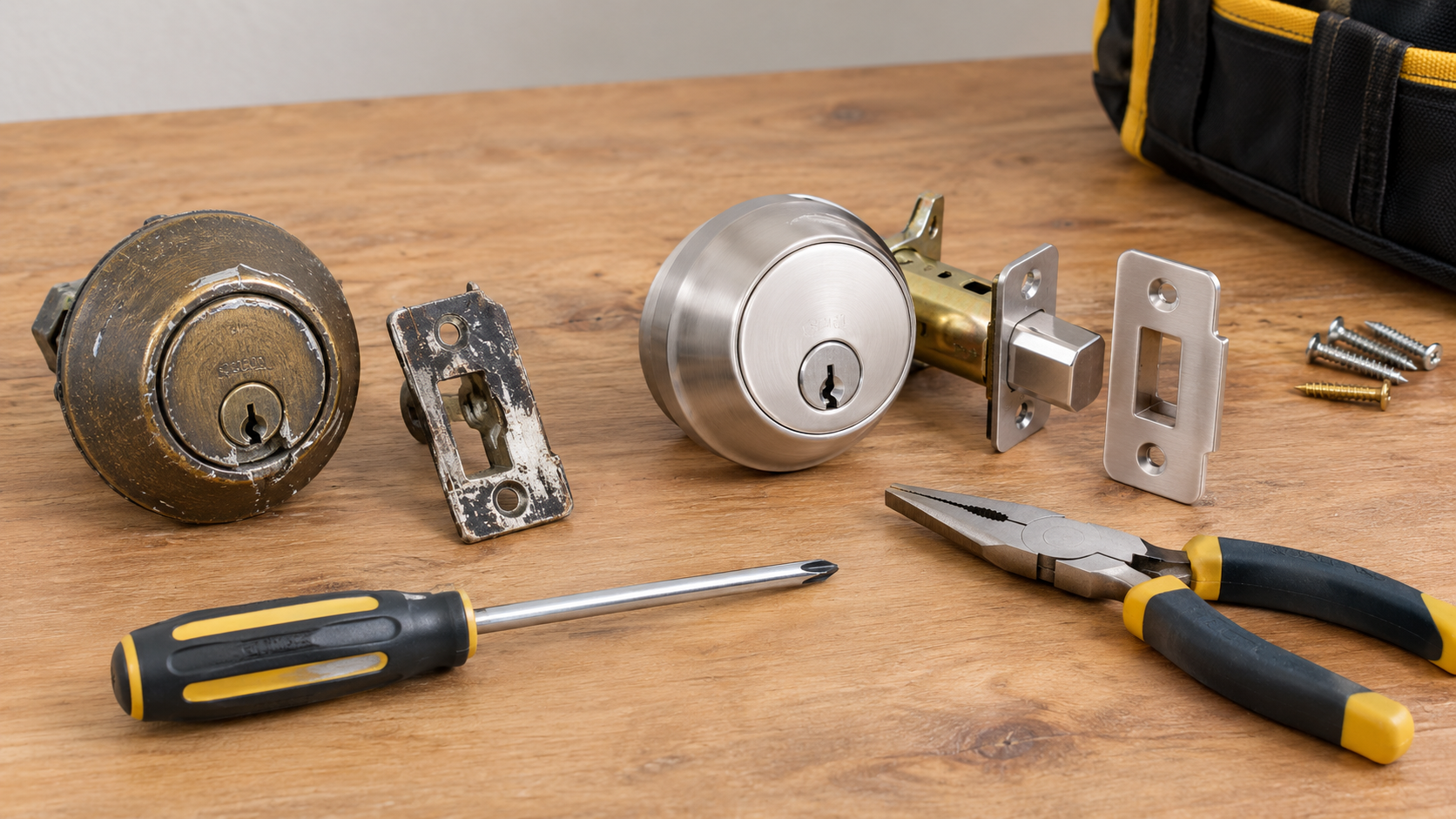
What is the difference between rekeying and replacing?
Rekeying keeps the lock body, cylinder, and exterior hardware in place. A locksmith changes the internal pin arrangement or electronic authorization so the old key or credential stops working.
Replacing removes the existing lock and fits different hardware. That may mean a new cylinder, deadbolt, smart lock, panic bar, electric strike, or complete locking assembly.
The correct choice depends on the failure mode. Start with the key, cylinder, latch, door, frame, and strike before ordering a part.
| Situation | Usually the right choice | Reason |
|---|---|---|
| The lock works, but someone else may have a key | Rekeying | You regain control without changing sound hardware |
| The cylinder sticks or the key will not turn smoothly | Inspection, then often replacement | Rekeying does not repair worn parts |
| The lock was damaged during a break-in | Replacement or professional assessment | Hidden damage may affect the cylinder, housing, latch, or door |
| You need a smart lock or different access method | Replacement | New features require different hardware |
| Several compatible locks must use one key | Rekeying | The cylinders can often be matched to one key |
| The door and lock no longer fit correctly | Repair or replacement | Poor fit can cause repeated failure and weak security |
Rekeying changes the internal key combination
A mechanical rekey changes the pins inside the lock cylinder. The cylinder remains in the door, but the old key no longer lines up the pins correctly. A new key operates the lock instead.
This is useful after a tenant change, employee turnover, a lost key, or a key that was never returned. It can also match several compatible locks to one key, provided the hardware uses compatible key systems.
A rekey does not straighten a bent lock housing. It does not repair a broken tailpiece, loose latch, damaged strike, or door that has shifted in its frame. If the lock already drags or binds, changing the pin combination leaves the main fault in place.
For a condo or rental, confirm who can authorize the work. The unit owner, property manager, landlord, or building may control the lock hardware. A locksmith may also need proof of ownership or occupancy before changing access.
Replacing installs different lock hardware
Replacement removes the existing hardware and fits something else in its place. The new part may be the same general type, such as a different deadbolt, or it may change how the door is secured and released.
Replacement options include:
The new hardware must fit the door preparation, often called door prep. That includes the bore size, backset, edge cutout, mounting holes, cylinder type, interior clearance, and strike position.
A product can fit the photograph and still fail on the door. The escutcheon may hit the frame. The bolt may not line up with the strike. A condo building may prohibit changes to the exterior hardware. Check those conditions before removing the old lock.
- A new lock cylinder
- A new deadbolt
- A lever or knob lock
- A smart lock
- A panic bar for a commercial exit
- An electric strike for controlled access
- A complete mortise or storefront locking assembly
Rekey when the lock works and key control is the problem
Rekeying is the right first choice when the lock is in good condition and you no longer trust the old keys. It gives you a new operating key while preserving the existing appearance and door preparation.
Common reasons include:
A rekey also reduces disruption. The door usually keeps the same exterior trim, latch, and mounting points. That matters in older Toronto homes, rental units, condos, offices, and storefronts where replacement hardware may not fit without additional door work.
If you need a master key system for several doors, the pin layout must be planned carefully. Inside the pinning that makes master keys work explains why extra key levels can increase complexity and reduce the margin for poor installation.
- A former occupant kept a key
- A tenant moved out
- An employee left the business
- A contractor or cleaner had access
- Keys were lost or never returned
- A key may have been copied without approval
- Several compatible locks should use one key
Replace when the hardware is damaged, weak, outdated, or compromised
Rekeying cannot restore damaged metal or worn moving parts. Replace the hardware, or have it assessed, when you find any of these conditions:
After a break-in, do not assume the visible damage tells the whole story. The cylinder, tailpiece, latch, screws, strike, door edge, and frame may all need checking. Keep damaged parts available if police, insurance, or building management may need to inspect them.
The Schlage B-Series B60N-Century deadbolt has an ANSI Grade 1 rating and may suit a higher-security residential or commercial application. The rating belongs to that complete tested lock design. It does not make a damaged door, weak frame, or loose strike secure. Read the ANSI standards information before treating a grade marking as a complete security assessment.
- The cylinder spins without moving the latch
- The key sticks, bends, or will not turn smoothly
- The lock housing is cracked, bent, or loose
- The latch drags against the strike
- The door has shifted in the frame
- The lock shows forced-entry damage
- The hardware is corroded or badly worn
- The keyway appears tampered with
- The lock lacks a security feature you now require
- The replacement part no longer fits the door correctly
Rekeying preserves hardware; replacement changes fit and features
Rekeying usually preserves the door’s appearance and existing fit. It also avoids changing the latch, strike, mounting holes, and interior trim when those parts are still sound.
Replacement gives you a chance to correct a poor setup. You may need a different cylinder, stronger deadbolt, controlled entry method, or smart feature. However, new hardware can create fresh problems if the door prep and frame alignment are ignored.
Check these points before replacement:
For example, the Schlage Encode Smart WiFi Deadbolt with Century Trim has built-in alarm technology. That feature may help in the right household, but it does not correct a dragging door or replace a sound mechanical check.
Similarly, the Kwikset 980 Deadbolt - Keyed One Side - featuring SmartKey is a listed lock model. A listed product still has to fit the door, align with the strike, and meet the building or property requirements.
- Does the new lock match the door thickness?
- Does the backset match the existing bore?
- Will the bolt enter the strike without pressure?
- Is there enough room for the interior thumbturn or housing?
- Will the new trim hit the frame or glass?
- Does the building approve the change?
- Can you still operate the door if power, Wi-Fi, or batteries fail?
Which option costs less?
Rekeying is commonly cheaper when the lock is serviceable because the existing hardware stays in place. The work focuses on the cylinder or its electronic authorization.
Replacement costs more because it includes new hardware and may require door adjustment. The added work can include enlarging a bore, moving a strike, correcting alignment, changing the latch, or repairing damage around the lock.
The cheaper choice is not always the sound choice. Rekeying a lock that sticks can leave you with the same failure and another service visit. Replacing a lock that only needed new key control wastes good hardware and may create fit problems.
The practical comparison is simple:
- Choose rekeying when the lock works and access control has changed.
- Choose replacement when the lock itself has failed or lacks the required capability.
- Choose an inspection when the symptom could come from the door, frame, latch, or strike.
Lost keys do not automatically require a new lock
A lost key usually calls for rekeying if the lock is functioning and there is no other damage. The old key stops operating the cylinder, while the existing hardware remains in place.
Use greater caution if the key was lost with identifying information, stolen during a burglary, copied by someone unauthorized, or found near the property. In those cases, a locksmith should assess the lock and surrounding hardware before deciding between rekeying and replacement.
Replace the hardware after forced entry if the cylinder, housing, latch, or mounting area was damaged. Do not push a new key into a cylinder that is already sticking, and do not force the lock to test whether it still works.
For residential access problems in the GTA, prepare identification, the address, lease or ownership details, and any concierge or property manager contact information. Residential locksmith service in Toronto and the GTA may also require building access arrangements before work starts.
Smart locks and vehicles follow different rules
Electronic locks do not always use mechanical pins. A smart lock may manage access through a keypad, app, card, hub, or stored user credential. Removing one user from the system is different from mechanically rekeying a cylinder, and changing the physical lock may not remove every electronic authorization.
Keep a manual key override where the system provides one. Check battery access, hub or Wi-Fi coverage, interior clearance, and the building’s rules before changing the hardware.
Vehicles add another layer. A transponder is a small electronic chip that must be recognized by the vehicle’s immobilizer. A sidewinder key may need both a precise blade cut and programming, so copying the visible shape does not prove the key will start the car.
An all-keys-lost job may require the vehicle identification number, year, make, model, trim, plate information if available, and proof that you can authorize the work. Some systems need security codes, specialized programming equipment, or dealer-level service. The National Highway Traffic Safety Administration provides vehicle safety information, but it does not replace the vehicle maker’s programming requirements.
Do not treat a car key problem as a house-lock rekey. The failure may involve the blade, remote, transponder, immobilizer, antenna, or vehicle battery. Key fob troubleshooting for battery, signal, or vehicle faults helps separate those symptoms before service is arranged.

Restricted and damaged systems need qualified service
A restricted keyway limits who can cut or duplicate the key. A high-security cylinder may also use controlled blanks, special pinning, hardened parts, or registration rules. You may need proof of ownership, building authorization, or a locksmith qualified to service that system.
Do not drill, pry, bypass, or force the lock because the key is missing. An incorrect attempt can push a fragment deeper, damage the latch, or leave the door less secure after entry.
Commercial doors need the same caution. A storefront may use a rim cylinder, panic bar, electric strike, card reader, keypad, or remote release. Identify how the door normally releases before anyone works on it. That detail points to the likely failure and the tools required.
For a broken or sticking cylinder, door lock repair and broken key extraction in Toronto covers the safer boundary. If the lock is turned, the fragment is deep, or the latch is disconnected, stop testing it and arrange an inspection.
How should you choose between rekeying and replacing?
Use the lock’s condition and your access goal as the decision rule.
Choose rekeying if:
Choose replacement if:
Rekeying is for control. Replacement is for condition, fit, or capability. That is the useful answer to what is the difference between rekeying and replacing, and it keeps you from paying for the wrong repair.
- The key turns smoothly
- The latch moves correctly
- The door and strike align
- The hardware is not damaged
- You only need old keys or credentials removed
- You want compatible locks to use one key
- The cylinder, latch, housing, or strike has failed
- The lock shows forced-entry damage
- The hardware is outdated for the property
- You need smart, electronic, or controlled access
- The lock no longer fits the door
- The keyway or system has been compromised
- Building or insurance requirements call for different hardware
FAQ
Common questions
Quick answers about this topic in Toronto and the GTA.
Does rekeying change the appearance of a lock?
Usually, no. A locksmith changes the cylinder’s internal pin arrangement or electronic authorization while leaving the visible lock hardware in place.
Can every lock be rekeyed to the same key?
No. The cylinders must use compatible key systems and have enough matching components for the planned key arrangement. Different brands or restricted systems may not match.
Should you rekey or replace after moving into a new home?
Have the lock checked first. Rekeying is suitable if the hardware is sound and you only need control over previous keys. Replace it if the lock is worn, poorly fitted, damaged, or missing a feature you need.
Does a smart lock need rekeying?
Not always. Some smart locks manage users through codes or an app, while others combine electronic access with a mechanical cylinder. Remove old electronic users and assess the physical key system separately.
Can a locksmith rekey a vehicle?
Some vehicle cylinders can be mechanically rekeyed, but modern vehicles may also require transponder or smart-key programming. Proof of ownership and specialized equipment may be required, and some systems need dealer service.
More reading
Related guides
More step-by-step and how-to articles on the same topic.
How Toronto High-Security Locks Control Access
High-security locks make key copying and unauthorized entry harder, but Toronto properties also need strong doors, frames, access rules, and key control.
Read article Locksmith guidesWhen Emergency Lock Drilling Is Truly Justified
Emergency lock drilling is usually a last resort. This guide explains safer entry options, warning signs, and when urgent access may justify permanent damage.
Read article Home securityHow GTA Homes Avoid Smart Lock Installation Problems
A proper GTA smart lock installation starts with door fit, condo rules, battery planning, and backup access. Use this guide to avoid lockouts.
Read articleReady for upfront pricing?
Describe your door or vehicle for a quoted range before a technician is dispatched.