
How GTA Homes Avoid Smart Lock Installation Problems
Start with the door, not the app. Residential smart lock installation in the GTA should begin with the deadbolt, door prep, strike alignment, condo or landlord rules, and backup access plan. A smart lock that fits badly will bind, drain batteries, and leave you with an expensive lockout. Check the hardware first, then choose the connection method and user features.
Real dispatcher answersOpen every day, 7 AM to 10:30 PM
In this guide
Door prep and strike alignment before install
How should residential smart lock installation in the GTA be handled?
A proper installation follows this order:
The GTA includes downtown condos, older Toronto row houses, suburban homes, basement units, and rental properties. They don't all use the same lock prep. A lock designed for a standard single-cylinder deadbolt may not fit a mortise lock, narrow aluminum door, multi-point lock, or fire-rated suite entry door.
A technician should identify the failure mode before recommending a model. If the existing deadbolt drags, the strike is loose, or the door has shifted in its frame, installing a motorized lock over that problem won't solve it.
For broader home security choices, see our guide to security and smart locks in Toronto and the GTA.
1. Check the door, frame, deadbolt, and strike.
2. Confirm the lock fits the existing door prep.
3. Check condo, rental, and fire-door rules.
4. Choose the right access method.
5. Install without forcing the hardware.
6. Pair the app and configure users with you present.
7. Test the lock manually, electronically, and with its backup method.
What should you check before buying a smart lock?
Check the physical door measurements and hardware before comparing apps. Product photos don't show the clearance around your escutcheon, the depth of your frame, or the pressure holding the bolt against the strike.
Ask these questions first:
The backset is the distance from the edge of the door to the centre of the lock hole. The strike is the metal plate in the frame where the bolt enters. Both matter more than the lock's advertised connection range.
A smart lock should turn the deadbolt with light resistance. If you must pull the door hard or lift the handle to make the bolt move, fix the strike alignment first. The motor will repeat that strain every time it locks.
- Is the existing lock a deadbolt, mortise lock, rim lock, or multi-point system?
- Does the door have a standard bore and backset?
- Is the door metal, wood, composite, or aluminum?
- Does the lock need a new hole or faceplate?
- Is there enough interior clearance for the motor and battery cover?
- Does the bolt enter the strike without rubbing?
- Can you still use a physical key?
- Is the door part of a fire-rated assembly?
- Does the condo or landlord allow the change?
Which types of smart locks suit GTA homes?
The right choice depends on the existing hardware, not on which product has the longest feature list.
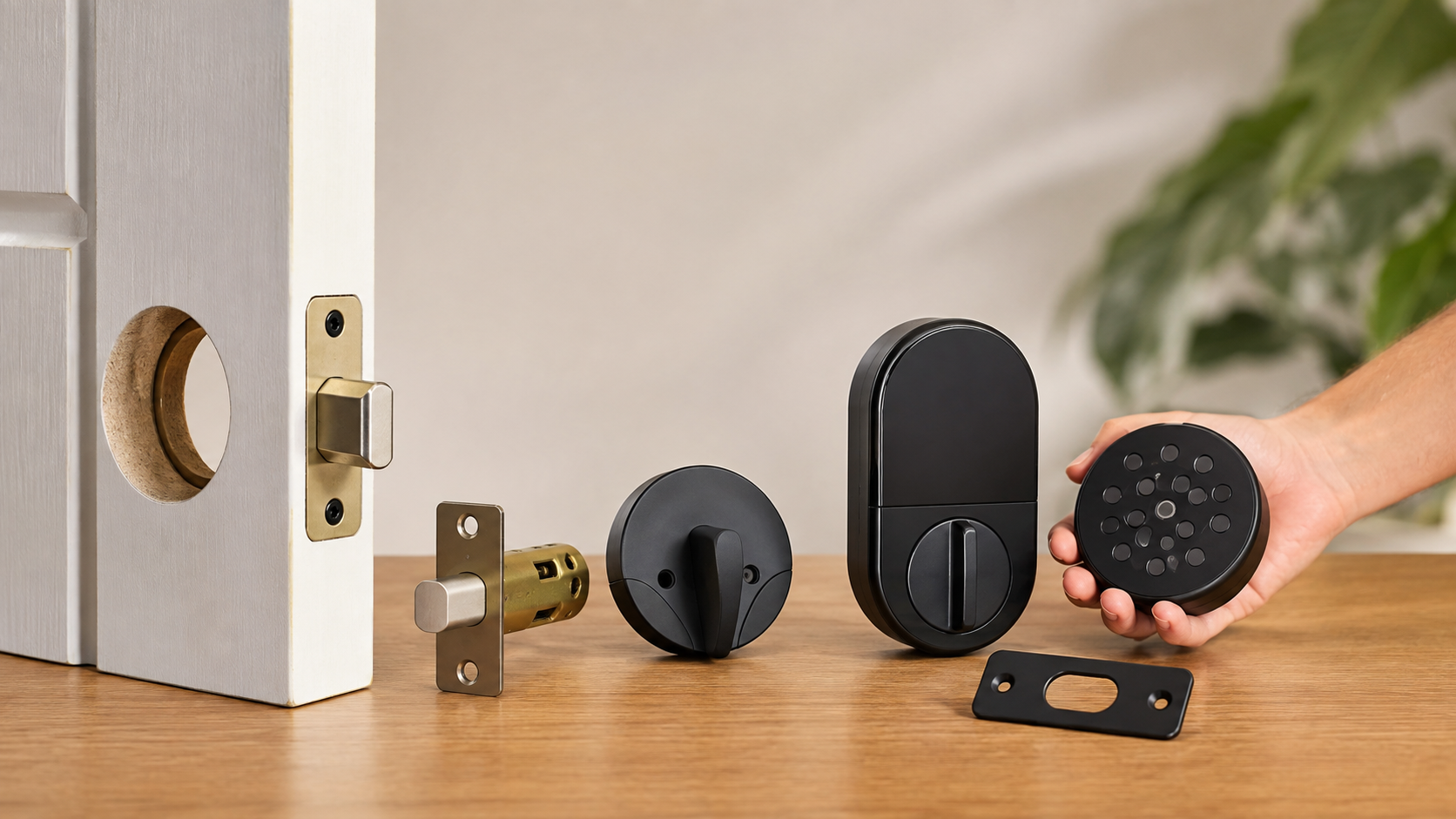
An interior retrofit can be a sensible choice for a condo where the outside appearance must stay unchanged. It still fails if the existing deadbolt is bent, loose, or badly aligned.
A full replacement gives more control over the cylinder, keypad, and exterior trim. However, the new lock must fit the door thickness, bore, backset, and strike. A replacement that leaves the old failure in place is wasted work.
Mortise locks need special care. A mortise lock has a larger case set into the edge of the door, with the latch and deadbolt working inside one body. Do not assume a standard smart deadbolt can replace it. The technician may need a compatible conversion or may advise keeping the existing case.
| Lock type | Best fit | Main advantage | Main limitation |
|---|---|---|---|
| Interior retrofit | A sound deadbolt with an acceptable exterior cylinder | Keeps much of the existing outside hardware | Requires interior clearance and a compatible deadbolt |
| Full deadbolt replacement | A standard residential door with poor or outdated hardware | Gives you a matched lock and exterior keypad or reader | May need new door prep or strike work |
| Mortise or specialty lock system | A door with a mortise case, narrow frame, or multi-point mechanism | Preserves the door's existing function when supported | Needs careful assessment and may limit model choices |
Which connection method should you choose?
Choose the access method based on how people use the door. Bluetooth, Wi-Fi, and Z-Wave each solve a different problem.
Bluetooth is not the same as remote access. A phone may operate the lock nearby while you still cannot check it from work. Wi-Fi can add remote access, but a weak signal in a concrete condo hallway creates its own failure mode.
If you use Bluetooth, check the Bluetooth technology overview before buying a lock that claims phone control. Ask whether the lock needs a bridge for remote access and where that bridge will sit.
- Bluetooth works when your phone is close to the lock. It usually suits a single home where you want phone access without remote control.
- Wi-Fi allows remote status checks and commands. It needs a reliable signal near the door and may need a hub or bridge.
- Z-Wave uses a separate smart-home network and usually needs a compatible hub. It can suit a home that already uses that system.
- Keypad access helps families, cleaners, caregivers, and guests. It avoids handing out physical keys.
- Physical key access remains useful during dead batteries, phone problems, app failures, and network outages.
How do winter conditions and batteries affect smart locks?
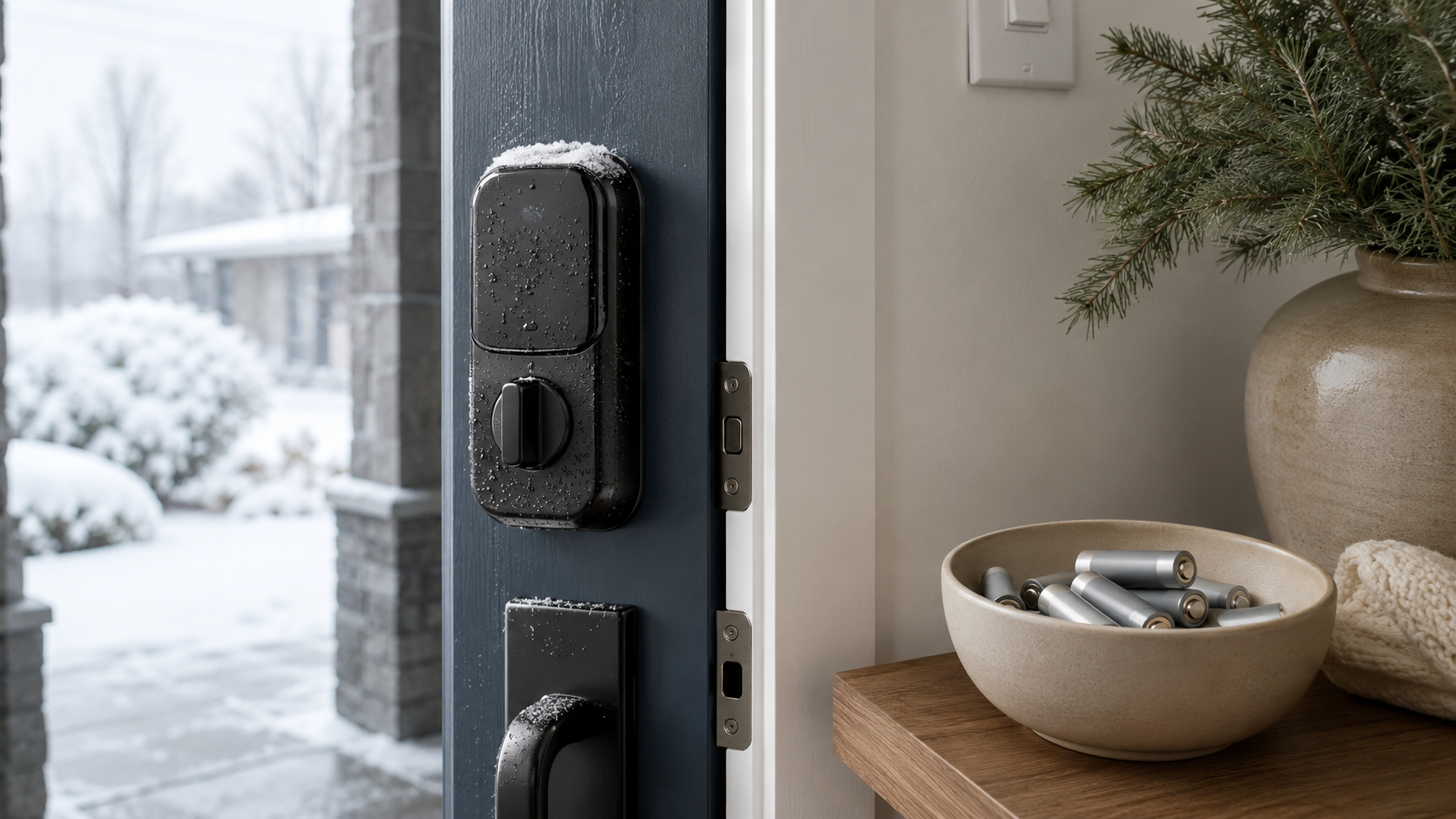
Cold weather exposes weak battery planning and tight door hardware. A battery-powered motor has less margin when the bolt is pushing against a misaligned strike, and low temperatures can reduce battery performance.
Install the batteries where you can reach them without removing the lock. Confirm the low-battery warning and keep the correct replacement batteries available. Do not wait for the motor to stop before dealing with the warning.
A smart lock also needs a manual backup. Depending on the model, that may be a physical key, an external battery contact, or another approved access method. Learn that method before you need it in a dark parkade or during a network outage.
Do not leave a spare key in an obvious outdoor hiding place. Give it to someone you trust, store it securely, or keep another authorized entry route available.
What do condo and rental rules change?
Condo and rental doors have ownership and building requirements that a detached home may not have. The person who lives behind the door may not be the person authorized to change the hardware.
Before installation, confirm:
A condo board may reject a lock because of its exterior appearance, not its security rating. A rental agreement may require the original hardware to be kept. In both cases, buying the lock first is the wrong order.
The Ontario Fire Code matters if the door is part of a rated corridor or suite entrance. Don't replace a door lock without checking whether the assembly has special requirements.
For a rental or condo, get written approval with the exact model and installation method. A verbal answer from a neighbour or concierge may not protect you if the building later orders the hardware removed.
- The permitted lock brands or types
- Whether the exterior escutcheon must remain unchanged
- Whether drilling is allowed
- Whether the door is fire-rated
- Whether the building requires a master-key function
- Whether the property manager must approve the work
- Whether concierge staff need notice or technician sign-in
- Whether elevator or parkade access must be arranged
What happens during a professional installation?
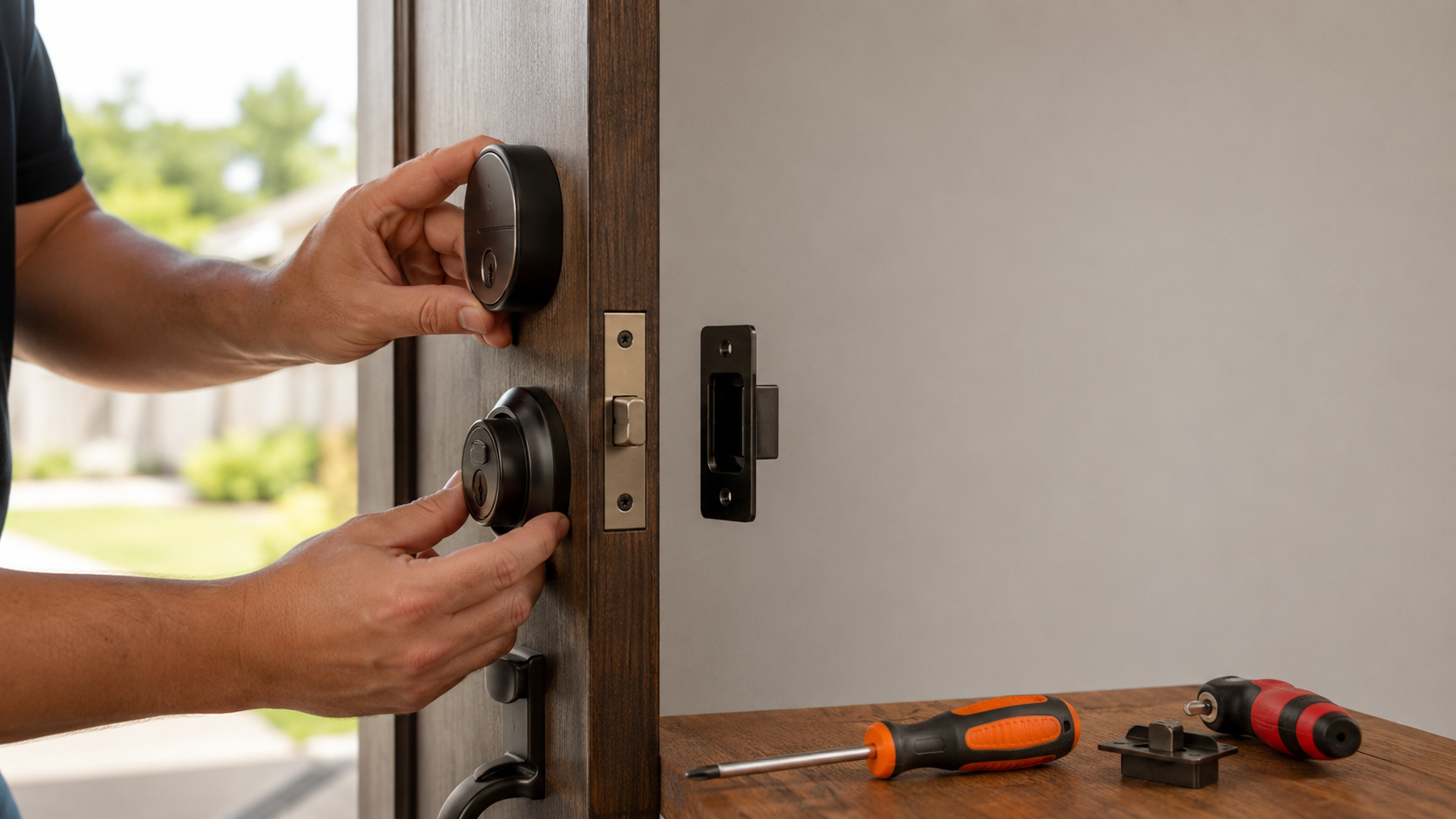
The technician should inspect the full opening before removing parts. That means checking the key, lock cylinder, deadbolt, latch, screws, hinges, door edge, frame, and strike.
A sound installation usually includes:
Test the lock with the door open before closing it. This confirms that the motor and bolt move freely. Then close the door and test the strike alignment again.
Ask the technician to show you how to remove a guest code. You should also know how to disable remote access, replace the batteries, and use the manual backup. A setup isn't finished because the app shows a connected lock.
- Removing the existing hardware without damaging the door
- Checking the bore, backset, door thickness, and interior clearance
- Fitting the new lock to the door prep
- Adjusting or replacing the strike when needed
- Testing the bolt with the door open
- Testing the bolt with the door closed
- Pairing the app or hub with you present
- Adding the owner code and agreed user codes
- Explaining low-battery warnings and backup entry
- Removing factory codes and unused access
- Confirming the door locks without forcing the motor
Can a locksmith install a lock you already bought?
Yes, if the lock fits the door and the building allows it. Compatibility should be confirmed before drilling or removing the existing hardware.
Send clear photos of:
Photos help, but they don't always show door thickness, internal clearance, or a tight strike. The technician may still need to inspect the door before confirming the installation.
If the lock is wrong for the opening, the safe choice is to return it or change the hardware plan. Do not enlarge a bore simply to make an incompatible lock fit. That can weaken the door, damage the finish, or leave the lock poorly supported.
- The inside and outside of the door
- The door edge and latch
- The strike plate in the frame
- The existing lock cylinder
- Any trim close to the lock
- The product box and model information
What are the main trade-offs?
Smart locks add useful access control, but they also add batteries, software, and another failure point.
The practical gain is controlled access. You can give a cleaner a temporary code instead of copying a key, then remove that code later. You can also keep a record of who has access.
The practical risk is neglect. A forgotten guest code, weak app account, dead battery, or dragging bolt can turn convenience into a lockout. Turn on two-factor authentication if the app supports it, change factory codes, and remove access that no longer has a reason to exist.
A smart lock doesn't strengthen a hollow door, loose strike, or weak frame. Repair the door and frame before adding electronic features.
| Benefit | Trade-off |
|---|---|
| No daily key use | Battery warnings need attention |
| Temporary codes for guests | Old codes must be removed |
| Remote status or access | Wi-Fi and hub coverage can fail |
| Activity records | Account security becomes part of home security |
| Easier access for family members | A motor can expose an alignment problem |
| Keypad entry | The code can be shared or observed |
When should you repair or replace the existing lock first?
Repair the existing lock if the cylinder is worn but the latch, deadbolt, housing, door, and strike are sound. A smart lock may be a poor next step if the mechanical lock already fails to operate smoothly.
Replace more of the hardware if:
A key that turns hard doesn't always mean the cylinder needs replacing. The door may be pressing the bolt against the strike. Push or pull the door lightly while turning once. If the bolt still binds, stop forcing it and have the alignment checked.
If you need help with an existing mechanical problem, our guide to door lock repair and broken key extraction covers the safer repair boundary.
- The deadbolt is bent
- The lock housing is cracked
- The latch drags
- The strike is loose or damaged
- The door has shifted in the frame
- The frame is split
- The current lock lacks a usable backup
- The mortise case is worn
- The exterior hardware no longer fits the door
Who should skip a smart lock for now?
Skip the installation until the door problem is fixed if the deadbolt drags, the door must be lifted, or the frame is moving. The electronic lock will not correct poor door prep.
You should also wait if:
For a lockout, damaged cylinder, or forced entry, use a residential locksmith in Toronto and the GTA. A smart lock should be installed after the actual failure is clear, not used to hide it.
- The landlord or condo board has not approved the change
- You cannot keep a safe backup access method
- The lock requires Wi-Fi that does not reach the door
- The door is fire-rated and the model is not approved
- Several people need access but nobody will manage the codes
- The existing lock is part of a restricted master-key system
- The door has a mortise or multi-point mechanism you haven't identified
What should you prepare for GTA installation?
Prepare the door information before booking. This avoids a visit that ends with the lock still in its box.
Have these details ready:
Tell the technician if the door is in a condo hallway, parkade, basement entrance, storefront-style residential building, or older walk-up. Access conditions affect the inspection and the tools needed.
Residential smart lock installation across the GTA still comes down to the same checks: fit the hardware, correct the strike, confirm authorization, pair the system, and test the backup. The app comes after the door works.
Related: Call Toronto Locksmith for Quote & ETA
- Property type and city
- Condo, rental, or freehold status
- Door material and approximate age
- Existing lock type
- Photos of both sides of the door
- Door edge and strike photos
- Exact smart lock model
- Condo or landlord approval
- Existing key requirements
- Wi-Fi or hub location
- Preferred users and backup access plan
Who this guide is for in Toronto and the GTA
Homeowners upgrading a deadbolt, condo owners checking board rules, and landlords adding keypad access without handing out dozens of brass keys.
If you already bought a lock online, this page still helps you confirm fit before install day. If you want supply-and-install, our security service page covers on-site work.
Geography does not change the steps: Vaughan row houses, Mississauga condos, and downtown Toronto walk-ups all need the same bore, strike, and battery planning.
What to expect when you book install
Call with door photos, existing bore measurements, and the exact model number. Dispatch quotes labour and any hardware we supply before we drive.
On site we test throw, adjust strikes, pair the app with you present, and leave written codes plus battery guidance.
If the door is binding, we fix alignment first. A smart lock on a sticky latch fails twice as fast in Toronto humidity swings.
FAQ
Common questions
Quick answers about this topic in Toronto and the GTA.
Can a smart lock be installed on a metal residential door?
Sometimes, but the lock must match the door prep and internal construction. Metal doors may use different reinforcement, latch types, or frame hardware. Confirm compatibility before drilling.
Can a smart lock use the same key as my other doors?
It may, if the new lock uses a compatible cylinder and keyway. A keypad feature doesn't automatically make the lock match the rest of your house. The cylinder must be checked and rekeyed where possible.
Can I keep the condo master key system?
Possibly, but this depends on the building's cylinder and access rules. A standard retail smart lock may remove the existing master-key function. Get approval before changing a condo suite lock tied to building access.
What should I do if the smart lock stops responding?
Use the approved backup entry method and don't force the keyway or keypad. Once inside, check the battery warning, inspect the bolt and strike, and review the app connection. If the lock still binds or stays unresponsive, have the cylinder and installation checked.
Is a keypad safer than giving guests a key?
A keypad can make access easier to control because you can remove a code without collecting a key. It still requires good code management. Avoid shared permanent codes and delete access when the person no longer needs it.
How long does smart lock installation take?
Most residential installs run one to two hours including strike adjustment and app pairing. Complex doors or fire-rated hardware can take longer.
Do you service the GTA or only Toronto?
We dispatch mobile technicians across Toronto and surrounding cities during our posted hours.
More reading
Related guides
More step-by-step and how-to articles on the same topic.
Locked Out of Your Toronto Home? Safe Next Steps
Handle a Toronto house lockout safely with lawful entry steps, locksmith timing guidance, and advice for lost, broken, or stolen keys at home.
Read article ResidentialBroken Key & Lock Repair
A key that snapped in the lock or a knob that spins freely is common, and rarely a DIY win if the piece sits flush inside. What usually broke, and what a mobile locksmith does on site.
Read article Locksmith guidesFix Deadbolt Alignment Without Forcing the Key
A binding deadbolt usually points to door or strike pressure. Use contact marks, hinge checks, and small adjustments to restore smooth locking safely.
Read articleOn-site help
Related locksmith services
If you need a technician on site, these service pages match this guide.
Guides explain the situation; a service visit fixes it. For security solutions in Toronto and the GTA, use the call button for a price range and ETA, confirmed on site before work starts.
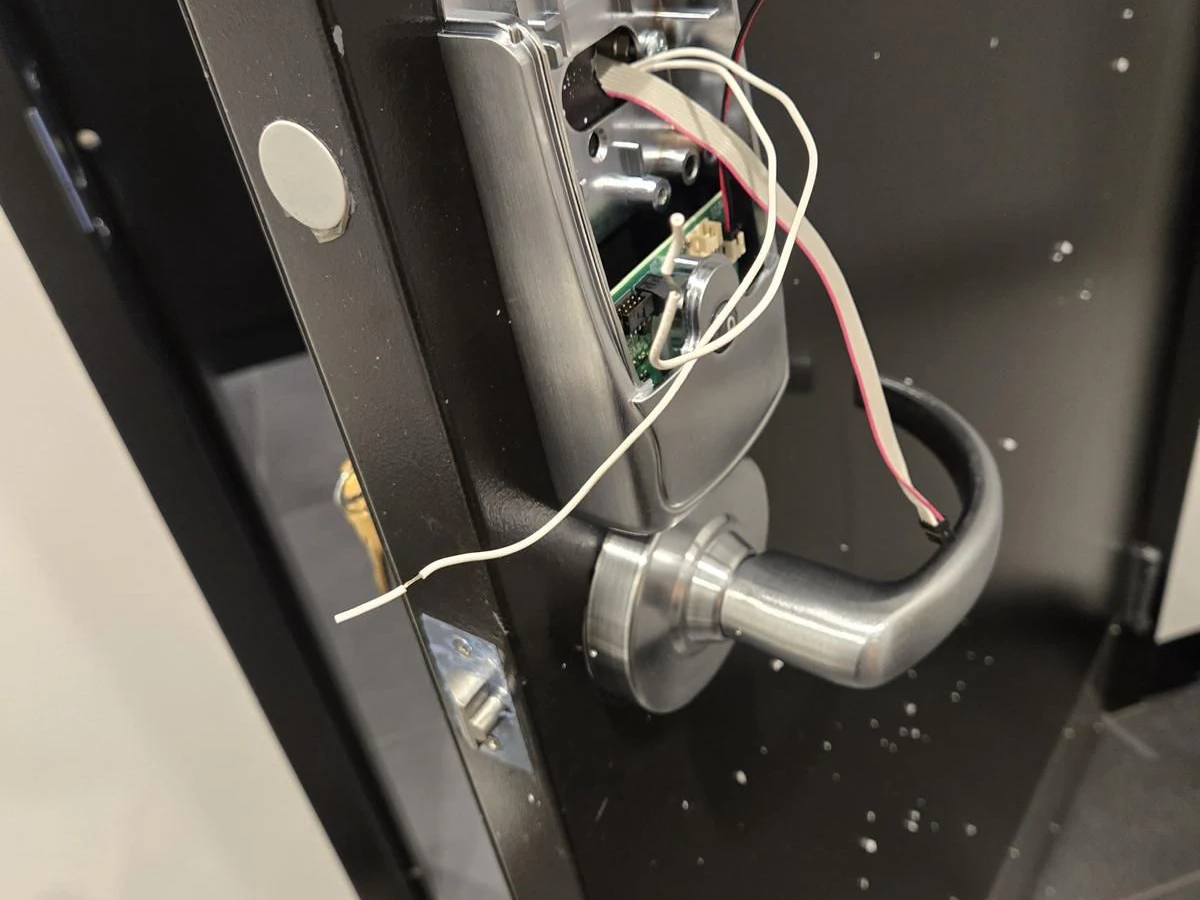
Security Solutions
Smart locks, high-security cylinders, and access control for homes and businesses.
See details
Residential Locksmith
House lockouts, lock changes, rekeying, and home security upgrades.
See details
Emergency Locksmith
Locked out or dealing with a broken lock? We come to you fast across the GTA.
See detailsReady for upfront pricing?
Describe your door or vehicle for a quoted range before a technician is dispatched.