
Commercial Lockout in Brampton: Steps to Take and Legal Info
A commercial lockout in Brampton starts with identifying why the door will not open, who can authorize entry, and what type of hardware controls the building. A locksmith checks the keyway, cylinder, latch, panic bar, electric strike, access system, and door frame before choosing non-destructive entry or a repair. If the dispute involves a landlord, tenant, unpaid rent, seized goods, or an eviction, the locksmith can address the door but cannot decide the legal right to possession.
Real dispatcher answersOpen every day, 7 AM to 10:30 PM
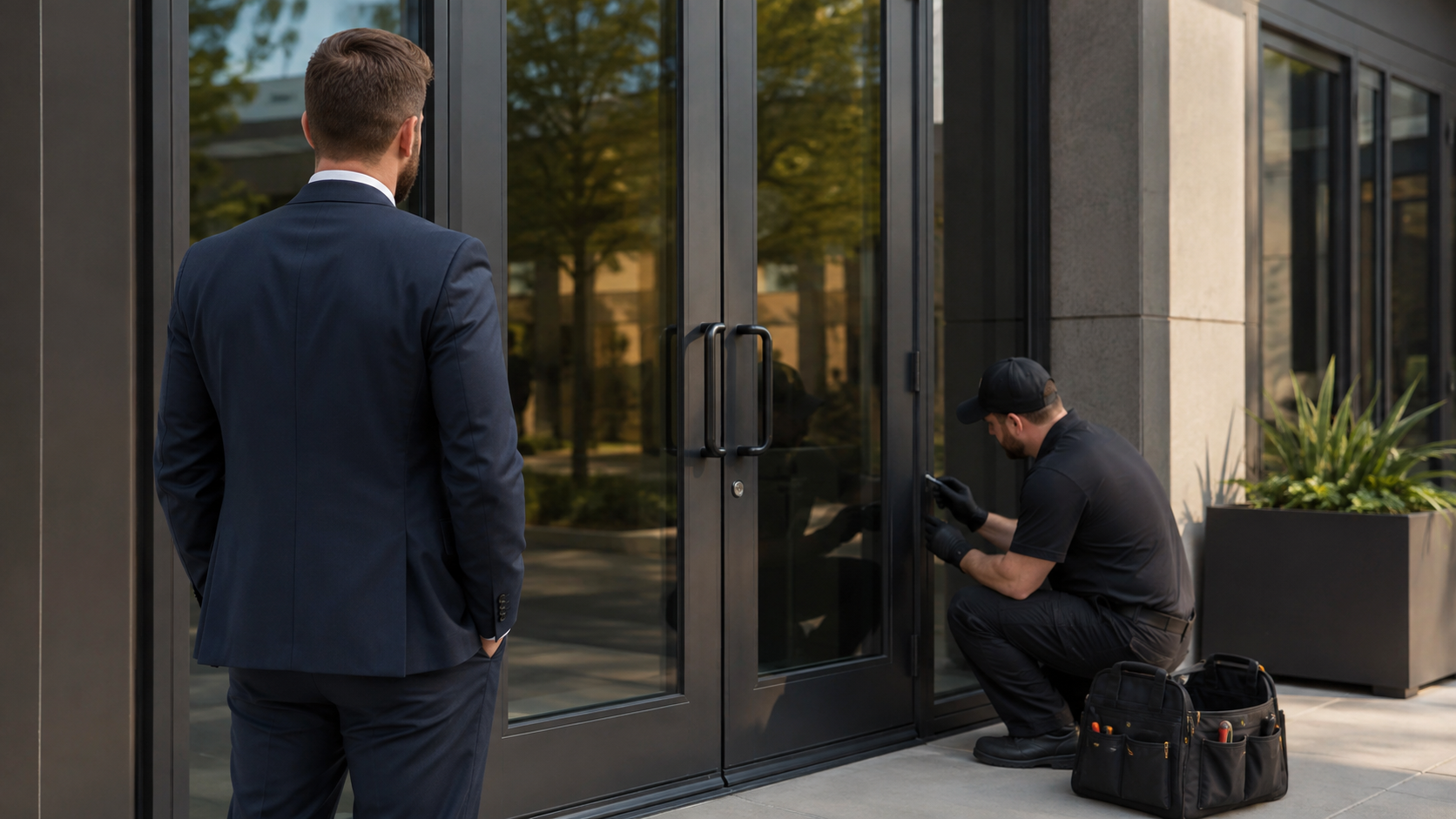
What happens during a commercial lockout in Brampton?
The first step is a phone assessment. You’ll be asked:
That information separates a failed lock from a tenancy dispute. It also tells the technician what tools and replacement parts may be needed.
Before work starts, prepare proof that you’re authorized to enter. This may include identification, a lease, business registration details, a property manager’s confirmation, or written permission from the owner. A technician should not bypass a commercial door for someone who cannot show a legitimate right to access the premises.
A Brampton commercial lockout may involve an aluminum storefront door, office cylinder, panic bar, mortise lock, keypad, card reader, or electric strike. Each system fails in a different place. For example, a key may turn without retracting the latch, while a card reader may approve access but fail to release the electric strike.
The technician normally checks the door without forcing it. If the problem is a worn lock cylinder, the cylinder may be repaired or replaced. If the frame has shifted, the strike is loose, or the latch is binding, changing the cylinder alone will leave the failure in place.
- The business address and unit number
- Your name and role
- The type of business and door
- How the door normally opens
- What happened before access failed
- Whether employees, customers, equipment, or records are inside
- Who owns or leases the space
- Whether a landlord, property manager, bailiff, or police officer is involved
The first decision is access, not replacement
A commercial lockout does not always mean the lock needs replacement. The correct response depends on the failure mode.
The key point is simple: a commercial door can appear locked when the real problem is alignment, power, or a damaged latch. Do not order a new lock from a photograph alone.
For a wider office problem, see Locked Out of Your Toronto Office? Start Here. The same checks apply in Brampton, but the building’s access rules may control who can enter mechanical rooms, parkades, and shared corridors.
| What you see | Likely problem | Usual next step |
|---|---|---|
| The key will not enter or turn | Damaged key, blocked keyway, or failed cylinder | Check the key and cylinder without forcing them |
| The key turns but the door stays locked | Broken tailpiece, disconnected latch, or frame pressure | Inspect the lock body and door alignment |
| The door opens with a key but not a card | Access-control or electric-strike fault | Check power, reader, release signal, and strike |
| The push bar moves but the door will not open | Panic-bar latch or strike problem | Inspect the hidden latch and frame |
| The lock was recently changed | Wrong cylinder, poor fit, or incorrect door prep | Confirm the hardware matches the door |
| Several doors stopped working | Building power, access software, or management-system issue | Contact the property manager or access provider |
How does the door normally release?
A technician needs to know the normal release method before attempting entry. Tell them if the door uses:
A storefront with a rim cylinder is not handled like an office door with a mortise cylinder. A panic bar may have a concealed latch that cannot be reached by working only on the outside cylinder. An electric strike may release only when it receives power from an access controller.
Do not pry an aluminum storefront frame. It bends easily and can leave the door unsafe after entry. Do not cut wires to an electric strike unless the system has been identified and the person doing the work is authorized to alter it.
If access control is involved, ask the property manager whether the system is online. A locksmith may restore the mechanical lock, but they may not control the building’s cards, software, server, or tenant permissions. On-site programming may also require approval from the building owner or access contractor.
- A metal key
- A keypad
- A card or fob
- A remote button
- A push bar
- An intercom
- A mobile access app
- A combination of these systems
What should you do before the technician arrives?
Keep people away from the door and leave the hardware in its current condition. A second key, screwdriver, pry bar, or drill can push a broken part deeper and turn a repair into a replacement.
Send useful information before the visit:
A photograph helps, but it does not prove the lock type or the failure. The door edge and frame often show more than the outside escutcheon.
If the business is in a plaza, warehouse, condo commercial unit, or managed office building, confirm access to the property first. A technician may need a property manager, security desk, or landlord to open a common entrance. That is separate from opening your leased unit.
- A clear photo of the exterior hardware
- A photo of the door edge and strike
- The key type, if one is available
- The access method that failed
- The make of the keypad or card reader
- Any error message or sound from the system
- The building contact’s name
- Parking, loading, elevator, or security instructions
What if the landlord changed the locks?
This is no longer a standard commercial lockout. It may be a dispute over rent, a lease breach, abandonment, insolvency, damage, or the landlord’s right to re-enter.
Ontario’s Commercial Tenancies Act contains rules that can affect commercial landlords and tenants. The lease also matters. A clause about default, re-entry, notice, rent, security, or access may change the next legal step.
Do not remove the landlord’s lock or install your own cylinder simply because you still have stock inside. That action can create a second dispute and may damage the door or frame. First document the condition:
A locksmith can sometimes provide access with authorization, but they cannot rule on the lease or grant possession. If the disagreement concerns who may occupy the unit, legal advice comes before drilling.
- Photograph the changed lock and surrounding damage
- Record the date and time you found the door secured
- Save emails, notices, and text messages
- Note whether goods, cash, medication, records, or equipment are inside
- Ask the landlord or property manager for the stated reason
- Contact a commercial tenancy lawyer before forcing entry
What role does a bailiff play?
A bailiff may be involved in an eviction, seizure, repossession, or enforcement process. That is different from calling a locksmith to open a failed office lock.
The bailiff’s authority comes from the legal process and the documents supporting it. The locksmith supplies a trade service, such as opening, changing, or securing hardware. The locksmith does not replace the bailiff’s authority.
Ask to see the paperwork and identify who has authorized the work. If the job involves a commercial eviction or seizure, keep copies of the documents available for the technician. Do not ask a locksmith to decide whether a notice is valid or whether a landlord can enter.
The Ontario Courts provide information about court processes, but a website cannot assess your lease or facts. For a contested possession issue, speak with a lawyer who handles commercial tenancy disputes.
Can a landlord lock out a commercial tenant without a court order?
The answer depends on the lease, the breach, the notices given, and the remedy being used. Commercial tenancy rules are not the same as residential lockout rules, and a landlord’s ability to re-enter or seize goods should not be guessed from a residential experience.
A commercial landlord may have remedies for unpaid rent or other lease breaches. Those remedies can involve notice, re-entry, distress, seizure of goods, court enforcement, or a bailiff. The correct path depends on the agreement and the facts.
A tenant should not assume that a locked door proves an unlawful eviction. A landlord should not assume that changing the lock settles the matter. Both sides need to preserve records and get legal advice before taking further action.
What happens to goods and business records inside?
A lockout can affect inventory, tools, computers, cash, customer records, medication, and personal property. Do not remove goods by force or enter through a rear door without authorization.
Make a written list of urgent items and tell the property owner, bailiff, lawyer, or court officer. Keep photographs and serial numbers if you can access them lawfully. If records contain personal information, handle them carefully and limit access to authorized staff.
If goods have been seized or the premises are under enforcement control, the person managing that process decides what may be removed and when. A locksmith should not be asked to bypass that control.
When is non-destructive entry the right choice?
Non-destructive entry means opening the door while limiting damage to the lock, door, frame, and access system. It is usually the first choice for a tenant, owner, or manager who has clear authority and a failed lock.
The method depends on the hardware. A technician may work through the cylinder, address the latch, release a failed panic bar, or repair the strike. The safe method changes if the door is under pressure, the key is broken, the lock is turned, or the frame is damaged.
Do not force the key. Do not hammer the cylinder. Do not pry the storefront frame. Those actions can damage the pins, latch, glass, weather seal, or door prep.
Destructive entry may be required if the lock has failed internally or the hardware cannot be reached without damage. In that case, the technician should explain what will be replaced and whether the door will still secure after entry.
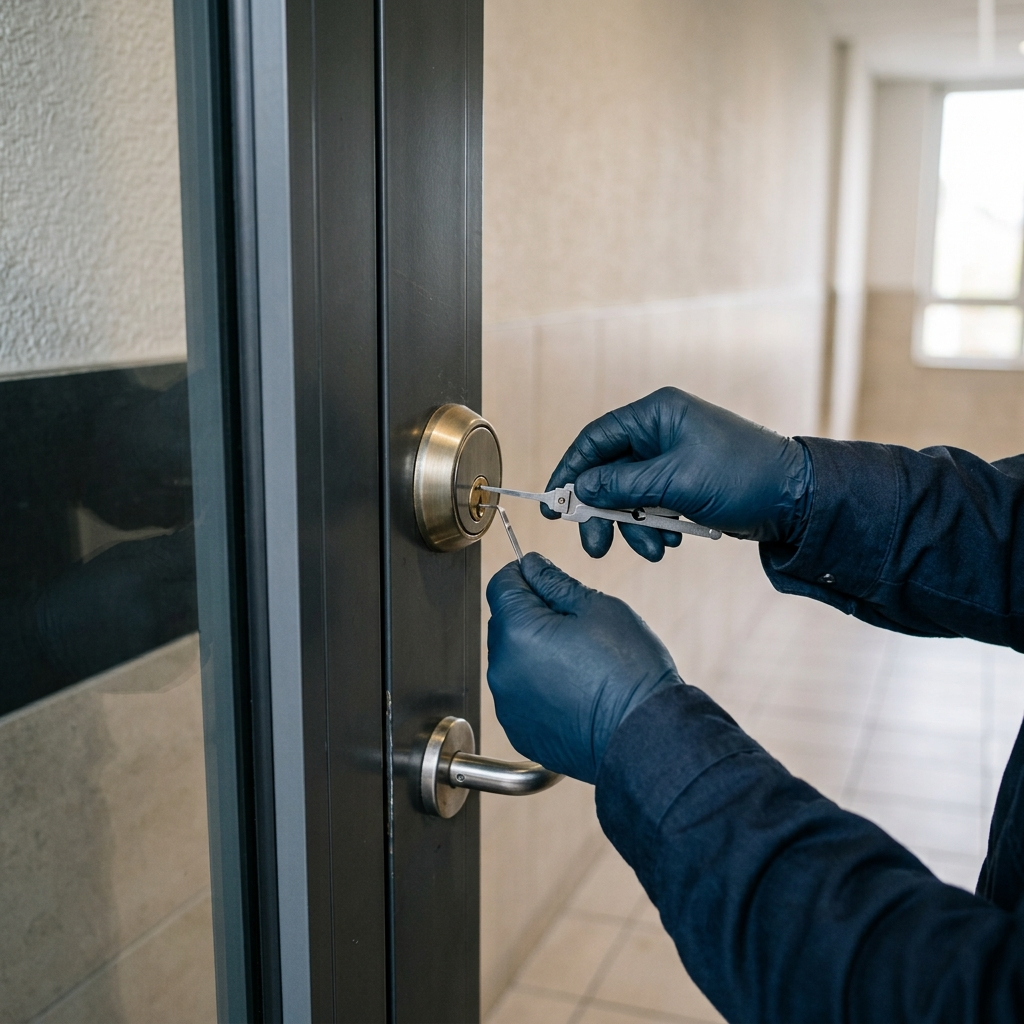
What should be repaired after entry?
Regaining access is only the first part of the job. The door must close, latch, and secure correctly before the business resumes normal operation.
Check:
If the cylinder is worn but the lock body and door are sound, rekeying or cylinder replacement may be enough. Replace more hardware if the housing is bent, the latch is failing, the strike is loose, or the door no longer fits the frame.
For a business with several doors, record which keys operate which openings. A master key system, restricted keyway, panic bar, or access-control setup needs parts that fit the existing door prep. A random replacement can leave staff with the wrong key plan and no reliable control over former employees.
See the guide to a commercial locksmith in Toronto and the GTA for related office, storefront, warehouse, and access-control problems.
- The lock cylinder and key
- The latch and deadbolt
- The strike alignment
- Door hinges and frame movement
- Panic-bar operation
- Electric strike release
- Keypad or card-reader permissions
- Door closer speed and latch
- Interior and exterior handles
- Any damage from an attempted break-in
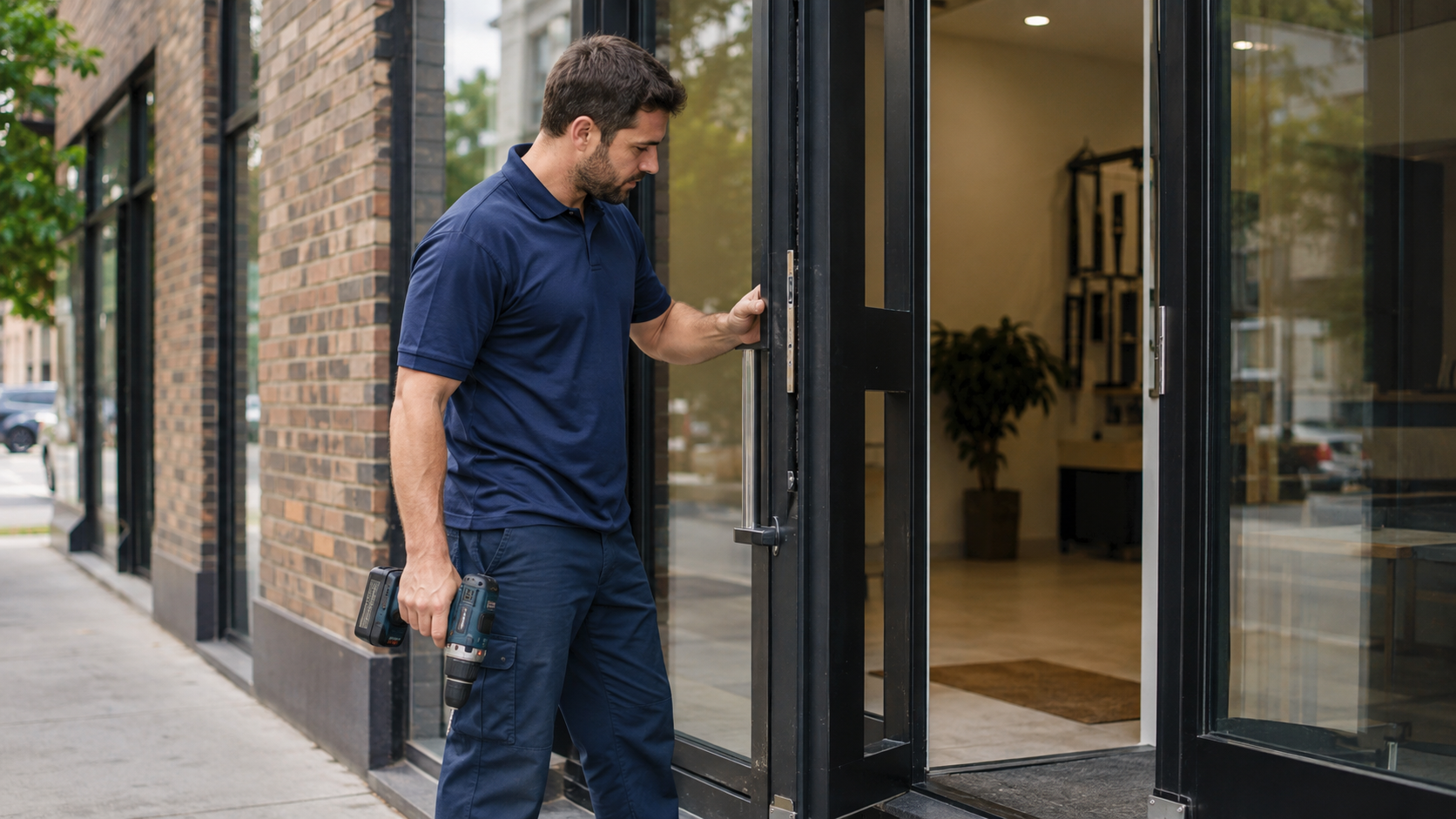
Who should call for commercial lockout help?
Call a commercial locksmith when the problem is a failed key, cylinder, latch, panic bar, door closer, or mechanical access point and you have authorization to enter.
Call the property manager or access-control provider when:
Call a commercial tenancy lawyer when:
Call emergency services if someone is trapped, injured, or facing an immediate safety threat. A lockout is disruptive, but it does not justify damaging a door or bypassing a live electrical system.
Related: Call Toronto Locksmith for Quote & ETA
- Several doors fail at once
- The card system is offline
- A building-wide power problem affects electric strikes
- Your tenant permissions were removed
- The common entrance is controlled by management
- The landlord changed the locks
- Rent or lease default is disputed
- Goods were seized
- A notice was served
- The parties disagree about possession
- A bailiff or court order is involved
FAQ
Common questions
Quick answers about this topic in Toronto and the GTA.
Can a locksmith open a Brampton storefront after hours?
A locksmith can work outside regular business hours if the service is available and the requester is authorized. Building access, security sign-in, loading rules, and property-manager approval may still control the visit.
Can employees request entry without the business owner present?
That depends on the business’s authorization policy and the evidence available. An employee should have identification and confirmation from an owner, manager, or property contact, especially if the request involves changing locks.
What should a business do if the only key is broken in the lock?
Stop inserting other keys or tools. If the fragment is visible, leave the cylinder in its current position and tell the technician what happened so proper extraction equipment can be used.
Can a locksmith reset a commercial card reader?
Not always. A locksmith may handle the mechanical lock or some on-site programming, but card permissions, cloud accounts, building servers, and electric-strike systems may belong to the property manager or access-control provider.
What information should a landlord provide before requesting a lock change?
The landlord should provide clear authority for the work and identify the affected unit, hardware, and reason for the change. If the work follows a tenancy dispute, eviction, seizure, or court process, the supporting documents should be available before the lock is altered.
More reading
Related guides
More step-by-step and how-to articles on the same topic.
Inside the Pinning That Makes Master Keys Work
Master keys work through planned pinning, not a universal override. See how master pins create two valid shear-line positions and shape access control.
Read article Locksmith guidesBrampton Lockouts: What Landlords Must Provide
A Brampton landlord should restore lawful access promptly with a key, supervised entry, or locksmith, while the lease explains after-hours steps and costs.
Read articleReady for upfront pricing?
Describe your door or vehicle for a quoted range before a technician is dispatched.