
Brampton Lockouts: What Landlords Must Provide
A Brampton landlord should provide a prompt, safe way for a lawful occupant to regain access after a lockout. That usually means a working key, supervised entry, or a locksmith arranged through the landlord. During business hours, contact the landlord or property manager; after hours, use the emergency procedure in the lease. If someone is trapped or in danger, call 911 instead of waiting for property staff.
Real dispatcher answersOpen every day, 7 AM to 10:30 PM
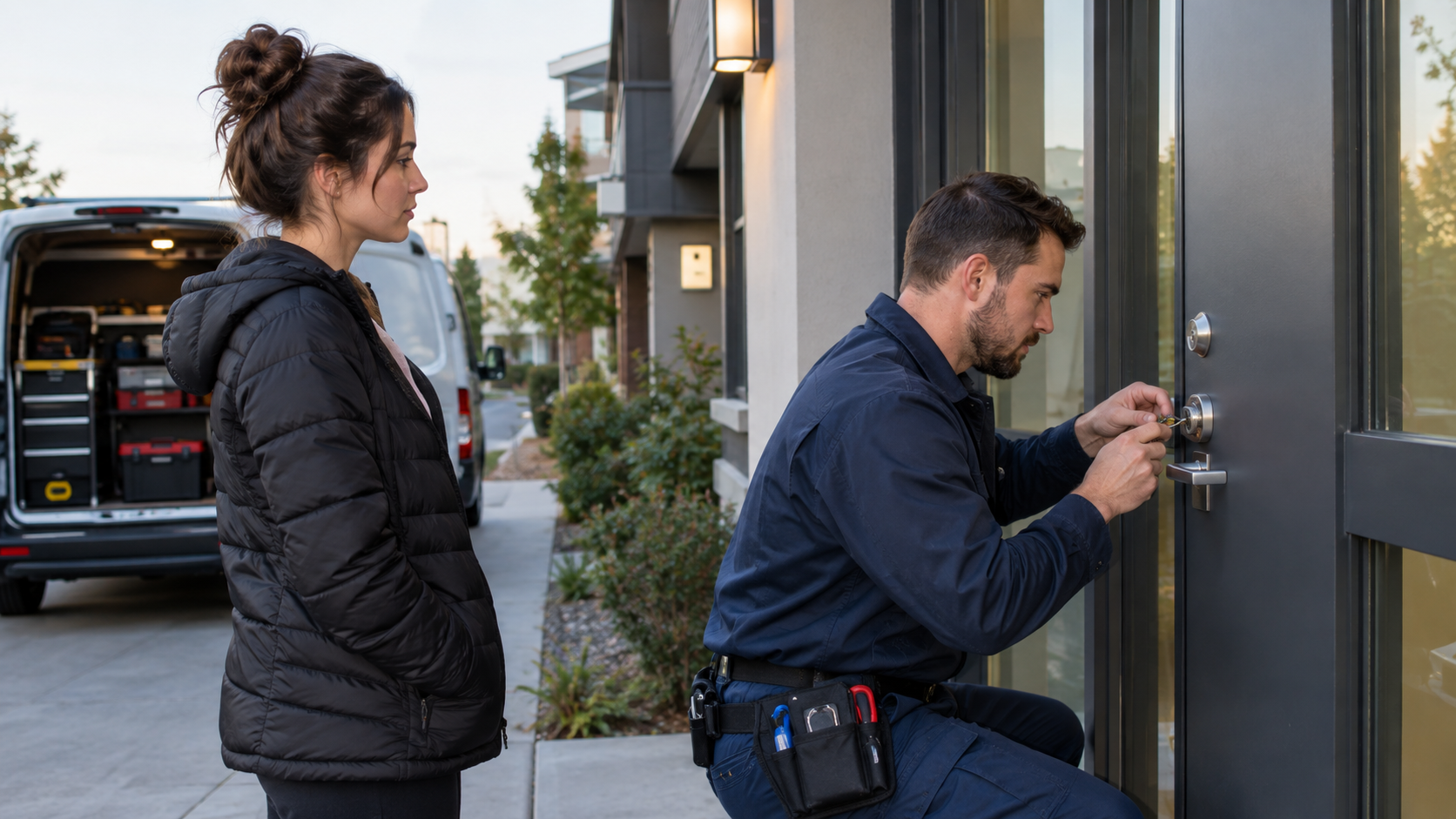
What should landlords provide after a lockout in Brampton?
The landlord should provide reasonable access to the rental unit through one of these options:
The right response depends on the failure. A lost tenant key differs from a broken lock. A dead battery in an electronic lock differs from a landlord changing the cylinder. The landlord should identify that cause before assigning responsibility for the repair or service cost.
A landlord who changes a lock must provide the tenant with new keys right away. This remains true if the change was made to repair a broken lock or improve security.
- A spare key or working replacement key
- Supervised entry by the landlord, superintendent, or property manager
- A locksmith approved or arranged by the landlord
- A repair to a failed lock, latch, strike, or access-control device
- Clear instructions for after-hours entry
Reasonable access is the landlord’s baseline duty
A landlord must maintain functional locks and should not unreasonably prevent a tenant from entering the rented home. The exact response can depend on the lease, the time of day, the lock failure, and who caused the problem.
Ontario’s Residential Tenancies Act governs residential rental rights, including rules around changing locks and access. A lease cannot turn an ordinary lockout into permission for the landlord to ignore a tenant who has a lawful right to enter.
The Landlord and Tenant Board states that it’s illegal for a landlord to lock a tenant out of the rental unit. If a landlord changes the locks while the tenant still lives there and has no eviction order, the tenant may file an application to seek a return to the unit.
Only a sheriff from the Court Enforcement Office can force a tenant to move out. That happens after the landlord receives an eviction order from the Landlord and Tenant Board and the tenant fails to leave by the date in that order.
An eviction order can only be enforced by the Court Enforcement Office of the Superior Court of Justice, also called the Sheriff’s Office. The landlord must file a copy of the Landlord and Tenant Board order with that office before enforcement can occur.
A landlord cannot replace the lock, keep the new keys, and call the matter a private building decision. That can become an illegal lockout.
How should a business-hours lockout be handled?
During office hours, the tenant should contact the landlord, property manager, superintendent, or rental office using the listed contact method. The message should state the unit address, the tenant’s name, the lockout time, the access problem, and a safe callback number.
The landlord should then confirm the tenant’s identity and arrange entry. Verification may include photo identification, the lease, proof of occupancy, or a call from a known tenant contact. Those checks protect the unit, but they should not become an excuse for an avoidable delay.
A useful response usually follows this order:
If the landlord knows the tenant is locked out and then stops responding, that is a different problem from a tenant missing a key after the office closes. A prolonged, avoidable failure to provide access can interfere with the tenant’s use of the home.
1. Confirm that the caller is an authorized occupant.
2. Ask whether the key is lost, broken, stolen, or merely not turning.
3. Check whether the door, lock, latch, or building access system has failed.
4. Provide a spare key, supervised entry, or an approved locksmith.
5. Record any damage and decide whether the lock needs repair or replacement.
6. Confirm who will pay and how the charge will be handled.
What should happen after hours?
The lease should provide a usable emergency contact for lockouts outside regular office hours. That contact may be a landlord, superintendent, property manager, building security desk, or approved locksmith arrangement.
A workable after-hours procedure should explain:
A concierge desk may control access in a Brampton condo, but the concierge may not have authority to release a unit key. A rental building may have a superintendent but no one on site overnight. The lease should match the building’s actual procedure instead of listing a number that reaches nobody.
If the tenant hires a locksmith without following a clear approval process, reimbursement may become disputed. If the landlord gives no workable after-hours option, the tenant should preserve the call log and messages before arranging necessary help.
For safe steps before calling a locksmith, see what to do if you’re locked out at night. Do not force the door, pry the frame, or push objects into the keyway. Damage can turn a simple key problem into a lock, door, or frame repair.
- Which number or service the tenant must contact
- How the tenant will be verified
- Where a spare key is held
- Whether the tenant may call a locksmith directly
- Which locksmiths or access-control technicians are approved
- How a tenant-paid charge can be submitted
- What to do if the listed contact does not answer
Emergencies need emergency services
A lockout becomes an emergency if someone is trapped, medically vulnerable, exposed to immediate danger, unable to escape, or facing a serious health risk inside or outside the unit. Call 911 immediately in those situations.
Do not wait for a landlord’s callback if a child, elderly person, injured person, or person in medical distress is trapped inside. Fire, smoke, gas, violence, extreme exposure, and an inability to exit also require emergency services.
A locksmith can provide non-destructive entry or repair a failed lock. A locksmith cannot replace firefighters, paramedics, or police during an active emergency.
If the lockout is connected to partner violence or another immediate safety threat, leave the area if you can do so safely and call 911. People escaping violence may also need emergency shelter support. The Salvation Army Family Life Resource Centre is an emergency short-term shelter in the Brampton area for women and their children escaping partner violence.
What should the lease say about lockouts?
A clear lease or written building policy should explain the lockout process before a tenant needs it. The tenant should not have to search through old emails while standing outside in bad weather.
The terms should cover:
The policy should also say whether the tenant may use a locksmith directly if the landlord cannot be reached. If it requires approval, it should state how that approval can be obtained after hours.
A vague clause saying “the tenant pays all lockout costs” leaves important questions unanswered. It does not explain what happens if the lock failed, the landlord changed the cylinder, or the building access system stopped working.
- Spare keys and access devices
- Authorized occupants and approved contacts
- Business-hours and after-hours contacts
- Identity checks before entry
- Locksmith approval requirements
- Expected response steps
- Responsibility for reasonable service or repair costs
- Lost-key, stolen-key, and damaged-key procedures
- Replacement and return of keys at the end of the tenancy
- Rules for changing locks or adding access devices
Who pays depends on the cause
The cause of the lockout matters more than the fact that a locksmith attended. The landlord should first identify the failure and then assign the cost.
A landlord should not charge the tenant for a repair caused by worn hardware or a failed building system simply because the tenant was the person waiting outside. In contrast, a tenant who loses a key, forces a lock, or changes the hardware without authorization may face a reasonable charge if the lease and facts support it.
The tenant should ask for the reason for the charge in writing. The landlord should provide the service record, receipt, or repair explanation if the amount is disputed.
| Lockout cause | Usual responsibility question |
|---|---|
| Landlord changed the lock | Were new keys provided right away? |
| Defective lock, latch, strike, or building access system | Does the landlord need to repair or replace the failed hardware? |
| Tenant lost the key | Does the lease allow a reasonable replacement or service charge? |
| Tenant damaged the lock or door | Is there evidence of tenant-caused damage? |
| Tenant changed the lock without approval | Must the original hardware be restored, and who caused the added cost? |
| Stolen key | Does security require rekeying or replacement, and what does the lease say? |
| Electronic access failure | Is the device, battery, software, or building system responsible? |
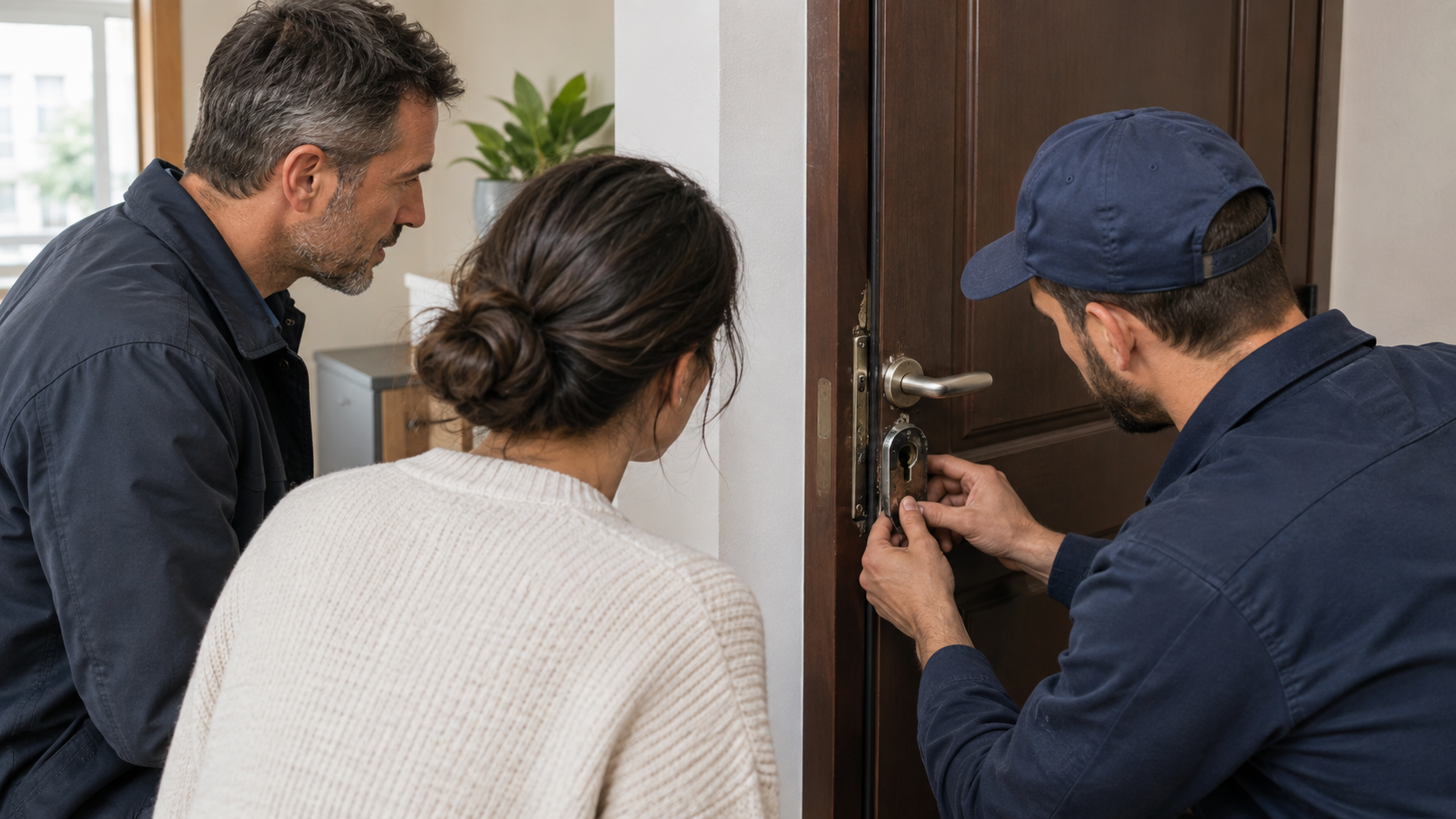
Lockout fees must be clear and reasonable
A lockout fee should be disclosed in the lease or written building policy. It should identify the event that triggers the charge, the basis for the amount, and the method of payment.
An unexplained fee added after the tenant requests entry is a poor practice. The landlord should not label every call an emergency charge without explaining the service provided and why the charge applies.
The fee also should not replace the landlord’s repair duty. A tenant may be responsible for a lost key while the landlord remains responsible for a failing lock cylinder. Those are separate issues.
Before paying, ask for:
Do not withhold rent to recover a disputed lockout cost without proper advice. Keep the dispute separate and put the request for review in writing.
- The reason for the charge
- The relevant lease term or written policy
- The locksmith or repair invoice
- Whether the charge is for a key, entry, repair, replacement, or after-hours service
- Whether the tenant can pay through the normal rent or building process
Spare keys should be arranged before the problem
Landlords and tenants should settle spare-key procedures at move-in. The landlord should issue the agreed keys and access devices, explain which doors each one opens, and record what must be returned at the end of the tenancy.
A spare key should be kept in a secure location controlled by an authorized person. It should not be hidden in a common hallway, taped behind a panel, or left where another resident can take it.
For access devices, the record should include:
A tenant should not copy a restricted key, bypass a building access system, or change the unit lock without checking the lease and obtaining approval. A locksmith may need proof of occupancy and authorization before cutting a key or working on a restricted cylinder.
If the original key is lost or stolen, the landlord should consider whether rekeying is needed. Rekeying changes the pins inside the lock cylinder so a new key works while the lock body remains in place. Replacing the hardware may be necessary if the lock is damaged or the building requires a different access system.
- Key or fob issued
- Authorized user
- Date issued
- Replacement process
- Deposit or charge, if allowed and disclosed
- Return requirement
- Deactivation process after move-out
Why can a landlord require an approved locksmith?
A landlord may require an approved locksmith or access-control technician when the building uses restricted keys, master-key systems, electronic locks, panic hardware, electric strikes, or a shared entry system. The reason should be protection of the building and correct repair, not a way to delay entry.
An aluminum storefront-style access point, a condo suite door, and a rental deadbolt do not fail in the same way. The technician must check the keyway, lock cylinder, latch, strike alignment, door frame, and any electrical control before selecting a part.
Forced entry can damage the door, frame, weather seal, lock, or building fire hardware. It can also create a security problem for other residents. A landlord may reasonably require professional repair where an improvised entry could damage shared hardware or leave the unit unsecured.
If the problem involves an electric strike, card reader, keypad, or building software, a general key copy will not solve it. The landlord may need an access-control technician who can repair the system and restore authorized credentials.
For a landlord-arranged residential service, see emergency residential locksmith service in Toronto. Prepare identification, the rental address, the unit number, and proof that you’re authorized to request entry.
Document the lockout and escalate a failure to respond
Both parties should document the incident while the details are clear. A short record is more useful than a later argument about what someone remembers.
Keep:
Start with written notice to the landlord or property manager. State that access was denied or unavailable, explain what response was requested, and ask for the next step and cost decision.
If the landlord, superintendent, or agent interfered with the tenant’s rights, a tenant or former tenant may file an Application About Tenant Rights, called a T2, with the Landlord and Tenant Board. Substantial interference with reasonable enjoyment is one example of the type of issue that may be raised.
After an illegal lockout, a tenant can apply to the Landlord and Tenant Board to ask to move back into the unit. Municipal housing guidance, legal clinics, and the Board’s own process can help identify the correct application. A locksmith can restore access or secure a damaged door, but a locksmith does not decide eviction rights.
- Call logs and voicemail records
- Text messages and emails
- The time the lockout began
- Photos of the key, lock, door, frame, or damage
- Locksmith or repair receipts
- Names of staff or contractors contacted
- Entry time and method
- Any injury, safety issue, or missed essential service
- The lease clause or written policy relied on by either side
Preventing another Brampton lockout
A landlord should give the tenant a written access procedure at move-in and after any lock or access-system change. The tenant should save the emergency contact outside the unit, keep keys in separate secure locations, and report sticking or loose hardware before it fails.
Landlords should also track which keys and fobs were issued. If a key is lost, the landlord should decide promptly whether the cylinder must be rekeyed. If a lock drags or the strike does not line up, repair the door condition before it becomes a late-night failure.
A good process protects both sides. The tenant gets a clear route back into the home, and the landlord gets proper verification, controlled repairs, and a record of who authorized the work.
FAQ
Common questions
Quick answers about this topic in Toronto and the GTA.
Can a landlord refuse entry because the tenant forgot their key?
A landlord may verify that the caller is an authorized occupant before providing entry. However, verification should lead to a workable access decision rather than an indefinite refusal. The lease may assign a reasonable cost for a lost-key service, but it does not automatically justify denying access to the rented unit.
Can a tenant change the locks after a Brampton lockout?
Check the lease and obtain written approval before changing the lock. A replacement may interfere with a master-key system, concierge access, fire hardware, or the landlord’s entry rights. If the lock failed, ask the landlord to arrange repair or replacement and keep the failed part available for inspection.
What should a tenant do if the landlord says the tenancy has ended?
Ask for the claim and any written order in writing. A landlord’s statement alone does not give the landlord authority to force a tenant out. In Ontario, eviction enforcement follows an order from the Landlord and Tenant Board and action by the Court Enforcement Office.
Can a tenant recover a locksmith cost after the landlord failed to respond?
The answer depends on the cause, the lease, the urgency, and the steps taken before hiring the locksmith. Keep proof that the landlord was contacted, explain why access was necessary, and retain the invoice. A tenant may raise the cost and the access failure through the Landlord and Tenant Board process if the facts support it.
More reading
Related guides
More step-by-step and how-to articles on the same topic.
Commercial Lockout in Brampton: Steps to Take and Legal Info
The initial step for a Brampton commercial lockout is phone assessment to identify authorization and hardware before checks or repairs, noting legal limits.
Read article Locksmith guidesLocked Out at Night? Safe Steps Before Calling a Locksmith
Stay safe during a nighttime lockout with practical steps for checking authorized entry, spotting emergencies, and calling a qualified locksmith.
Read article Locksmith guidesWhen Emergency Lock Drilling Is Truly Justified
Emergency lock drilling is usually a last resort. This guide explains safer entry options, warning signs, and when urgent access may justify permanent damage.
Read articleReady for upfront pricing?
Describe your door or vehicle for a quoted range before a technician is dispatched.