
Locked Out of Your Toronto Home? Safe Next Steps
A house lockout in Toronto needs a calm check first, then the safest lawful entry method available. Stop forcing the door, check every authorized entrance, contact anyone with a spare key, and call a 24-hour emergency locksmith when no legitimate route works. Toronto lockout services advertise arrival windows from 15 to 30 minutes, but traffic, parking, and building access can change that.
Real dispatcher answersOpen every day, 7 AM to 10:30 PM
In this guide
House lockouts and same-day rekeys
What should you do during a house lockout in Toronto?
Start with the access points you’re allowed to use. Check the front door, side door, back door, garage entry, basement entrance, and any patio door. A detached home may have several doors, but don’t climb fences, force windows, or enter through a neighbour’s property.
Use this order:
Do not pry the door, slip a card into the latch, drill the cylinder, or push another key into the keyway. Those actions can bend the latch, damage the frame, or push a broken key deeper.
Tell the locksmith what happened before they arrive. Give the property type, door location, lock type if known, and whether the key is lost, broken, or inside. Mention children, seniors, pets, medical needs, or an active security concern.
For a house lockout in Toronto, a clear description saves time. A photo of the lock face can help, but it does not replace proof that you’re authorized to enter.
Some Toronto house lockout services advertise response within 20 minutes of receiving a call. Treat that as a service estimate, not a promise. Traffic, weather, parking, and access restrictions can delay arrival.
1. Check every authorized exterior entrance.
2. Call anyone inside, including family, roommates, or a tenant.
3. Contact a landlord, superintendent, property manager, or concierge if they control access.
4. Ask an authorized neighbour or family member about a spare key.
5. Move to a safe, lit location if the weather or area is unsafe.
6. Call a reputable emergency locksmith if no lawful entry route works.
Common Toronto house lockout situations
The symptom points to the next step. A locked door with a working key is a different job from a key that turns without moving the latch.
| Situation | Likely issue | Safe next step |
|---|---|---|
| Keys are inside the house | Door closed behind you | Check another authorized entrance, then request non-destructive entry |
| Keys are lost | The lock may still work | Gain entry, then rekey or replace exposed locks |
| Keys are stolen | Someone else may have access | Treat the lock as compromised and arrange a rekey or replacement |
| Key broke in the lock | The fragment may block the pins | Stop inserting objects and request key extraction |
| Key turns but the door stays closed | Tailpiece, latch, or alignment failure | Stop forcing the key and request an inspection |
| Keys are inside a vehicle | The home may still be accessible | Check the house first, then address the vehicle separately |
| Door slammed shut | The latch may have engaged | Use a proper entry method rather than a card or pry tool |
| Electronic lock stopped working | Battery, motor, wiring, or software issue | Check the approved backup method and call for service if it fails |
Locked-in keys
If the door closed while the keys stayed inside, don’t assume the lock itself has failed. The cylinder may be fine, and the job may only require authorized entry.
A technician can assess the lock and try a non-destructive method first. The result depends on the lock type, the door gap, the latch, and whether the door is deadbolted.
Some Toronto home lockout services advertise entry without damage. That result depends on the lock and door condition, so ask what happens if the first method cannot work.
Lost or stolen keys
Lost keys create an access problem after you get inside. If you cannot account for them, rekey the exterior cylinders or replace the hardware if it is damaged or outdated.
Rekeying changes the pins inside a lock cylinder so the old key no longer works. It usually keeps the existing lock body and exterior hardware in place. Replacement makes more sense if the lock is damaged, poorly fitted, corroded, or missing a feature you now need.
Broken keys
Do not push a screwdriver or another key into the keyway. If part of the key is visible, stop before it moves deeper.
A broken key may be extracted without replacing the cylinder. If the fragment is flush, the lock is turned, or the keyway is tight, extraction tools and a trained technician are safer than fine pliers from a household drawer. You can read more about broken key extraction and door lock repair before deciding what information to give dispatch.
Keys left in a vehicle or another home
A key left inside your house does not justify forcing a window or garage door. Check whether another authorized person can provide access.
If the keys are inside a vehicle, handle the home and vehicle as separate jobs. A house lockout technician may not be able to make or program a vehicle key. Modern vehicles can require a transponder, an immobilizer match, or vehicle-specific programming equipment.
When a Toronto emergency locksmith is the right call
Call for immediate professional help when there is no lawful entry route and the situation cannot safely wait. This includes a child or vulnerable adult inside, a medical concern, an active break-in, severe weather exposure, or a damaged door that no longer secures the home.
Toronto emergency locksmith services commonly advertise 24-hour lockout service and arrival in 15 to 30 minutes. The actual response depends on the technician’s location, traffic, parking, and the property’s access rules.
You also need a locksmith when:
Tell dispatch if police, fire services, building staff, or an alarm company is already involved. A locksmith needs to know who has authority at the property and whether the hardware must be preserved as evidence.
Use the emergency locksmith service page for the service details and the information to prepare before the technician arrives.
- The key broke inside the cylinder.
- The lock turns without retracting the latch.
- The door or frame shows forced-entry damage.
- The lock is jammed and the key will not insert or turn.
- You have lost keys and cannot confirm who may have them.
- The property uses restricted, high-security, or electronic hardware.
- A rental, condo, or apartment building requires an authorized service provider.
- No occupant, landlord, superintendent, or property manager can provide access.
Home lockout service for houses, apartments, and condos
The property type changes the access rules and the hardware involved. It also changes who can approve the work.
Detached houses
A detached house may have several independent locks. The front door, side entrance, basement door, garage entry, and shed may not use matching cylinders.
Tell the technician which entrance is affected and whether the door is wood, steel, aluminum, or part of a newer security system. If you need more than entry, identify every exterior door that may need rekeying.
Rental houses and basement apartments
Renters should confirm the lease and landlord rules before changing hardware. A tenant may be allowed to arrange emergency entry but still need approval for a rekey, replacement, or change to a shared entrance.
Ontario’s Residential Tenancies Act sets out rules for rental housing, but the lease and building arrangements still matter. Have your identification, address, lease details, and landlord or property manager contact information ready.
Basement apartments can have separate entrances and separate locks. Do not assume the owner’s front-door key operates your unit, or that a locksmith can change shared hardware without approval.
Apartment buildings
A high-rise or walk-up apartment may require superintendent access, a building key, or a service sign-in. The technician may also need elevator access or permission to work on a shared entry.
Contact the superintendent or property manager before dispatch if possible. If the suite door is the only problem, say so. If the building entrance, intercom, or access reader also failed, report that separately.
Condos
Condo lockouts often involve concierge desks, restricted hardware, fire-rated doors, and board or property-manager rules. A technician may be able to open the suite door but still need approval before replacing the lock.
Prepare:
A photograph of the lock helps identify the hardware. It does not prove authorization. Bring the documents that show you have the right to enter.
- Government identification.
- Suite number and building name.
- Proof of ownership or tenancy.
- Concierge or property-manager contact details.
- Parking, loading, and elevator instructions.
- Information about any access-control system.
Non-destructive lock opening and safe entry methods
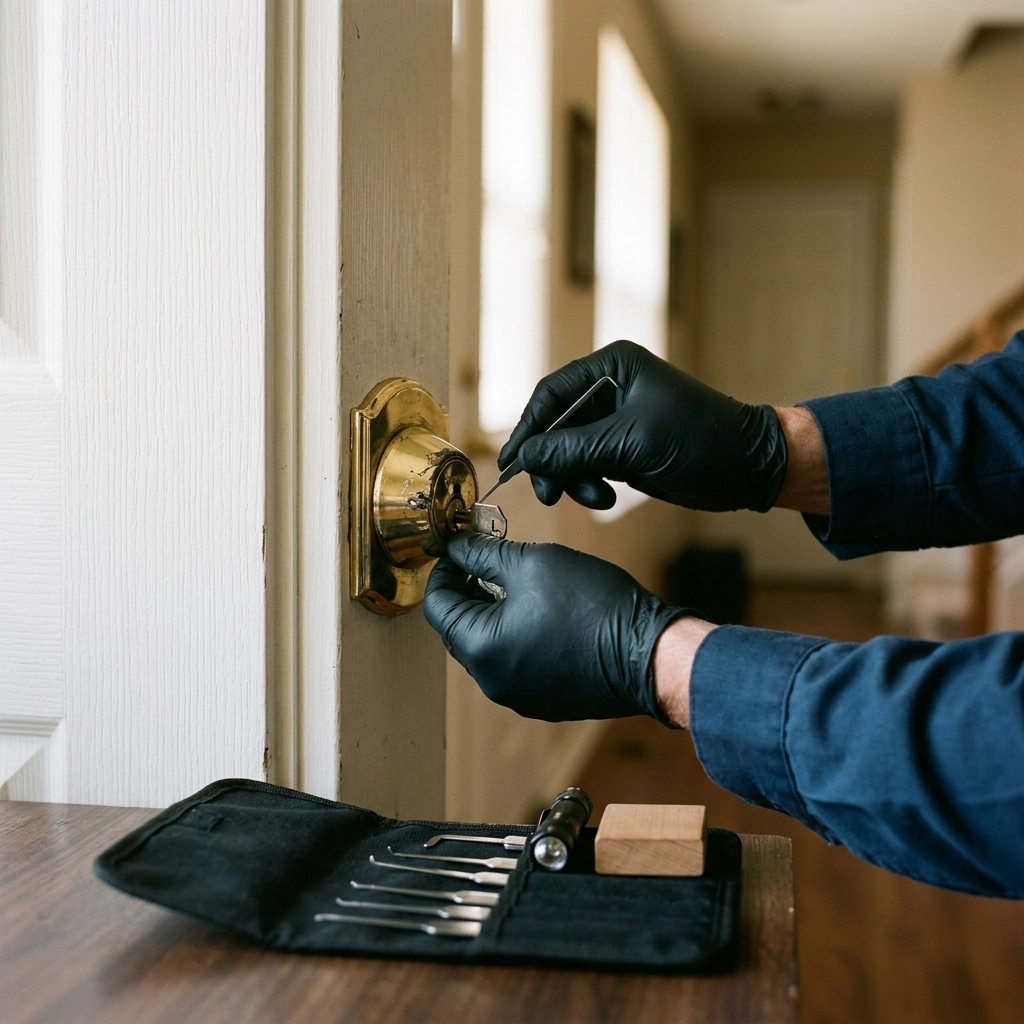
A qualified locksmith should assess the door, keyway, cylinder, latch, strike, frame, and access conditions before choosing a method. Non-destructive entry means opening the door while preserving the lock and surrounding hardware where the failure allows it.
The method depends on the failure:
Drilling is not the normal first step. It becomes necessary when the cylinder has failed, the lock is damaged, the key cannot operate the mechanism, or a non-destructive method would cause greater damage. The technician should explain the reason, the replacement part, and the price before drilling begins.
If you want more detail on this decision, read when lock drilling is justified. Do not approve drilling simply because it sounds faster. A destroyed cylinder can turn a simple entry into entry plus repair.
- A closed door with a sound latch may allow a careful entry technique.
- A deadbolted door may need a different approach.
- A broken key may require extraction before the cylinder can operate.
- A failed electronic lock may require its approved backup method.
- A damaged cylinder may need removal or replacement.
- A shifted frame may need pressure relief before the latch moves.
Jammed, damaged, or compromised door locks
A lockout is not always an access problem. Sometimes the lock has already failed.
Look for these signs:
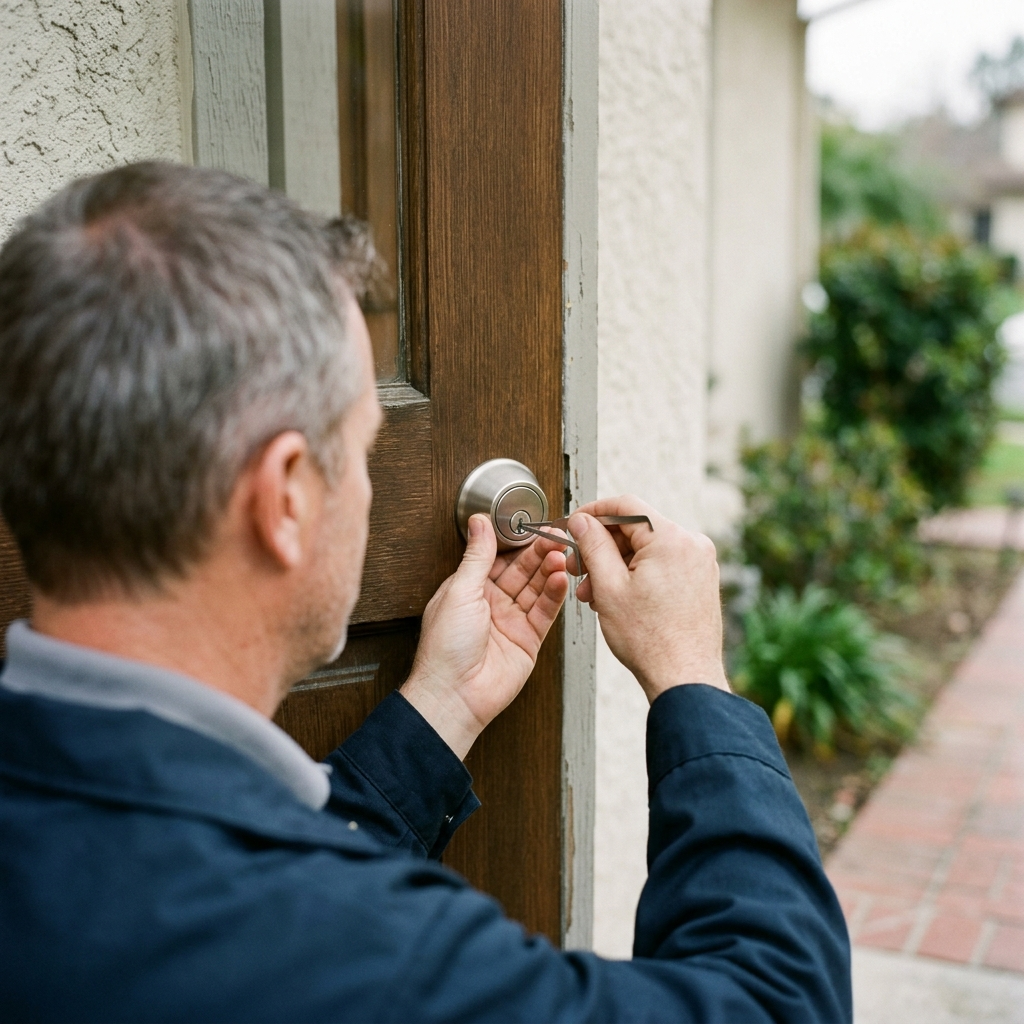
A key that turns without retracting the latch may have a broken tailpiece, disconnected latch, or damaged lock body. A door that only opens when pushed may have strike alignment trouble or frame movement.
Repair the lock if the cylinder is worn but the latch, screws, door, and strike remain sound. Replace more than the cylinder if the latch drags, the housing is bent, the strike is loose, or the door has shifted in its frame.
Repeated entry attempts can make a failed lock worse. If the failure is inside the lock body, another copy of the same key will not solve it.
- The key will not enter fully.
- The key enters but will not turn.
- The key turns freely without moving the latch.
- The knob or lever spins without resistance.
- The door opens only when you lift, push, or pull it.
- The strike plate is loose or bent.
- The frame is split near the latch.
- The cylinder moves inside the housing.
- The lock was damaged during a break-in.
How fast Toronto locksmith response can be
Arrival time depends on the technician’s location, traffic, weather, time of day, emergency priority, parking, and building access. A detached house with clear curb access is different from a condo with a concierge desk and restricted parking.
Give dispatch the full address, nearest cross street, entrance location, and parking instructions. Mention if the door is in a rear lane, parkade, basement, or gated area.
Response estimates are estimates. Published Toronto emergency services advertise arrival in 15 to 30 minutes, while other house lockout services advertise response within 20 minutes of the call. Traffic can delay a technician, and a job already in progress may take longer than expected.
If someone vulnerable is inside or the property is unsafe, say that at the start so the urgency is understood. A faster arrival does not make unsafe entry acceptable.
The technician still needs to confirm authorization and assess the lock before using a method that could damage the door.
What a Toronto house lockout costs
Ask for the pricing structure before work starts. A clear estimate should separate the service call, after-hours charge if applicable, entry work, extraction, repair, replacement parts, and taxes.
The final cost can change if the lock is damaged or the door needs more than simple entry. A high-security cylinder, restricted key system, electronic lock, or vehicle-related programming may require different equipment and parts.
Confirm these points:
Be careful with a quote that is far below every other estimate. It may cover only the trip to the door, with the real charges added after damage or specialized hardware is discovered.
The technician should explain the repair-versus-replacement choice before doing extra work. You’re allowed to decline a replacement and arrange temporary security, unless the door cannot safely remain closed.
- Is there a service-call fee?
- Does the fee change outside regular hours?
- Is the quoted amount for entry only?
- What happens if the lock must be drilled?
- Is the replacement cylinder included?
- Are repair parts priced separately?
- Are taxes included?
- Is payment by card or another method accepted?
- Will you receive an itemized receipt?
How to choose a legitimate Toronto locksmith
A legitimate locksmith should identify the business, confirm the address, explain what information is needed, and provide a clear price range before dispatch. The technician should also be prepared to verify that you’re authorized to enter.
Check the following:
Do not hand over proof of ownership to an unknown person without checking their identity. If the technician arrives in an unmarked vehicle, ask for identification and business details before allowing work to begin.
A reputable technician will not promise that every lock opens without damage. They will explain the failure mode, the least damaging workable method, and what happens if the first method cannot succeed.
- Business name and contact details.
- Technician identification.
- Proof of ownership, tenancy, or authorization.
- Written estimate or clear price range.
- Service-call and after-hours charges.
- Payment terms and receipt.
- Insurance information if damage occurs.
- Explanation of non-destructive entry first.
- Approval before drilling or replacing hardware.
- Clear limits for condo, rental, and electronic systems.
After entry: secure the home and prevent another lockout
Once you’re inside, find out why the lockout happened. The fix may be a spare-key plan, a rekey, a new cylinder, a repaired latch, or a corrected strike alignment.
Rekey the lock if keys were lost, stolen, or given to someone who should no longer have access. Replace the hardware if it is damaged, badly fitted, corroded, or too weak for the door and frame.
Make spare keys in a controlled way. Give them only to people who need access, and record who has them. Avoid hiding a key in an obvious outdoor location where anyone can find it.
For condos and rentals, update the concierge, landlord, superintendent, or property manager after the work. Keep the receipt and record which doors were changed.
If the lockout involved a break-in, photograph the door, frame, strike, and lock before removing damaged parts. Contact police and your insurer as needed, and keep the broken hardware until you know it is no longer required.
The right repair addresses the failure that caused the lockout. A new key will not fix a bent latch, and a new cylinder will not correct a door that has shifted in its frame.
Residential emergencies we see most in the GTA
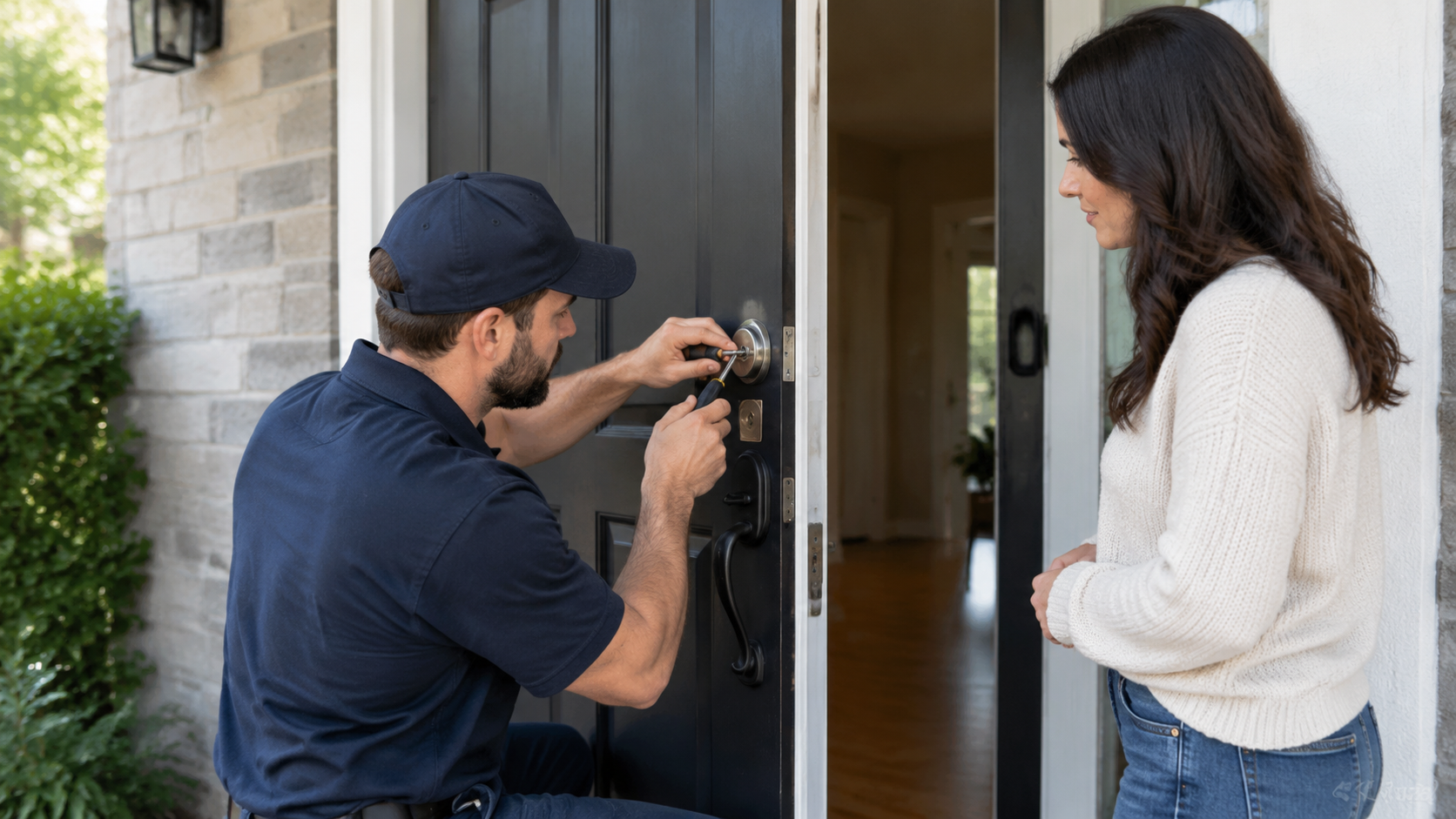
Slammed doors, lost purses with only one house key, post-break-in rekeys, and move-in days where no one knows how many copies exist.
Basement apartments and laneway homes in Toronto often have separate cylinders. mention every entrance that needs matching.
Same-day service is common during open hours; overnight needs another provider because we are 7 AM to 10:30 PM daily.
Matching keys across doors without overspending
Key-alike front, side, and garage service doors when hardware brands align saves carrying three brass keys.
If one door uses a different brand, we explain what can merge and what must stay separate.
Upgrades come after the door closes and latches cleanly. not before.
FAQ
Common questions
Quick answers about this topic in Toronto and the GTA.
Can a locksmith open my house if I cannot find my keys?
Yes, if you can show that you’re authorized to enter. Bring identification and proof of ownership, tenancy, or permission. The technician should verify the property before choosing an entry method, because a missing key does not by itself show that the lock has failed.
Should I call the police for a house lockout?
Call emergency services if someone faces immediate danger, a break-in is in progress, or the situation involves a medical emergency. For a normal lockout with no immediate threat, contact an authorized building representative or locksmith and keep the door and frame intact.
Can a locksmith make a new key from the lock?
Often, a locksmith can identify the lock and cut a replacement key. The result depends on the lock type, its condition, and whether the key system is restricted. If the cylinder is damaged, making another key may leave the actual failure untouched.
What information should I send before the locksmith arrives?
Send the property address, door location, lock type if known, reason for the lockout, and any access limits. Also provide condo, rental, concierge, parking, or landlord details that could delay entry. Those details help dispatch determine what equipment and authorization checks the job may require.
Can a smart lock prevent another home lockout?
A smart lock can provide approved entry methods, but it can still fail through a dead battery, poor installation, network trouble, or a damaged door. Confirm battery access and keep the manual backup method available. Fix door alignment before adding electronic hardware.
Do you help with mailbox or garage keys?
Yes on many setups where hardware is accessible and standard.
Should I change locks after a break-in?
Rekey or replace exposed cylinders and upgrade strikes or frames if those failed. We inspect on site before recommending.
More reading
Related guides
More step-by-step and how-to articles on the same topic.
Broken Key & Lock Repair
A key that snapped in the lock or a knob that spins freely is common, and rarely a DIY win if the piece sits flush inside. What usually broke, and what a mobile locksmith does on site.
Read article Home securityHow GTA Homes Avoid Smart Lock Installation Problems
A proper GTA smart lock installation starts with door fit, condo rules, battery planning, and backup access. Use this guide to avoid lockouts.
Read article Locksmith guidesHome Break-In: A Safe Order for Next Steps
Safety comes first after a break-in: this guide covers 911 calls, police reports, evidence, insurance claims, and temporary repairs in the right order.
Read articleOn-site help
Related locksmith services
If you need a technician on site, these service pages match this guide.
Guides explain the situation; a service visit fixes it. For residential locksmith in Toronto and the GTA, use the call button for a price range and ETA, confirmed on site before work starts.
Residential Locksmith
House lockouts, lock changes, rekeying, and home security upgrades.
See details
Emergency Locksmith
Locked out or dealing with a broken lock? We come to you fast across the GTA.
See details
Security Solutions
Smart locks, high-security cylinders, and access control for homes and businesses.
See detailsReady for upfront pricing?
Describe your door or vehicle for a quoted range before a technician is dispatched.