
Locked Out at Night? Safe Steps Before Calling a Locksmith
A nighttime lockout calls for caution first. Move to a well-lit place, check for authorized access, and contact someone you trust or a qualified locksmith. Do not force the door or copy an online bypass trick. Call emergency services if a child, vulnerable person, pet in danger, fire, gas concern, or medical threat is inside.
Real dispatcher answersOpen every day, 7 AM to 10:30 PM
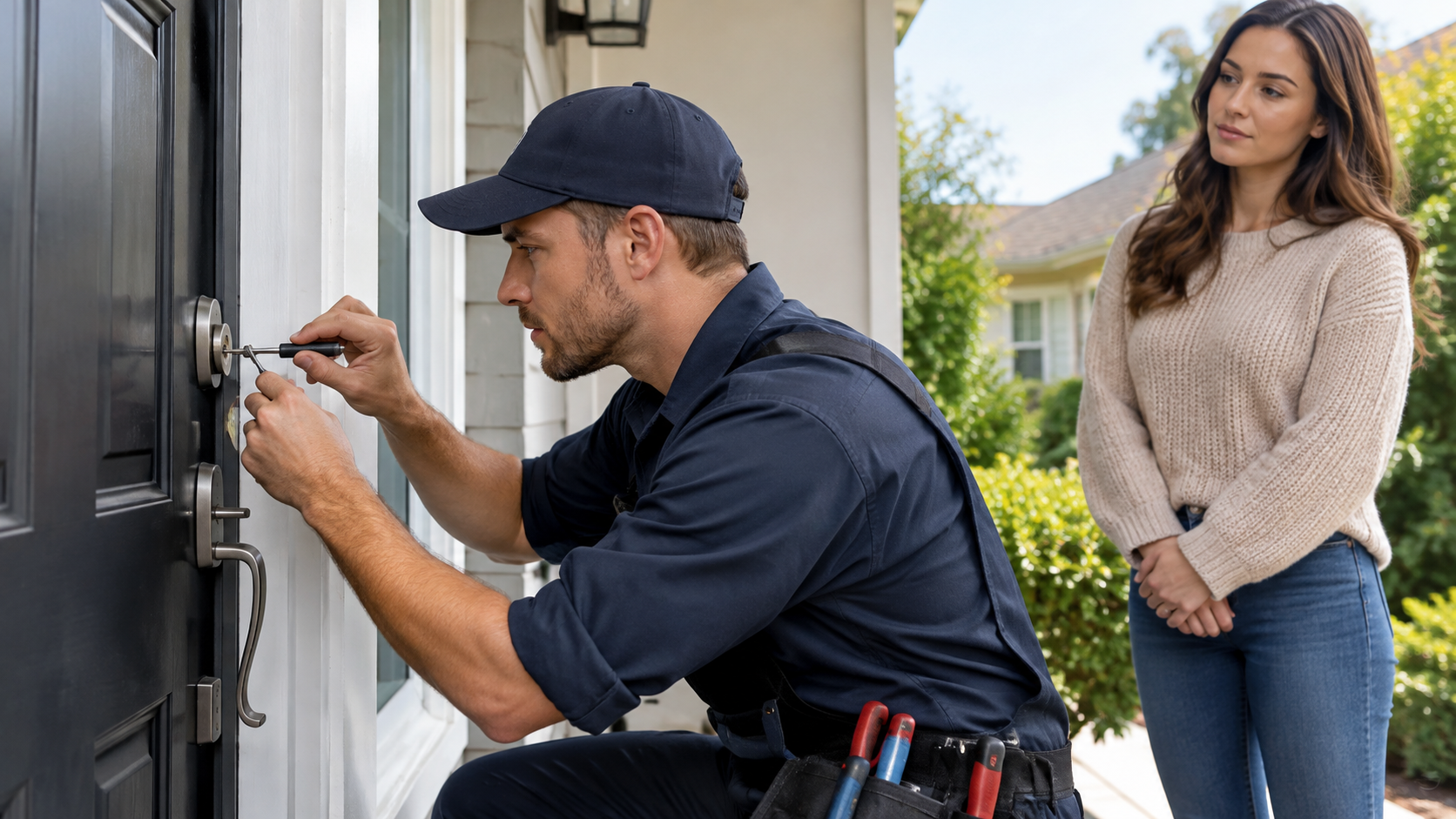
What should you do if locked out at night?
Leave dark parking areas, alleys, rear entrances, and exposed porches. Wait near lighting, open businesses, a staffed lobby, or other people. If possible, ask someone you trust to stay with you or remain on the phone.
Avoid making rushed decisions and assess the situation. A late-night lockout is frustrating, but a damaged door or injured hand makes it worse.
Keep your phone available for calls. Share your location with a trusted contact, especially if you’re outside a home, condo, office, or vehicle alone.
Confirm what actually failed
Before arranging service, identify the failure mode, which means the part or condition causing the lockout. A missing key, broken key, jammed cylinder, shifted door, dead smart-lock battery, and disabled access card require different work.
Check the symptom before anyone arrives. Do not force the key or assume every closed door has the same problem.
Also check whether the door is simply under pressure. Pull or push it lightly while operating the key once. If the key bends, sticks, or feels ready to break, stop.
| Symptom | Likely problem | Safe next step |
|---|---|---|
| Key is missing | Lost, stolen, or left elsewhere | Check for an authorized spare and consider rekeying |
| Key is visible inside | Ordinary lockout | Contact an authorized person or locksmith |
| Key broke in the lock | Fragment lodged in the keyway | Stop inserting objects and arrange extraction |
| Key enters but will not turn | Wrong key, worn key, or tight cylinder | Try no more force and report the symptom |
| Key turns but the door stays shut | Failed latch, tailpiece, or strike alignment | Lightly relieve door pressure once, then stop |
| Door opens by app or keypad only | Battery, network, account, or access-control fault | Use the approved backup method or administrator |
| Vehicle remote does nothing | Remote battery, vehicle battery, or programming issue | Use roadside, locksmith, or dealer support |
Contact the person who controls access
For a rental, call the landlord, superintendent, or property manager. They may have a key, but they may also require identification or charge for an after-hours visit. Check your lease once you’re somewhere safe.
For a condo, the concierge may control elevator access, technician sign-in, or entry to a parkade. However, building staff may be barred from opening individual suites. Ask what they can authorize before arranging a locksmith.
For an office or storefront, contact the owner, manager, security desk, or access-control administrator. A card reader may be rejecting your credential while the mechanical lock works correctly. Our guide to a Toronto office lockout explains the checks that matter for commercial doors.
For a short-term rental, use the host or platform’s approved contact method. Avoid paying an unknown person who claims to manage the property but cannot verify that role.
Is anyone inside in immediate danger?
Call emergency services if someone inside faces an urgent threat. That includes a child alone or a vulnerable adult who cannot respond. It also includes a medical emergency, visible fire, smoke, a gas concern, or a pet in immediate danger.
Give the dispatcher the exact address, unit details, and nature of the threat. Follow the dispatcher’s instructions rather than breaking glass or forcing the door yourself. The Canadian Radio-television and Telecommunications Commission’s 9-1-1 guidance explains how emergency calling works in Canada.
A routine lockout is not an emergency-services job. If everyone is safe and there is no immediate hazard, use the building, roadside, or locksmith channel instead.
Use a qualified locksmith when ordinary access fails
For a middle-of-the-night lockout, call a 24-hour locksmith once authorized options are exhausted. A locksmith is also the right call when the key breaks or the lock cylinder jams. The same applies when the latch disconnects or proper entry tools are required.
Before dispatch, give the locksmith the details that affect access and the work required:
Ask for the business name, technician identification, and licence details where required. Also ask for an explanation of the expected work. Confirm the service-call fee, labour, after-hours charges, parts, tax, and what could change the estimate.
A low phone quote means little if nobody will state what it covers.
A legitimate technician will also verify your right to enter. Have photo identification, a lease, ownership record, vehicle registration, or an authorized contact ready. If your identification is inside, explain that before dispatch so another verification method can be arranged.
A skilled technician should attempt non-destructive entry where the lock and access conditions allow it. This means opening the door without drilling or damaging the hardware. However, a failed lock body, damaged cylinder, restricted key system, or high-security setup may require drilling or replacement.
Ask why destructive entry is needed before approving it.
For local help, see the process for an emergency locksmith in Toronto and the GTA.
- The exact location and unit or vehicle details
- The type of property and door
- Whether the key is lost, broken, or locked inside
- What the key or lock does when operated
- Any condo, parkade, security, or elevator restrictions
- Proof of ownership, occupancy, or authorization
- A safe callback number
Do not force the door or bypass the lock yourself
Do not kick the door, pry the frame, drill the cylinder, or push improvised tools into the keyway. These attempts can bend the latch, split the frame, damage the door prep, or drive a broken key deeper. Door prep means the holes and cutouts that hold the lock hardware.
Avoid breaking a window. Glass injuries and weather damage can cost far more than controlled entry. You may also create a security problem that remains after you get inside.
Online bypass methods often omit the hardware type, legal boundary, and damage risk. A method shown on one loose residential latch may fail on a deadbolt, panic bar, multipoint lock, or live electric strike. A panic bar releases a commercial door when pushed, while an electric strike releases the latch through an access system.
Climbing is another bad trade. A balcony or upper window can look reachable from below and leave you stranded halfway up. Move back to a visible waiting area instead.
Special lockouts need the correct channel
Some doors and vehicles require more than mechanical entry. The proper contact depends on who controls the credential, programming system, or building hardware.
Smart locks and electronic access
Check the approved backup method in the product instructions. That may involve a manual key, external power contact, building administrator, or account recovery process. Do not remove exterior hardware while you’re locked out.
A dead keypad does not always mean a dead lock. The batteries may have failed, the app account may be unavailable, or the door may be pressing against the bolt. Once inside, check battery condition and strike alignment before replacing the device.
Strike alignment describes how the latch or bolt meets the metal plate on the frame. If those parts no longer line up, a working lock can still bind.
Rental and condo doors
The lock may belong to the building, even if it serves only your unit. Exterior hardware changes can require landlord, condo board, or property manager approval. A locksmith may gain entry but still be unable to install a different lock without authorization.
Concierge access also affects timing. Confirm technician parking, elevator use, building sign-in, and whether security must escort the work.
Vehicle lockouts
Start with a spare key, roadside assistance, or the vehicle’s approved mobile-access method. If every key is lost, prepare the vehicle identification number, year, make, model, trim, plate if available, and proof of ownership.
Modern vehicles may use a transponder, which is an electronic chip paired with the immobilizer. The immobilizer blocks the engine from starting unless it recognizes the key. Entry alone does not produce a working start key.
Some systems need on-site programming, dealer-level equipment, or towing.
Use the separate checklist for a Toronto car lockout before arranging vehicle entry.
Offices and controlled buildings
Card readers, electric strikes, magnetic locks, panic bars, and mechanical cylinders fail in different places. A magnetic lock holds the door closed with an electromagnet. Report how the door normally releases and what happened when you tried it.
Security staff may need to confirm your access level before anyone opens the door. A locksmith cannot override an employer’s authorization rules simply because you have identification.
Stay safe while waiting for help
Wait in a visible place where the technician can find you without drawing you into an isolated area. If conditions are unsafe, move to a staffed business, lobby, fuel station, transit area, or trusted neighbour’s home.
Keep your phone charged and turn down unnecessary screen use. Share the technician’s expected arrival information with someone you trust. However, do not post your address and lockout publicly.
When help arrives, verify the business name and technician identity before approaching the vehicle or granting access. Do not hand over identification or payment details to someone who cannot explain which call they are attending.
If the person pressures you to approve drilling before checking the door, lock cylinder, latch, and authorization, pause the job. A late hour does not remove your right to a clear explanation.
Check the lock after entry
Regaining access solves the immediate problem. It does not repair a worn key, dragging latch, loose strike, failed battery, or damaged lock body.
After entry, check the parts that can leave you outside again:
Rekey the lock if an unaccounted-for key could be used to enter and the hardware remains sound. Rekeying changes the pins inside the lock cylinder so the old key stops working. Replace the hardware if it is broken, badly worn, poorly fitted, or missing a feature you now require.
Document any damage before removing parts. If the lockout followed theft or forced entry, use the safer order of steps in our home break-in guide.
- Whether the key still operates smoothly
- Whether the latch retracts without dragging
- Whether the deadbolt enters the strike cleanly
- Whether the door has shifted in the frame
- Whether any key fragment remains in the cylinder
- Whether the lock or frame was damaged during an attempted entry
- Whether a lost key can still identify the property
Prevent the next nighttime lockout
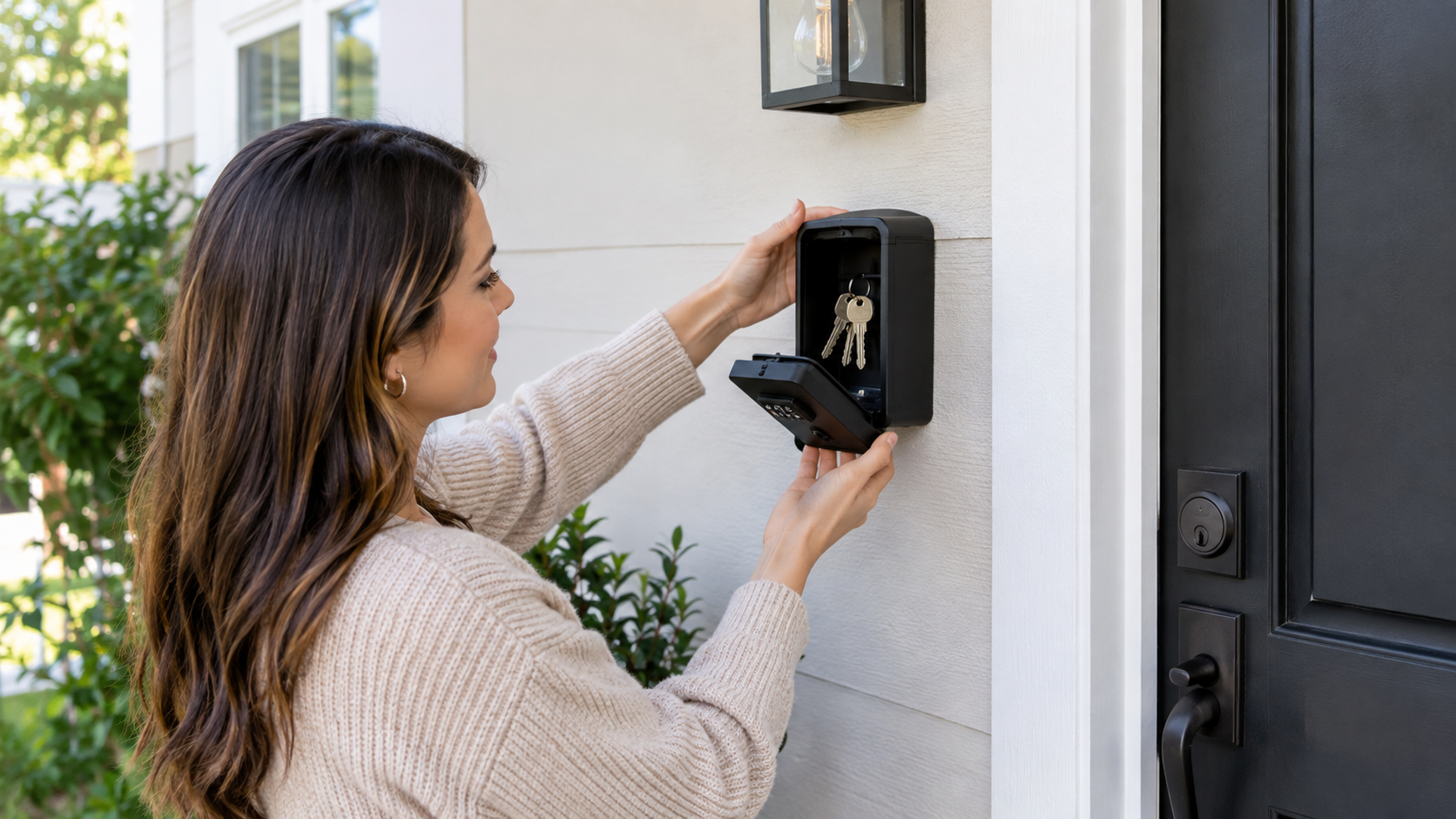
Keep a spare with a trusted person or in an approved secure key container. Do not place it under a mat, inside a planter, or above the door frame. Those locations are familiar to anyone checking for an easy entry point.
For electronic locks, replace batteries before they become unreliable and confirm the manual override still works. Also keep recovery details current for apps, building credentials, and vehicle accounts.
Store the contacts that can authorize entry before you need them:
Finally, deal with warning signs before the lock fails. A key that sticks, a bolt that needs shoulder pressure, or a card reader that works only after repeated attempts is already giving you the diagnosis.
- Household members
- Your landlord or property manager
- Condo concierge or building security
- Roadside assistance
- An authorized workplace contact
- A qualified emergency locksmith
FAQ
Common questions
Quick answers about this topic in Toronto and the GTA.
What should you do if your identification is locked inside?
Say so before the landlord, building staff, or locksmith attends. Hiding that detail only delays the authorization check at the door. They may accept a lease, digital ownership record, matching vehicle registration, confirmation from an authorized person, or identification retrieved after controlled entry. The accepted method depends on the property and its access rules.
What should you do if a locksmith says the lock must be drilled?
Do not approve drilling until the technician identifies the failed part and explains why non-destructive entry will not work. Also confirm whether the cylinder alone can be replaced or whether the latch, lock body, or door hardware is damaged. You need a clear repair-versus-replacement plan before the drill touches the lock.
Can a landlord refuse to let you into a rental at night?
A landlord’s after-hours duties depend on the lease, building policy, and applicable rental rules. They may require proof that you occupy the unit or direct you to an approved locksmith. Keep the invoice and report any hardware failure in writing, because a lockout caused by failed building hardware needs a record.
Should you rekey after losing your house key?
Rekey if the missing key could be linked to your home or may have been stolen. The existing hardware must still be sound and properly fitted. If the lock is damaged, corroded, loose, or poorly fitted, replacement is the better decision. Confirm approval first in a rental or condo.
More reading
Related guides
More step-by-step and how-to articles on the same topic.
When Emergency Lock Drilling Is Truly Justified
Emergency lock drilling is usually a last resort. This guide explains safer entry options, warning signs, and when urgent access may justify permanent damage.
Read article CommercialOffice Lockout in Toronto: Safe Steps to Call a Locksmith
Protecting the door, people nearby, and business records during an office lockout in Toronto begins with authorization checks before calling a locksmith.
Read article AutomotiveWhat to Do First When Locked Out of a Toronto Car
A coat hanger can wreck wiring, airbags, and seals, so check reachable doors only, then call a Toronto mobile locksmith or 911 if a person is trapped.
Read articleReady for upfront pricing?
Describe your door or vehicle for a quoted range before a technician is dispatched.