
Home Break-In: A Safe Order for Next Steps
Start with safety, not cleanup. What to do after a home break-in is straightforward: leave if the intruder may still be inside, dial 911 immediately, avoid touching damaged areas, report the crime, document the loss, and secure the home after police and your insurer allow it. Do not confront anyone or force your way through a damaged door.
Real dispatcher answersOpen every day, 7 AM to 10:30 PM
What should you do immediately after a home break-in?
Use this order:
The first decision is about danger. The second is about evidence. The third is about keeping the home closed and safe without making unnecessary changes.
If you see a person leaving, do not follow them. Record only what you can safely observe, such as clothing, direction of travel, vehicle details, or visible damage. Tell the responding officers rather than trying to investigate the property yourself.
1. Leave the home if you’re inside and the scene may still be active.
2. Dial 911 immediately if there is an immediate threat, injury, suspected intruder, fire, or other emergency.
3. Move to a safe nearby location.
4. Do not touch doors, windows, drawers, tools, footprints, or broken items.
5. Wait for police instructions before entering again.
6. Contact your insurer or insurance professional promptly.
7. Arrange temporary security after evidence has been documented.
Call emergency services when the situation is active
Dial 911 immediately when you believe someone may still be inside or anyone is hurt. The same applies if you hear movement, see a weapon, smell gas, or find another urgent hazard.
For a non-emergency crime, search online for the local law enforcement agency’s contact information where the crime occurred to file a police report. Local law enforcement agencies may use an online system or dedicated phone line to report a non-emergency crime. Contact your local police department for more information if you’re unsure which reporting route applies.
For general emergency guidance, the Government of Canada’s 911 information explains when emergency assistance is appropriate.
What should you tell the police?
Give the responding officers a clear account of what you know. Avoid guessing about the time, entry point, or missing property. A clean statement is more useful than a confident theory.
Prepare these details if you can do so safely:
Tell officers about possible evidence before they walk through the home. Mention wet footprints, open drawers, dropped items, damaged locks, broken glass, and camera equipment. Do not move those items to make the scene easier to inspect.
Ask how to obtain the official police report and whether you’ll receive a report number. Your insurer, landlord, property manager, or bank may request it later. Keep the report number with your claim documents.
For Toronto residents, the Toronto Police Service provides official reporting and service information. Other municipalities use their own local law enforcement agency, so confirm the correct agency for the address where the break-in happened.
- When you last saw the home secure
- Who discovered the damage
- Which doors or windows appear disturbed
- Whether anyone may have had a key or access code
- Whether cameras, alarms, or smart locks recorded activity
- Whether weapons, medication, identity documents, or vehicle keys are missing
- Names of people who may have entered before police arrived
- Any unusual vehicle, person, sound, or message connected to the incident
Protect the evidence before you clean up
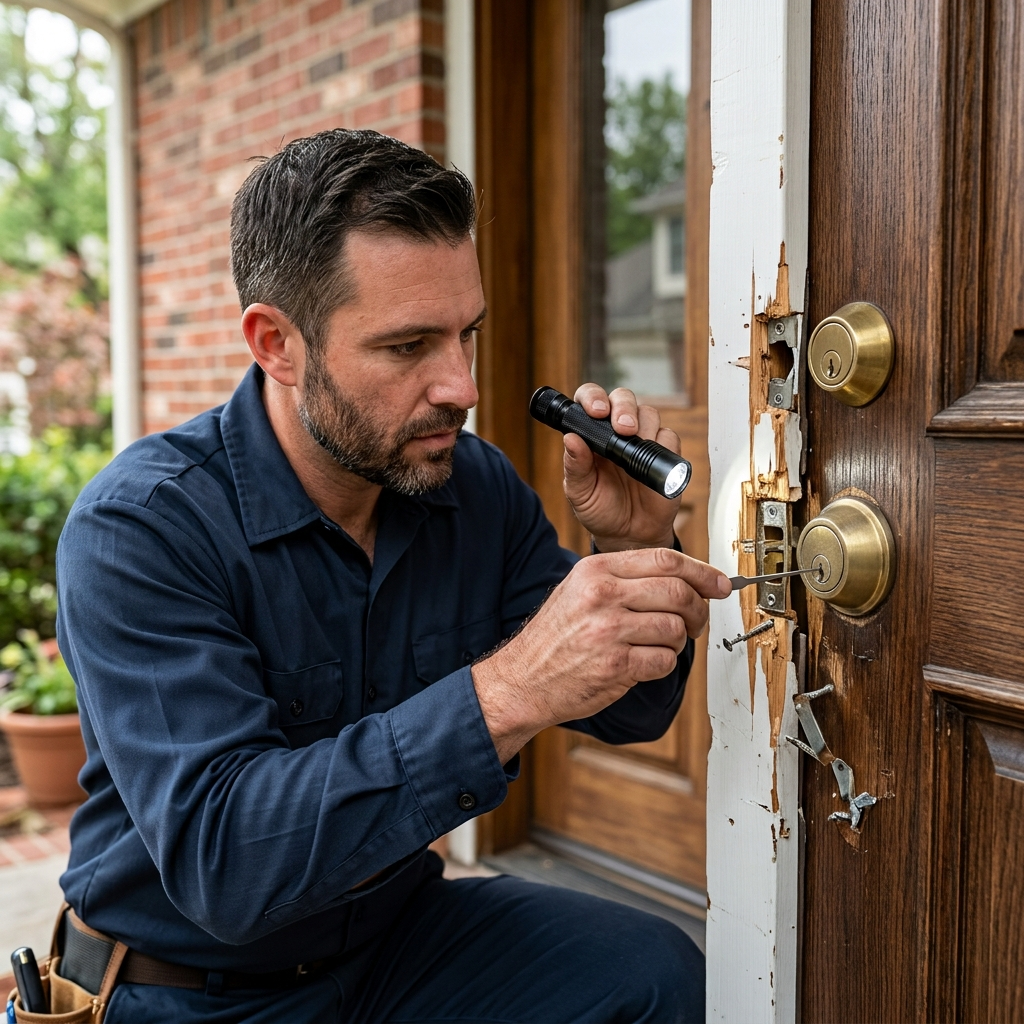
The damaged lock may show how entry occurred. So may a bent strike plate, pry marks, broken glass, or a disturbed window frame. Replacing the first damaged part before inspection can remove useful evidence and make the original failure harder to understand.
Do not:
Take photographs from a safe distance if police tell you to document the scene. Capture the whole door, frame, lock, strike, window, and surrounding area. Then take closer photographs of damage, but do not place objects beside marks for scale or touch the hardware first.
Save original camera files when possible. Screen recordings and cropped images can lose the time, file details, or surrounding activity that an investigator may need. Keep copies in a separate location.
- Sweep up glass
- Wipe fingerprints from handles
- Throw away a broken key
- Repair a door before police or the insurer gives direction
- Reset an alarm panel without saving its event history
- Delete camera footage
- Move tools or objects left near the entry point
- Test a damaged lock repeatedly
How do you report the break-in and start an insurance claim?
Report the incident to the appropriate local law enforcement agency, then contact your insurance professional promptly. Your policy may set deadlines for notice, documents, temporary repairs, and inspection. Read the policy or ask the insurer for those deadlines before assuming you have time.
Ask the insurer:
A deductible affects whether a small repair belongs in the claim. A claim also creates a record, so discuss the damage with your insurance professional before deciding to pay for minor work yourself. The right choice depends on the policy, the total loss, and the effect of leaving the property unsecured.
Do not exaggerate missing property. If you’re unsure whether something is gone, mark it as unconfirmed and check again later. False certainty creates problems when the insurer compares your list with receipts, photographs, police notes, or other records.
The Insurance Bureau of Canada offers general home insurance information. Your policy and insurer control the actual claim decision.
- What coverage applies to the building and contents
- What deductible applies
- Which temporary repairs are reasonable
- Whether an adjuster must inspect the damage first
- Which damaged items must be kept
- How to submit photographs, receipts, and the police report
- Whether additional living expenses are covered if the home cannot be occupied
- Whether damaged locks, doors, windows, alarms, or cameras need approved vendors
Make temporary repairs without destroying the scene
Once police and the insurer allow repairs, close the entry point first. A temporary board, secured window, or temporary lock may be enough until the correct hardware arrives. Keep receipts and photograph the condition before work starts.
A temporary repair should prevent another entry while preserving as much of the original hardware as possible. Do not drill through a damaged lock simply because it is the fastest way to get the door closed. That can destroy the cylinder, damage the door prep, and remove information about the failure.
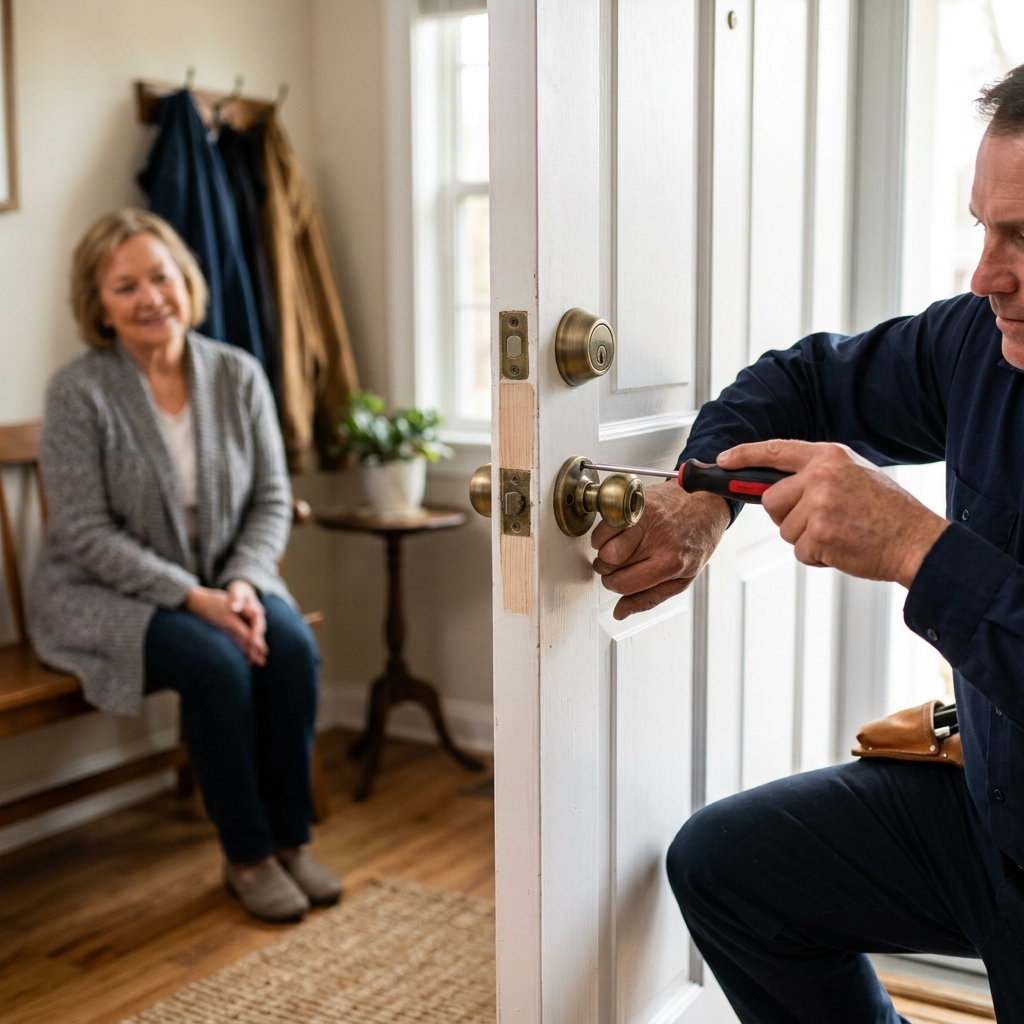
A locksmith checks the door, frame, lock cylinder, latch, hinges, and strike alignment before recommending a repair. The strike is the metal plate that receives the latch or deadbolt. If it is loose or shifted, replacing the cylinder alone can leave the door vulnerable or difficult to close.
The correct repair may involve:
Read more about emergency residential locksmith service in Toronto if the home needs immediate securing after police release the scene.
- Rekeying an intact lock so old keys no longer operate it
- Replacing a damaged lock cylinder
- Replacing the latch or deadbolt
- Repairing the door frame
- Replacing a bent strike plate and its fasteners
- Adjusting strike alignment
- Replacing a damaged door or window
- Adding a compatible secondary lock
- Repairing an alarm, camera, or access device
Rekey, repair, or replace?
Rekey the lock when the hardware is sound but someone who should no longer have access may possess a key. A locksmith changes the pins inside the lock cylinder, so a new key works and the old key does not.
Replace the cylinder when it is damaged but the lock body, latch, door, and frame remain in good condition. Replace more of the hardware when the latch drags, the housing is bent, the strike is loose, or the door has shifted.
Replace the door or frame when the damage affects the structure. A stronger lock cannot correct a split frame or a door that no longer sits securely in the opening. This is where product claims often fall apart. The lock may be rated well, but it still depends on sound door prep and proper installation.
For a rental, condo, or managed building, confirm who can approve the work. You may need landlord approval, property management permission, concierge coordination, or a building-approved hardware type. Keep proof of ownership or occupancy available for the locksmith and insurer.
Check every way the intruder may still have access
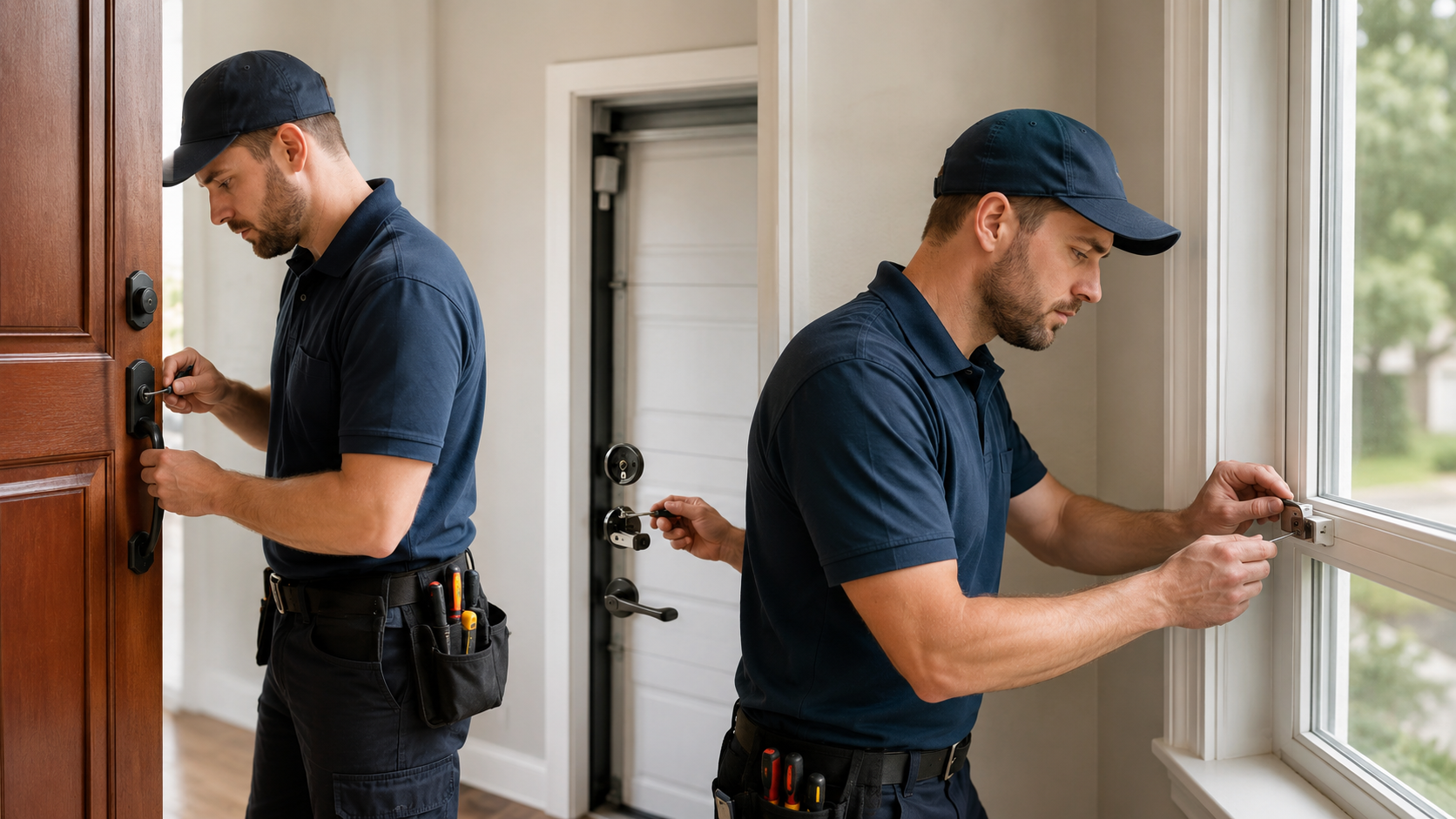
A break-in can leave access beyond the visibly damaged door. Check the rest of the property after police release it, and involve a locksmith or security technician when the access system is unclear.
Review:
If keys are missing, rekey the affected locks. If a vehicle key or garage remote is gone, address that separately. A person with a house key may also have access to a garage, mailbox, storage area, or vehicle if those systems use related keys or remotes.
Change alarm and smart-home passwords from a device you trust. Review active users, guest access, door codes, remote entry permissions, camera accounts, and notification settings. Remove unknown users rather than assuming the old list is accurate.
Do not publish photographs that show your address, lock type, alarm panel, access code, or the location of valuables. Insurance documentation belongs in the claim file, not on a public account.
- Front, rear, side, and garage doors
- Basement and patio doors
- Accessible windows
- Detached sheds and garages
- Shared condo entrances
- Mailboxes and storage lockers
- Spare keys
- Key safes
- Garage remotes
- Alarm codes
- Smart locks and access apps
- Building fobs
- Vehicle keys found inside the home
Build the inventory for the claim
Make a room-by-room list of missing, damaged, and possibly missing items. Start with obvious losses, then check closets, drawers, storage areas, and outbuildings. Mark each entry as stolen, damaged, missing, or still being confirmed.
Include:
Preserve damaged items unless they create a safety hazard or the insurer tells you otherwise. Do not throw out a damaged television, smashed lock, broken window hardware, or damaged furniture before an adjuster has had a chance to review it.
Ask banks, phone providers, and document issuers what to do if cards, passports, identity documents, keys, or personal records were stolen. If a device is missing, change important passwords and revoke its access. The physical burglary may be over, but stolen credentials can create a second problem.
- Item description and brand
- Model or serial number if available
- Approximate purchase date
- Receipt or order record
- Photograph from before the incident
- Estimated replacement category
- Location in the home
- Police report reference
Choose the safest repair path
A home break-in is the wrong time to experiment with unfamiliar hardware. The immediate goal is to secure the opening and keep evidence available. Security upgrades can follow after the failure is understood.
A locksmith may recommend rekeying, repair, or replacement based on the actual damage. You may also need a door contractor, glazier, alarm technician, building approval, or insurance authorization. One trade cannot safely substitute for all of them.
Prepare for the visit:
Ask what will be replaced, what will stay, and why. A clear repair plan should identify the failure mode, the temporary measure, and the permanent work. If the door is dragging or the frame is split, a new cylinder is only part of the job.
- Government-issued identification
- Proof of ownership or occupancy
- Police report number
- Insurance claim details
- Photos of the door and frame
- Information about missing keys
- Building or landlord contact information
- Details about existing alarms, fobs, or smart locks
FAQ
Common questions
Quick answers about this topic in Toronto and the GTA.
Should you change the locks after a break-in?
Change or rekey the locks if keys are missing, copied keys may exist, or the lock cylinder was damaged. If the door, frame, latch, or strike is damaged, have the full opening checked before choosing a replacement.
Can you stay in the home after a break-in?
You can stay only if police confirm the home is safe and the entry point can be secured. If the door, window, alarm, or frame cannot be secured, ask your insurer about temporary accommodation and keep records of related expenses.
What if you cannot tell what was stolen?
Report what you know first, then continue the inventory after police leave. Check less obvious places, storage areas, and documents later. Send updates to the insurer and police instead of guessing in the original report.
Should you clean the house before the adjuster arrives?
Do not clean damaged areas until police and the insurer give permission. You can remove an immediate health hazard if necessary, but photograph it first and keep the damaged item whenever it is safe to do so.
Do you need a locksmith or a door contractor?
A locksmith handles many lock cylinder, latch, strike, key, and access problems. A door contractor or glazier may be required for a split frame, damaged door slab, broken window, or structural repair. The damage decides which trade is needed.
More reading
Related guides
More step-by-step and how-to articles on the same topic.
Locked Out of Your Toronto Home? Safe Next Steps
Handle a Toronto house lockout safely with lawful entry steps, locksmith timing guidance, and advice for lost, broken, or stolen keys at home.
Read article ResidentialBroken Key & Lock Repair
A key that snapped in the lock or a knob that spins freely is common, and rarely a DIY win if the piece sits flush inside. What usually broke, and what a mobile locksmith does on site.
Read article CommercialLocked Out of Your Toronto Office? Start Here
Prevent door, frame, and access-system damage during a Toronto office lockout with safe checks and guidance on when to call a commercial locksmith.
Read articleReady for upfront pricing?
Describe your door or vehicle for a quoted range before a technician is dispatched.