
How to Vet a Mobile Locksmith Before They Arrive
Most bad locksmith jobs are decided on the phone, before anyone reaches your door. Knowing what to check before hiring a mobile locksmith comes down to four things. Confirm who the technician is and whether the business is licensed where your area requires it and insured for damage. Get the full price for the exact job, and have your own proof that you're allowed to have the lock opened. If a locksmith dodges any of those or wants payment before explaining the work, don't hire them.
Real dispatcher answersOpen every day, 7 AM to 10:30 PM
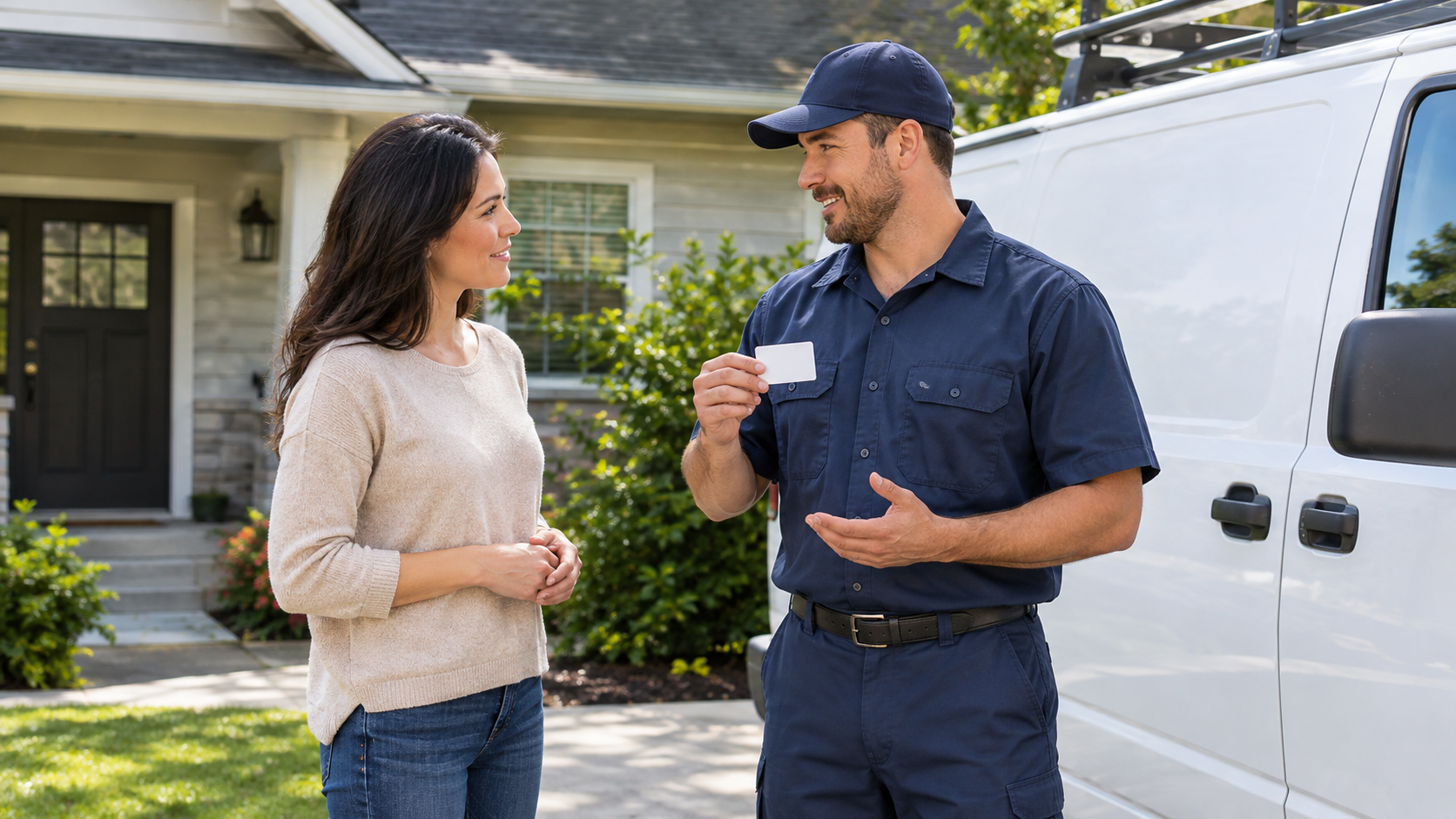
What should you check before hiring a mobile locksmith?
Check the business, the price, and your authorization before the technician touches the lock. A legitimate locksmith will give you a business name, a written total, and a clear method, and will ask you for proof of ownership. If any of those is missing, stop the job.
The checks fall into four moments:
A rushed lockout tempts you to skip the first two stages. Those are the stages that protect you most, so keep them even at 2 a.m.
- On the phone: business name, who is coming, estimated total, arrival time.
- At arrival: technician ID, marked vehicle, written estimate that matches the phone quote.
- Before work starts: agreed method, parts, warranty, and payment terms.
- After the job: itemized invoice, receipt, and new keys tested in every lock.
Verify the business and the technician
Ask for the legal business name before you agree to anything. Then compare it against the website, the online listing, the vehicle, and the invoice. Those four should all match. When they don't, you may be talking to a call centre that sells your job to whichever subcontractor is nearby.
A real business has a traceable local presence. Look up the listed address and make sure it belongs to that company and not to an unrelated shop or a vacant lot. Also ask whether the person who answers works for the company doing the job.
When the technician arrives, ask for identification with a name that matches what the dispatcher gave you. Reviews help too. However, skip the star average and read the complaints. A pattern of "the price doubled when he got here" tells you more than fifty short five-star notes.
If you want to see how this business presents itself and who stands behind it, our page about Toronto Premier Locksmith covers that separately.
Licensing and insurance rules depend on where you are
Licensing is set by provinces, states, and sometimes cities, so the right check depends on your location. California shows what a strict system looks like. There, a locksmith company must hold a locksmith license from the Bureau of Security and Investigative Services, and each employee must hold a separate employee registration. The company license costs $500 to start and $300 every two years to renew. A California locksmith company also needs a contractor's license if work at a single site exceeds $500.
Other places don't license locksmiths at all. In that case, asking for a licence number screens out nobody. Instead, check whether your province or municipality has a requirement. If it does, verify the number with the body that issued it.
Insurance matters everywhere
Ask whether the business carries liability insurance that covers damage to doors, frames, and vehicles. A drilled cylinder is part of the job. A cracked frame or a scratched car door is damage, and someone has to pay for it.
Condo property managers and commercial landlords in the GTA may ask for a certificate of insurance before a technician can work in the building. Have the locksmith send it ahead of time. That way the job isn't held up at the concierge desk.
Get the full price in writing before work starts
A phone quote that names only a "service call" fee is the opening of a negotiation. Ask for the full estimate by text or email before the technician leaves for your address. It should cover:
Ask that last item directly: "If you can't open it without damage, what's the most this could cost?" A legitimate technician can give you a range, because they know which locks commonly need drilling.
When the technician arrives, compare the written estimate to the phone quote before work begins. If the number climbs without a new fact about the lock, refuse the job. A price change needs a reason you can see, such as a high-security cylinder or a broken latch.
- Service call or trip fee
- Labour, and whether it's billed flat or by time
- Parts, with the brand or type named
- After-hours, weekend, or holiday charges
- HST
- The likely cost if the method fails and the lock must be replaced
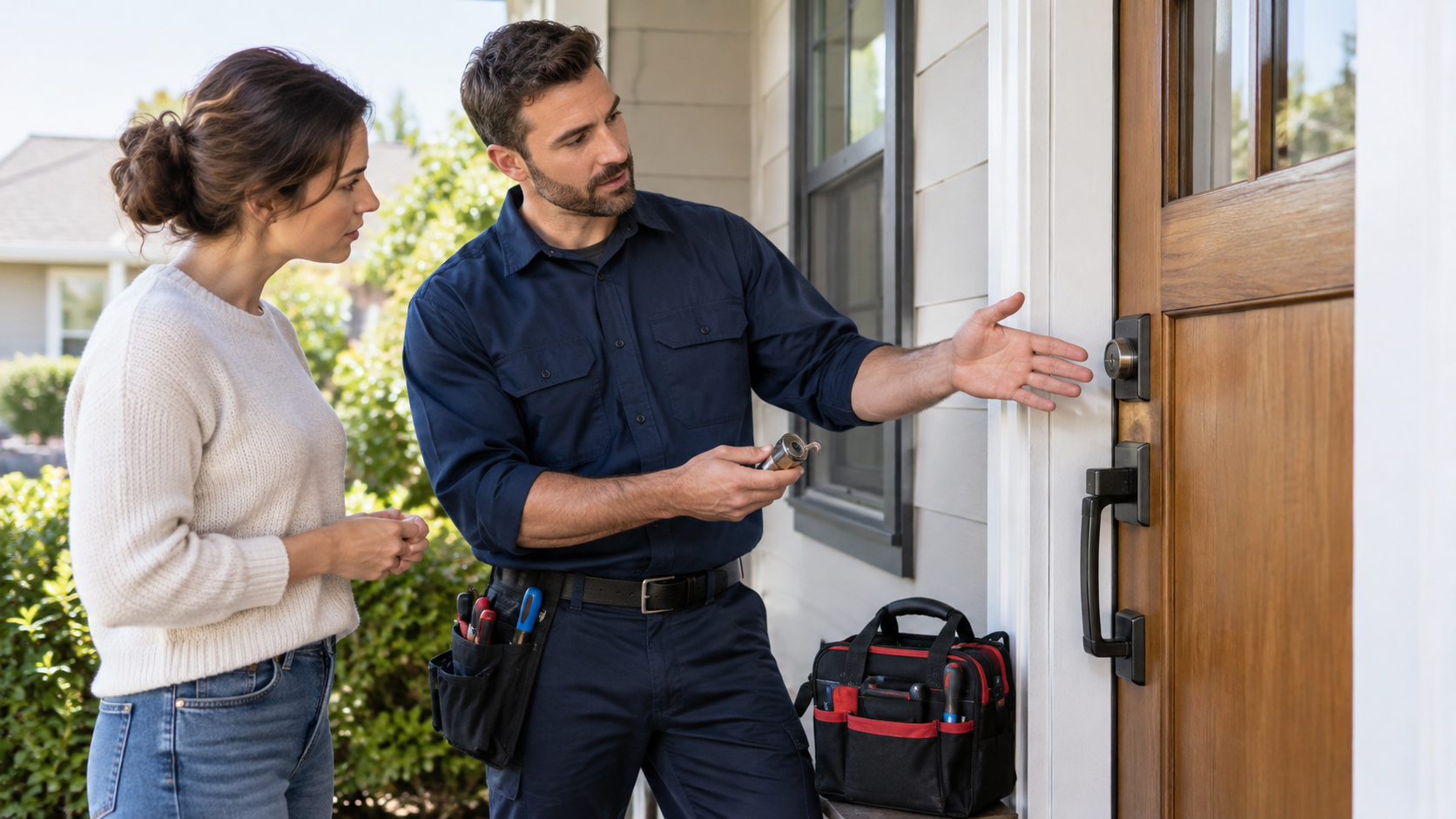
Describe the problem accurately on the first call
Clear details get the right tools to your door on the first visit. Vague details lead to a second trip, or to a technician who drills because they didn't bring an extraction kit. Tell the dispatcher:
Separate symptoms that look alike. "I'm locked out" might mean a lost key. It could also mean a key that turns freely because the cylinder tailpiece snapped, and that needs different parts.
Access details matter as much as the lock in Toronto. A car on the fourth level of an underground parkade with low clearance, or a condo that requires a technician sign-in, changes the arrival time and sometimes the method. Say so up front.
- Setting: house, condo, rental, storefront, warehouse, or vehicle
- Lock type: deadbolt, knob, lever, smart lock, panic bar, electric strike, or rim cylinder
- Symptom: lost key, broken key in the lock, key turns but latch won't move, lock won't turn at all
- Vehicle information: year, make, model, and whether it uses a push-start button or a key
- Access: buzzer code, concierge desk, parkade level, loading dock, or street parking limits
Which entry method should the locksmith try first?
Non-destructive entry should come first for nearly every standard residential and vehicle lockout. That means picking, bypassing, or using entry tools that open the lock without destroying it. Drilling is a last resort for high-security cylinders, damaged locks, or cases where other methods have honestly failed.
Ask the technician two questions before they start. What will you try first? What would make you switch to drilling? A professional answers both plainly.
Be wary of a technician who reaches for a drill the moment they see an ordinary deadbolt. Drilling destroys the lock cylinder, and the replacement often comes off their van at their price. That's how a modest lockout becomes a full hardware sale.
The same logic applies after entry. If the lock works but old keys are out there, a rekey changes the pins inside the cylinder and keeps your existing hardware. Replace the hardware only if it's damaged, worn, or missing features you need. That's the repair versus replacement call, and you should hear the reasoning for it.
Can the technician handle your lock or key system?
Ask about your specific system before the technician arrives. Some jobs need equipment, codes, or authorization that a general locksmith may not carry.
High-security and restricted cylinders. Many use keyways that can only be cut with an authorization card or through an approved dealer. Ask whether the locksmith can cut keys for your brand, or whether you'll need to order through the original key system.
Car keys. A modern car key may contain a transponder chip that must be programmed to the vehicle's immobilizer before the engine will start. A sidewinder key also needs a specific cutter. Ask: "Have you programmed this year, make, and model? Do you need a security code? Can you do on-site programming, or does it need the dealer?" Some vehicles can't be programmed at the curb. For the first steps when you're stuck outside a vehicle, see what to do first when locked out of a Toronto car.
Commercial access. An electric strike, card reader, or keypad may be controlled by software the locksmith can't reach. Find out who manages that system before the call. Otherwise a technician may force a door that has a live electrical fault.
Smart locks. Confirm the locksmith knows the brand and whether a manual key override exists. A dead battery and a failed motor need different fixes.
Have your proof of ownership ready
A legitimate locksmith will ask you to prove you're allowed in. Treat that request as a good sign. A technician who opens your door without asking would open it for anyone.
Prepare the right documents for your situation:
If your ID is locked inside, tell the dispatcher. Many locksmiths will open the door and then check your ID inside before finishing. Expect them to stop if it doesn't match.
For a rental, read your lease and building rules before you rekey. Changing locks without landlord approval can create a separate problem you'll have to fix later.
- House: photo ID showing the address, or a utility bill or tax notice with your name
- Condo: photo ID plus suite number, and management or concierge approval if the building requires it
- Rental: your lease, and landlord permission for any rekey or lock change
- Vehicle: photo ID and vehicle registration or ownership papers
- Business: proof that you own the business or manage the property, or a signed letter from the owner
Locksmith scams and pressure tactics to reject
Most locksmith scams follow the same script. A very low quote gets the technician to your door, then the price grows once you're committed. Reject the job if you see any of these:
You can say no at the door. If you agreed to a service call fee on the phone, paying that and sending the technician away is often cheaper than letting a padded job continue.
If you've been overcharged or misled, keep every message and receipt. You can report it to the Canadian Anti-Fraud Centre. File the report even if you've already paid, because those patterns help others avoid the same company.
- A vague phone quote with no total, only a low "starting" fee
- An unmarked vehicle and no company identification
- A new, higher price at the door with no new facts about the lock
- A demand for cash only
- Drilling a standard lock without trying anything else first
- Pressure to decide right now, or a claim that the lock "must" be replaced
- Refusing to give a written estimate or a business name on the invoice
Parts, keys, and warranty
Ask what's going into your door or vehicle before you approve it. You need to know whether the replacement lock is new or refurbished, which brand it is, and whether it fits the hardware you already have. A lock that doesn't fit the existing door prep means new holes, a loose strike, or a latch that drags.
Ask about keyways if you have several locks. A new deadbolt that takes a different key than your other doors means carrying extra keys, unless it's rekeyed to match.
For car keys, ask whether the key is original or aftermarket. Also ask whether the remote buttons will work, and whether the blade and chip are both covered. A key that starts the car but won't lock the doors is a half-finished job.
Get the warranty in writing. It should say what it covers (workmanship, product, or both), for how long, and what voids it. A verbal "we stand behind our work" can't be enforced later.
Pay in a way you can trace
Pay by credit card, debit, or e-transfer so there's a record. Cash leaves you nothing to dispute if the work fails or the price was inflated. A cash-only demand is reason enough to send the technician away.
Don't pay in full before the work is done. A deposit is reasonable when a special part has to be ordered, such as a restricted key blank or a specific smart lock. In that case, get the deposit amount and the part named on paper.
Keep a record of the job:
Test every new key in every lock before the technician leaves. Problems found after the van drives off take longer and cost more to fix.
- Written estimate and final invoice, both showing the business name
- HST registration number on the invoice, if the business charges HST
- Technician's name
- Exact work done and parts installed
- Warranty terms
When a locksmith is the wrong call
Some situations need someone else first. Calling a locksmith in these cases wastes money or creates a problem with the building, insurer, or dealer.
A good locksmith will point you to the right party when the job isn't theirs. You can see the full range of work a mobile locksmith handles on our locksmith services page.
- Building-controlled doors. Master-keyed condo doors, fob systems, and common-area locks belong to the property manager. Call management or concierge access first.
- Smart lock failures under warranty. The manufacturer may need to reset or replace the unit. Forced entry can void that coverage.
- Roadside coverage. If your auto club or insurance includes lockout service, check it before paying out of pocket.
- After a break-in. Call your insurer before repairs. They may want the damaged door, frame, and lock left in place until they've been inspected.
- Dealer-only vehicles. Some cars need dealer-level equipment or security codes the dealer controls. A locksmith may tell you this up front, which is a sign they know the limits.
- Structural damage. A split frame or a door that no longer sits square needs a carpenter or door installer. A new lock on a broken frame won't hold.
Final go-or-no-go checklist
Run through this before the technician starts. Any item in the right-hand column means you stop the job.
If you can tick every box in the middle column, you've done what to check before hiring a mobile locksmith. The rest is the technician's job.
| Check | Go | No-go |
|---|---|---|
| Business identity | Name matches website, vehicle, and invoice | No name, or names don't match |
| Technician | Shows ID matching the dispatcher's info | Won't show ID |
| Licensing and insurance | Licensed where required, insurance confirmed | Can't answer either question |
| Price | Written total before work, including HST | "Starting at" only, or price rises at the door |
| Method | Explains what they'll try first | Drills a standard lock right away |
| Capability | Confirms tools, codes, or programming for your system | Vague about your vehicle or lock brand |
| Authorization | Asks for your proof of ownership | Never asks |
| Parts and warranty | Names the parts, warranty in writing | "Don't worry about it" |
| Payment | Card or e-transfer, paid after the work | Cash only, or full payment up front |
FAQ
Common questions
Quick answers about this topic in Toronto and the GTA.
Do I have to pay if I send the locksmith away at the door?
That depends on what you agreed to on the phone. If you accepted a trip or service call fee, expect to pay it even if you decline the work. That's why you confirm the fee and the full estimate in writing before they drive over.
Does a locksmith need me there in person?
For a lockout, yes, because they need to confirm your identity at the door. For a rekey or lock change in a rental or business, the owner or an authorized manager usually has to approve it. Someone with written permission may need to be on site.
Is it worth waiting until business hours to save money?
If you're safely inside and the problem is a worn lock or a key you want copied, waiting usually avoids after-hours charges. A lockout with a child, a pet, or a running car inside is different. Call right away in those cases and handle the price questions on the phone.
Are locksmiths at the top of search results more trustworthy?
Not by default. Paid ads and map listings can belong to call centres that pass jobs to unknown subcontractors. Use the same checks on every result: business name, local presence, written price, and technician ID.
More reading
Related guides
More step-by-step and how-to articles on the same topic.
Toronto Condo Lockout Costs: Fees to Check First
A Toronto condo lockout often runs $70 to $220 before extras. See how after-hours fees, concierge rules, taxes, and repairs can change the final bill.
Read article Locksmith guidesLocked Out at Night? Safe Steps Before Calling a Locksmith
Stay safe during a nighttime lockout with practical steps for checking authorized entry, spotting emergencies, and calling a qualified locksmith.
Read article AutomotiveWhat to Do First When Locked Out of a Toronto Car
A coat hanger can wreck wiring, airbags, and seals, so check reachable doors only, then call a Toronto mobile locksmith or 911 if a person is trapped.
Read articleReady for upfront pricing?
Describe your door or vehicle for a quoted range before a technician is dispatched.