
How a Locksmith Uses Your VIN to Make a Car Key
Yes, an automotive locksmith can often make a new car key from your VIN, but the number only starts the job. The vehicle identification number (VIN) leads to the factory key code and key type, while proof of ownership confirms you can authorize the work. On most modern vehicles, the cut key also needs a chip programmed to the car, and some systems require dealer-level access.
Real dispatcher answersOpen every day, 7 AM to 10:30 PM
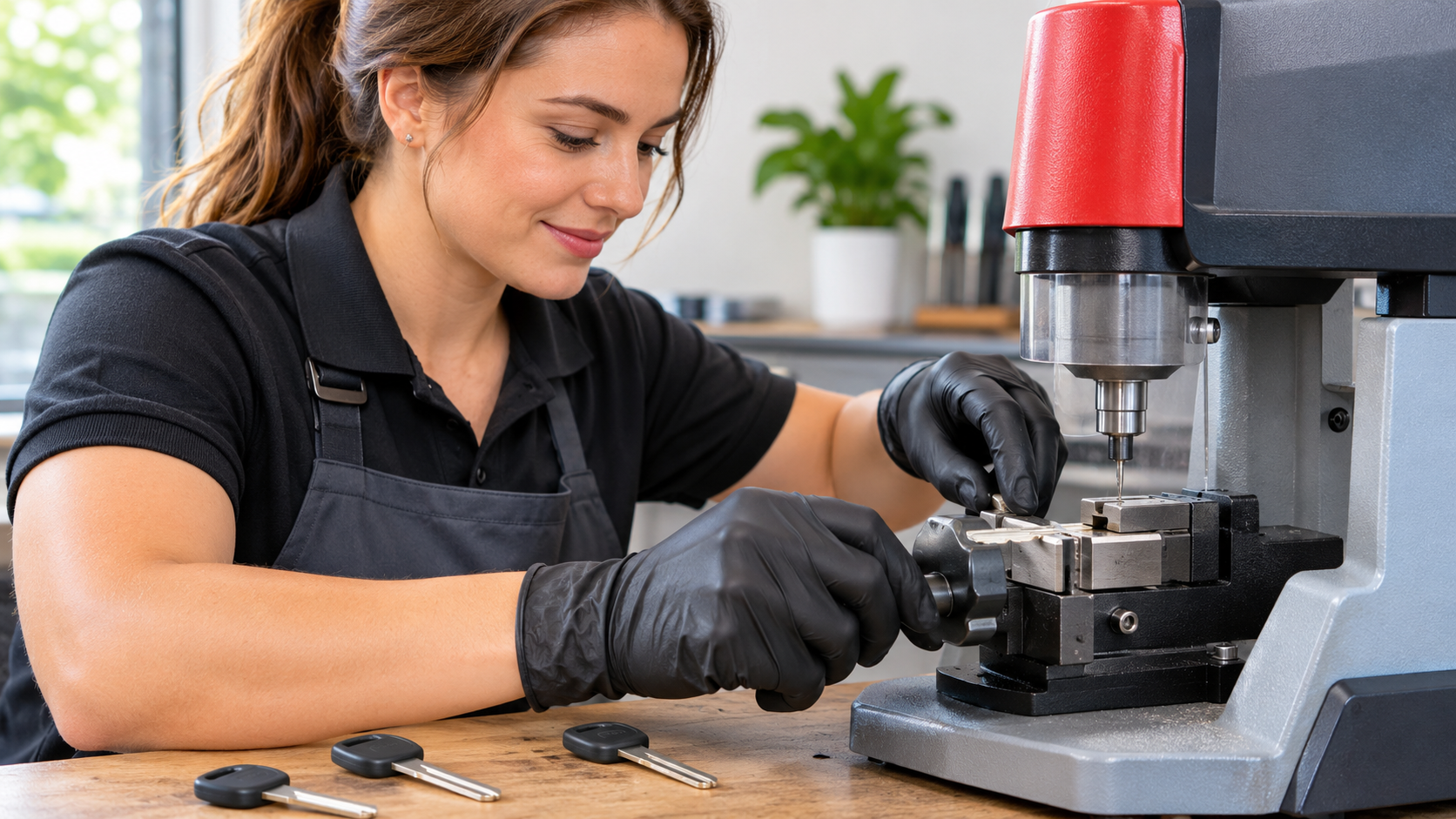
Can Locksmiths Make Keys From VIN Numbers?
For many vehicles, yes. Under rules from the US National Highway Traffic Safety Administration (NHTSA), every motor vehicle must carry a VIN of 17 characters. North American vehicles use the same format. That number identifies the exact make, model, year, and sometimes the specific key type. A credentialed locksmith uses it to request the factory key code, which converts into the cut depths a key machine needs.
The VIN does not hold everything, though. It does not store the transponder data, the immobilizer PIN, or the pairing for a push-button fob. Those come from separate secure lookups, programming tools, or the dealer. The VIN is a lookup reference, not a key.
Who Can Pull a Key Code From a VIN
Access to that data is controlled. In North America, many manufacturers release key codes and security information only to vetted professionals. The National Automotive Service Task Force (NASTF) runs a Vehicle Security Professional (VSP) registry. Approved members receive a universally accepted identification number and passcode to reach secure programming information and codes.
That access costs money. A primary VSP account runs $435 for 2 years, and a subordinate account runs $250 for 2 years. An administrative account has no cost. Vetting and fees are part of why a credentialed locksmith can pull a code and a key kiosk cannot.
A locksmith without that access may still cut a working blade by reading the lock itself. So the VIN helps, but it is one of several routes to the same mechanical key.
The Safest Workable Path for Replacing a Lost Car Key
Follow the steps in order. Skipping ahead usually wastes a part or a trip.
Ownership comes first because a legitimate locksmith will not cut anything until it is settled. Identification comes before buying parts. A fob that looks right can carry the wrong frequency or part number. As a result, a fob ordered online before anyone checks the system often ends up in a drawer.
1. Confirm ownership
Have your ID and vehicle documents ready, or proof that the owner authorized you to act.
2. Identify the vehicle and key system
Give the VIN, year, make, model, and the type of key the car uses.
3. Get the correct blank or fob
The part must match the vehicle's key profile and electronics.
4. Cut the blade
The cut comes from the factory key code or from decoding a lock on the car.
5. Program the key when required
Transponder and smart keys must be paired with the immobilizer.
6. Test everything
Check the doors, ignition, trunk, and remote buttons, and ask to erase the lost keys from the car's memory.
Proof of Ownership Comes Before Any Key Is Cut
A VIN is not authorization. It sits on the dashboard where anyone can read it through the windshield. For that reason, most professionals ask for two things: proof of who you are, and proof that the vehicle is yours or that you can act for its owner. Your vehicle's dealership follows the same rule and verifies ownership before creating a key from the VIN.
Bring the documents that apply to your situation:
The names have to match, or the link between you and the owner has to be clear. A company car, a spouse's car, or a car registered to a parent all need that link spelled out. Ask the locksmith what documents they require before dispatch, since the check can vary by situation.
- Government-issued photo ID
- Vehicle registration, which in Ontario is the vehicle permit
- Insurance card for the vehicle
- Bill of sale, if you bought the car recently and the registration is still being updated
- Lease, fleet paperwork, or other authorization showing you can act for the registered owner
When Your Documents Are Locked in the Car
The common snag is a registration sitting in the glovebox of the car you cannot open. In that case, a locksmith can usually perform non-destructive entry first, then check the documents before cutting a key. Tell the dispatcher about this up front. If you are stuck outside the car right now, start with what to do first when locked out of your car.
What to Tell an Automotive Locksmith Before They Drive Out
The details you give on the phone decide which blank, which cutter, and which programming tool end up in the van. Have this ready:
The number of remaining keys matters more than most people expect. Adding a key when one still works is often simpler than an all-keys-lost job, where the car has nothing to compare against. Some vehicles also need a working key present before a new one can be added.
Location matters too. A condo parkade in Toronto may need concierge access, a visitor spot, or a security escort before a mobile technician can reach the car. Programming also needs the vehicle itself, so the technician has to get to it. For the full range of vehicle work, see our page on automotive locksmith service in Toronto and the GTA.
- Make, model, year, and trim
- The full VIN
- Your exact location, including parkade level, ceiling clearance, and concierge or security desk contacts
- How many working keys you still have: none, one, or a spare at home
- The key type: plain metal, chip key, flip key, sidewinder key, or push-button fob
- Whether the door locks or ignition have ever been replaced
- Your ownership documents, ready to show
Where Is the VIN on Your Car?
Check a few of these places and make sure they match:
A mismatch between the dashboard and the paperwork stops the job until it is explained. It can be a typo on an old document. However, it can also point to a rebuilt or misidentified vehicle.
Older vehicles need extra care. For cars sold in the United States, VINs were not standardized to 17 characters before the 1981 model year. A classic car may carry a shorter number, and key code records for it may be thin or missing.
- Dashboard plate: at the base of the windshield on the driver's side, readable from outside
- Driver's door jamb: a label on the door edge or the pillar it closes against
- Vehicle registration: printed on the Ontario vehicle permit
- Insurance card: usually listed with the vehicle description
- Title or bill of sale: on the purchase paperwork
Can a Locksmith Make a Key Without the Original?
Yes. A locksmith can originate a mechanical key without the original, either from the factory key code or by decoding a lock on the car. Any chip or remote inside the key still has to be programmed to the vehicle as a separate step.
Decoding means reading the wafers inside a door lock or ignition lock cylinder to work out the cuts. It is slower than a code lookup. However, it works when the code is unavailable, or when the locks no longer match the factory record.
The mechanical blade only gets you into the car and turns the ignition. On most modern vehicles, the engine will not run until the electronics accept the key.
Older Metal Keys Are the Simplest VIN-Based Replacement
A plain metal key with no chip is the easiest case. The locksmith gets the key code, cuts a blank to it, and the key works the doors and ignition without any programming. There are fewer parts to match and fewer things to fail.
Wear is the main gotcha. A lock that has turned for years with one key wears down alongside it. A fresh key cut to factory depths can feel stiff or refuse to turn in a worn cylinder. The locksmith may adjust the cuts to suit the worn lock, or recommend repairing the cylinder.
Some older vehicles also used separate keys for the doors and the ignition. Each may have its own code, so mention it if your car came with separate keys.
Transponder Keys Need Cutting and Programming
A transponder is a small chip in the key head that sends a code to the car. The immobilizer is the system that blocks the engine unless it recognizes that code. A transponder key cut perfectly will turn the ignition. Still, the engine will not start, or will stall right away, until the chip is paired.
Programming needs a diagnostic tool connected to the vehicle. Depending on the make, it may also need a security PIN from a secure lookup. Some cars need a working key present, and some want every key programmed together in one session. Ask about this before the technician arrives, because it changes how long the job takes and what it costs.
Sidewinder and laser-cut keys add another layer. The groove is milled into the face of the blade, so the key needs the correct cutter. A kiosk can copy the shape and still hand you a key that will not start the car, because it copied the metal and skipped the chip.
When a VIN Key-Code Lookup Will Not Work
A code lookup fails more often than people expect. The usual reasons:
Replaced locks catch people out the most. A used car may have had its ignition or door locks changed, and the new owner never knew. In that case, the locksmith decodes the actual lock instead of trusting the record.
When the car's module or the manufacturer's rules are the barrier, a different blank will not help. That job goes to the dealer.
- Missing or restricted records: older vehicles, imports, and some brands have no code available to locksmiths
- Replaced locks: the code matches the factory lock, which may no longer be on the car
- Aftermarket ignition cylinder: a repair shop swapped the ignition, so the factory code will not turn it
- Damaged modules: a water-damaged or failed immobilizer module cannot accept a new key
- Unsupported vehicles: the locksmith's programming equipment does not cover that model
- Dealer-only systems: the manufacturer requires dealer authorization to program keys
- Rebuilt vehicles: parts from different cars no longer agree with one VIN
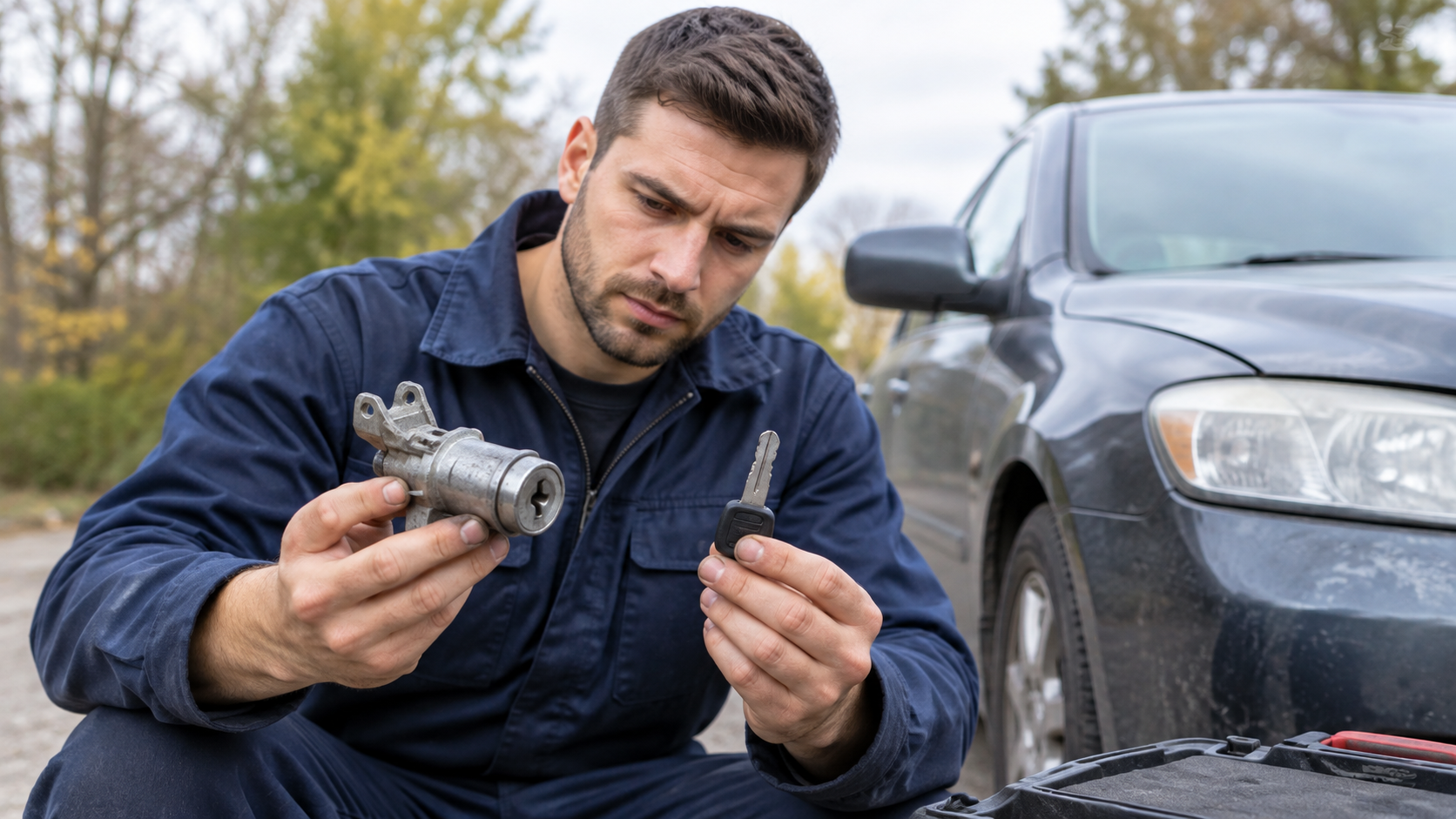
Locksmith, Dealer, or Tow: Pick the Service That Can Finish the Job
Choose the service that can complete your specific job. Price comes second. A mobile locksmith is usually the faster option for supported vehicles, because the work happens where the car sits. By contrast, a dealer may need the car on site and may have to order the key.
Towing in the GTA has its own limits. A car in a low-clearance underground parkade may need a specific tow setup and building permission to move. Check with your property manager before you book the tow, so the driver does not arrive and leave empty-handed.
| Situation | Best first call | Why |
|---|---|---|
| Metal key lost, no chip | Mobile locksmith | Cut from code or lock, no programming |
| Transponder key lost, vehicle supported | Mobile locksmith | Cut and program at the car |
| Spare key wanted, one key still works | Locksmith or dealer | Both can add a key; compare timing |
| Smart key needs dealer online pairing | Dealer | Locksmith tools cannot complete it |
| Immobilizer or module damaged | Dealer or qualified repair shop | Needs repair or module replacement first |
| Dealer-only job and no working key | Tow to dealer | The car cannot be driven there |
If the New Key Still Does Not Work
Match the symptom to the likely failure before anyone replaces another part:
Do not force a key that binds in the ignition. A blade under pressure can snap inside the lock and turn a key job into an extraction. If that already happened, read what to do when a key breaks inside a lock before you try anything else.
When the key checks out but the car still will not start, the problem sits in the vehicle. That needs diagnosis or repair, and no amount of recutting will fix it.
- Key will not go in or will not turn: a cutting error, the wrong blank, or a worn lock cylinder
- Key turns, engine cranks but will not start, security light flashes: the transponder is not programmed to the immobilizer
- Car starts, remote buttons do nothing: the remote is not paired, or its battery is dead
- Dashboard says key not detected: fob battery, pairing, or the wrong fob
- Key works the door but not the ignition: the ignition was replaced or is badly worn
- Key worked, then stopped: a module or wiring fault in the vehicle
FAQ
Common questions
Quick answers about this topic in Toronto and the GTA.
Could someone use my VIN to get a key for my car?
The VIN is visible on purpose, so its security comes from the checks around it. Legitimate locksmiths and dealers match ID and registration before cutting, and credentialed programs log who pulls key codes. Keep your registration and spare keys out of the car. A thief who finds both in the glovebox has what the checks are meant to stop.
Does my lost key still work after a new one is programmed?
Its chip can usually be erased from the car's memory, so it will no longer start the engine. The metal blade still fits the door locks, though. If the key was stolen with your address, ask about rekeying the door locks as well.
Can I buy a fob online and have a locksmith program it?
Sometimes, but it carries risk. Online fobs often have the wrong part number, the wrong frequency, or a chip already locked to another vehicle. Many locksmiths will try to program a customer-supplied part. Few will stand behind it if it fails, and you may pay for the visit either way.
What if the car is leased or owned by my employer?
Bring the lease agreement or company authorization along with your own ID. The registration may list the leasing company or the business as owner, so the paperwork has to show you can act for them. Some leasing companies also have their own rules for key replacement, so call them first.
More reading
Related guides
More step-by-step and how-to articles on the same topic.
What Drives the Cost of Programming a Car Key
Programming alone often runs $50 to $200, but a supplied fob, luxury security systems, travel, and lost keys can raise the total. See what affects your quote.
Read article AutomotiveWhat to Do First When Locked Out of a Toronto Car
A coat hanger can wreck wiring, airbags, and seals, so check reachable doors only, then call a Toronto mobile locksmith or 911 if a person is trapped.
Read article Locksmith guidesCar Key Fob Programming: What Works at Home
Match the part and frequency first, then use your car's pairing sequence or an OBD-II tool to program a new fob without locking out your keys.
Read articleReady for upfront pricing?
Describe your door or vehicle for a quoted range before a technician is dispatched.