
Car Key Fob Programming: What Works at Home
Most fobs that refuse to program were the wrong part from the start. Learning how to program a new car key fob begins with matching the fob to your vehicle's part number and radio frequency. Next, check the owner's manual for an onboard sequence: ignition turns, door switches, or button presses that put the car into pairing mode. Older vehicles often allow this from the driver's seat. On a 2003 Subaru Outback, for example, the sequence starts with ten rapid key turns from OFF to ON and back with your foot on the brake. Most newer cars, push-to-start systems, and any key with a chip that starts the engine need a programming tool plugged into the car.
Real dispatcher answersOpen every day, 7 AM to 10:30 PM
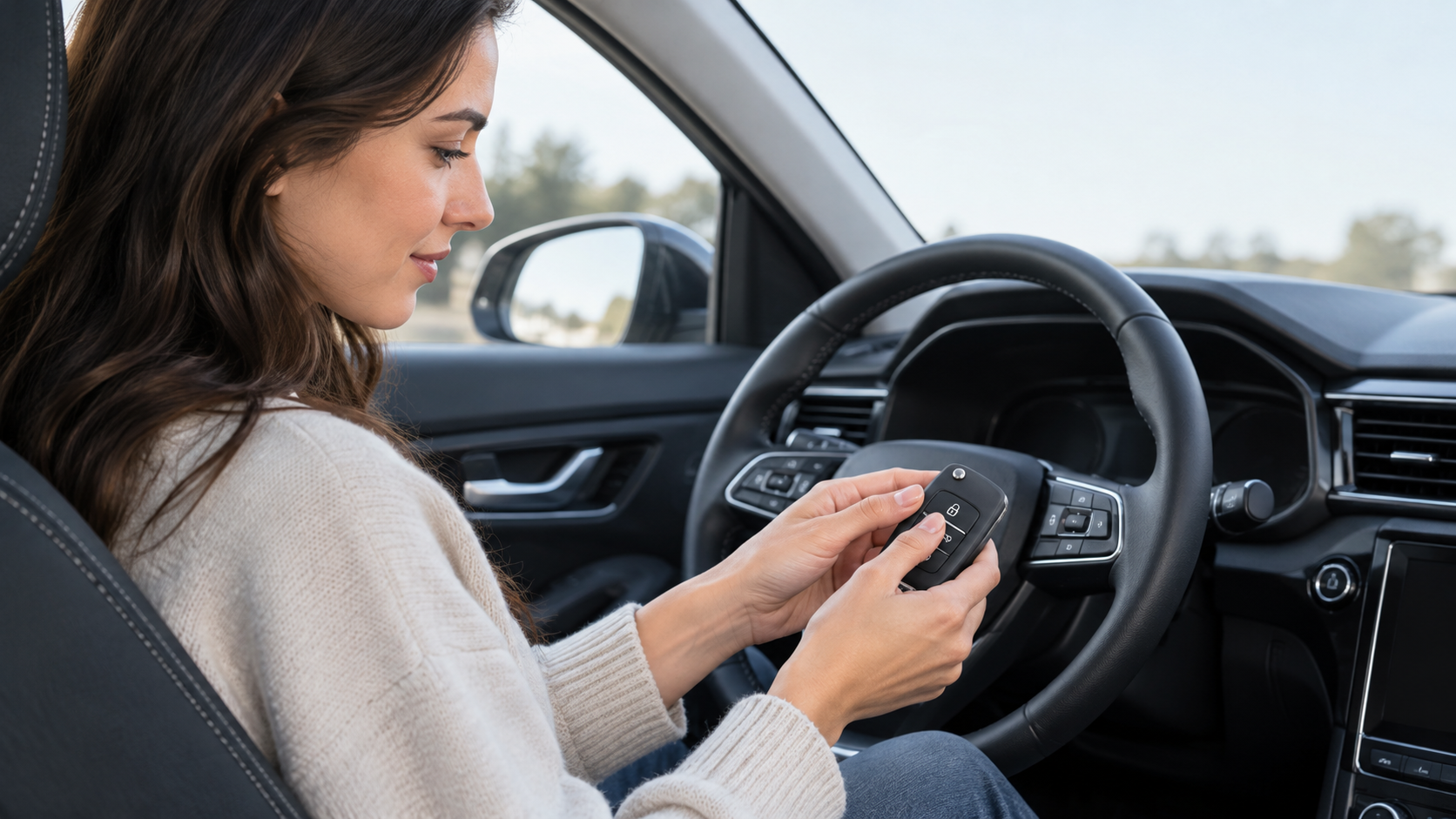
Know which part you are programming
A "key fob" can mean several different systems. Each one programs differently, and mixing them up is the most common reason a fob works the doors but the car still won't start.
A transponder is a small chip in the key head. The car reads it before it allows the engine to run. The immobilizer is the anti-theft module that checks that chip. Canada's Motor Vehicle Safety Regulations include a theft protection standard, which is why most modern vehicles carry one.
A remote can pair perfectly while the transponder stays unpaired. So the buttons work and the engine stays dead. Settle which system you're dealing with before you buy anything.
| What you have | What it controls | How it usually pairs |
|---|---|---|
| Remote fob (separate from the key, or built into the key head) | Door locks, trunk, panic alarm | Often an onboard sequence on older vehicles |
| Transponder key | Lets the engine run by talking to the immobilizer | Usually a programming tool, sometimes an onboard method with existing working keys |
| Smart key (proximity or push-to-start) | Doors, trunk, and engine start | Almost always a programming tool, sometimes a security code or dealer system |
Check the fob before you start
Do this before you sit in the car. A mismatched fob will never pair, however many times you run the sequence.
Online listings often promise "fits all years." That claim is a common source of wasted money. Match the code on your original, or use your vehicle information to confirm the correct part.
- Part number and FCC ID. The FCC ID or IC number is the radio certification code printed on the back of the original fob or inside the case. The new fob should match it.
- Frequency. Fobs that look identical can transmit on different frequencies for different markets or trim levels.
- Button layout. Remote start, power liftgate, or sliding door buttons often mean a different part.
- Blade profile. If the fob has a flip key or emergency blade, it still needs cutting. Laser-cut and sidewinder keys need a matching cutter.
- New or used. Many smart keys lock to the first vehicle they're paired with. Some can be reset with specialized equipment, and some cannot be reused at all.
How do you program a new car key fob?
If your vehicle supports onboard programming, you put the car into pairing mode with a set sequence and then press a button on each fob. If it does not, no sequence will work and you need a programming tool connected to the car's diagnostic port. Your owner's manual is the first place to find out which group your car falls into.
For vehicles that do allow it, the general order looks like this:
If the car never confirms pairing mode after two or three careful attempts, stop. Repeating the sequence won't fix a wrong fob, a missing feature, or a car that needs a tool.
1. Gather every remote you want to keep
On many vehicles, entering programming mode clears remotes that are not paired again in the same session.
2. Get in and close all doors
An open door or a faulty door switch can stop the car from entering pairing mode.
3. Follow your vehicle's exact sequence
Counts and timing differ by make, model, and year. Use the procedure written for your car, not one from a similar model.
4. Watch for the confirmation
The car usually signals pairing mode with door locks cycling, a chime, or a dash light.
5. Press a button on each fob within the time window
Do them one after another without long pauses.
6. Exit programming mode and test
Try every fob from a few car lengths away, then confirm the original key still starts the engine.
Example: the 2003 Subaru Outback remote
The 2003 Subaru Outback keyless entry remote shows what an onboard method looks like. With your foot on the brake, insert the key and run the rapid OFF-to-ON-to-OFF turns described at the top. Then finish the sequence as your owner's manual describes. The system can hold up to four remotes, so bring every remote you want to keep to the same session.
That procedure pairs the remote buttons. Any chip in the ignition key is a separate system, and it's not covered by this sequence.
Where onboard programming stops
The do-it-yourself boundary is clear on most vehicles. Stop and plan for professional programming if any of these apply:
The programming tool plugs into the OBD-II port, which is the diagnostic connector under the dash. It talks to the immobilizer directly. Some vehicles also need a security code pulled from the manufacturer, and some brands keep certain models on dealer-level systems only. As a result, an on-site job is possible for many cars but not for every one.
Do not buy a generic programmer and experiment on a late-model car. A failed write or a dead battery mid-session can leave the immobilizer refusing every key. That turns an extra fob into a tow.
- Push-to-start or proximity key. These almost always need a programmer and sometimes a security PIN.
- All keys lost. Without a working key, many cars cannot enter any onboard mode.
- No onboard method in the manual. If the manual sends you to a dealer or technician, believe it.
- Some models need several working keys. A few vehicles let you add a key yourself only if you already have enough programmed keys.
- Security lockout. Some systems lock out programming after repeated failed attempts. The car may then need to sit for a set period, or need a tool to clear the lockout.
Why did the fob program but the car will not start?
The remote side paired and the transponder side didn't. That's the usual cause. The car accepts the button signal for the doors, but the immobilizer doesn't recognize the chip, so the engine cranks and dies or won't crank at all.
Check the dash for a flashing key or security light when you try to start. That light usually points to the immobilizer, which means the fob needs transponder or smart key programming. If the fob doesn't work the doors either, the problem may be the battery, signal, or receiver. Our guide on key fob troubleshooting for battery, signal, or car faults separates those failure modes.
A new fob with an uncut blade can also cause this. The buttons pair, but the emergency blade won't turn the ignition or door cylinder. Get the blade cut before you count the job as done.
Programming in a condo parkade or underground garage
Location affects the job more than people expect. Underground parkades in Toronto condos can block the signal a mobile technician's equipment needs to pull security codes. Concrete levels also make it harder to test fob range properly.
If your car is parked below grade, ask building management whether a technician can work in your spot or near the ramp. Some buildings require concierge access, a visitor sign-in, or an approved time window for service vehicles. Arrange those details before the appointment, because a technician who cannot reach the car cannot program it.
If the car is drivable, moving it to a surface spot or the visitor area often shortens the visit. If every key is lost and the car is locked, see what to do first when locked out of a car before calling anyone.
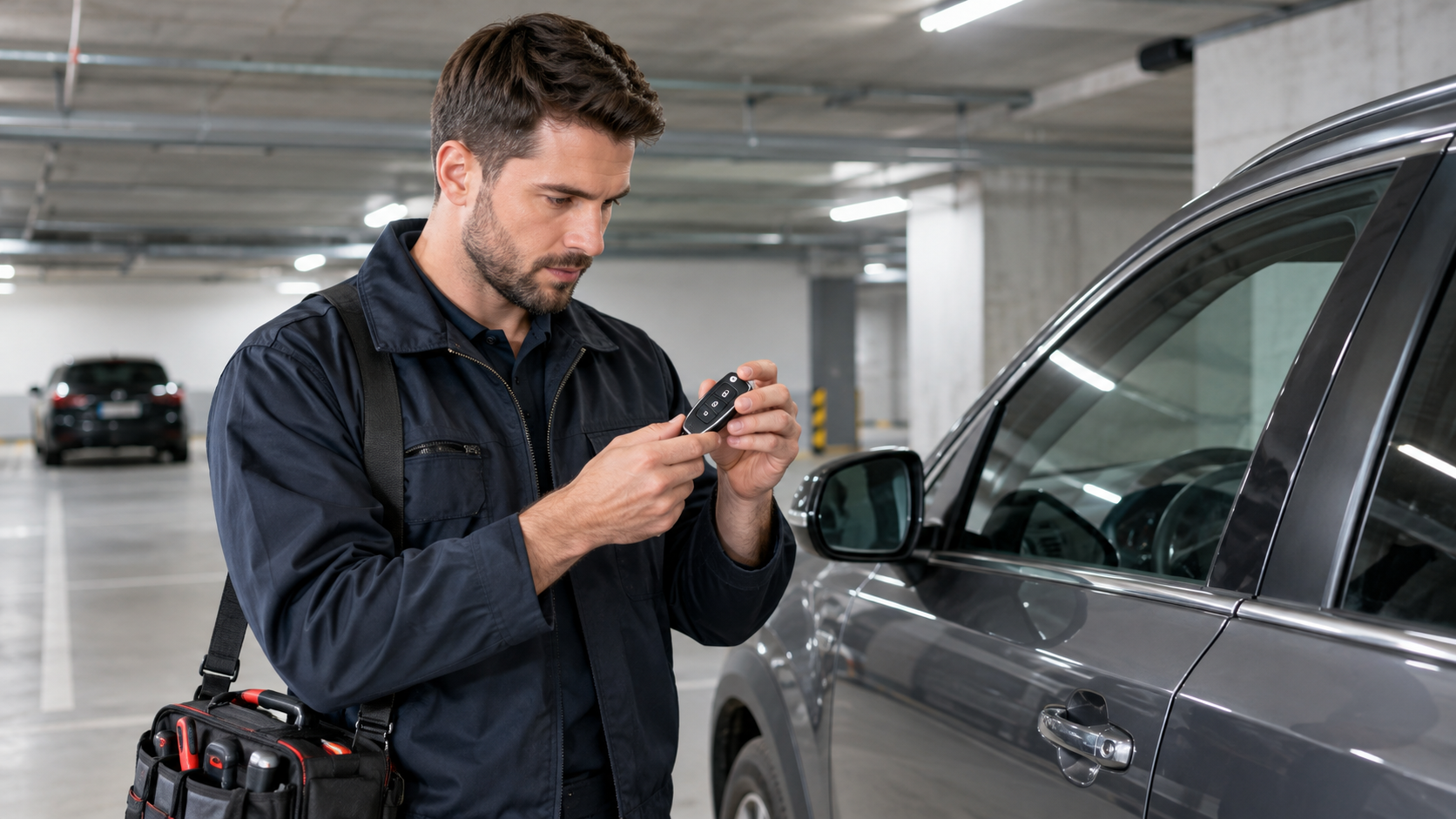
What a technician needs from you
Professional programming starts with proof that you can authorize the work. No legitimate technician will program a key to a vehicle without it. Have these ready:
Bring the existing keys even if you only want to add one. Some programming sessions clear old keys from memory, and the technician needs them in hand to keep them working. For mobile service across the city, see our automotive locksmith service in Toronto and the GTA.
- Vehicle identification number (VIN), from the lower windshield or the driver's door jamb
- Year, make, model, and trim
- Ownership or registration in your name, plus matching photo ID
- Every existing key and fob, working or not
- The new fob, if you bought one, with its packaging or part number
- Where the car is parked and any building access rules
FAQ
Common questions
Quick answers about this topic in Toronto and the GTA.
Should I buy the fob myself or let the technician supply it?
Supplying your own fob can save money if the part code matches exactly. However, if it turns out to be the wrong frequency, a used locked unit, or a poor-quality copy, you still pay for the visit. A technician who supplies the fob is responsible for it matching the vehicle.
Will a new fob stop my old fob from working?
It can. On many vehicles, pairing mode wipes stored remotes and only keeps the ones paired in that session. If you lost a fob and want it disabled, that wipe is useful. Pair only the fobs you have in hand.
Do I need to replace the fob battery before programming?
A fresh battery removes one variable. A weak cell may still blink the fob light but fail to send a strong enough signal for the car to accept it. Use the battery type printed inside the case.
Can a key fob be programmed without the car present?
Generally no. Pairing happens between the fob and the car's own modules, so the vehicle has to be there and powered. For some older remote systems, the fob is cut and prepared ahead of time, but the final pairing still happens at the car.
More reading
Related guides
More step-by-step and how-to articles on the same topic.
What Drives the Cost of Programming a Car Key
Programming alone often runs $50 to $200, but a supplied fob, luxury security systems, travel, and lost keys can raise the total. See what affects your quote.
Read article Locksmith guidesKey Fob Troubleshooting: Battery, Signal or Car?
A dead coin cell is common, but weak contacts, interference, lost programming, and vehicle faults can also stop a key fob. Use these checks to isolate it.
Read article AutomotiveWhat to Do First When Locked Out of a Toronto Car
A coat hanger can wreck wiring, airbags, and seals, so check reachable doors only, then call a Toronto mobile locksmith or 911 if a person is trapped.
Read articleReady for upfront pricing?
Describe your door or vehicle for a quoted range before a technician is dispatched.