
Toronto Condo Lockout Costs: Fees to Check First
One Toronto locksmith publishes a house or condo lockout range of $70 to $220, and lists a separate after-hours service call of $60 to $119 that may be added to the entry price. Your final price depends on the lock and the hour, so approve the total before any work starts.
Real dispatcher answersOpen every day, 7 AM to 10:30 PM
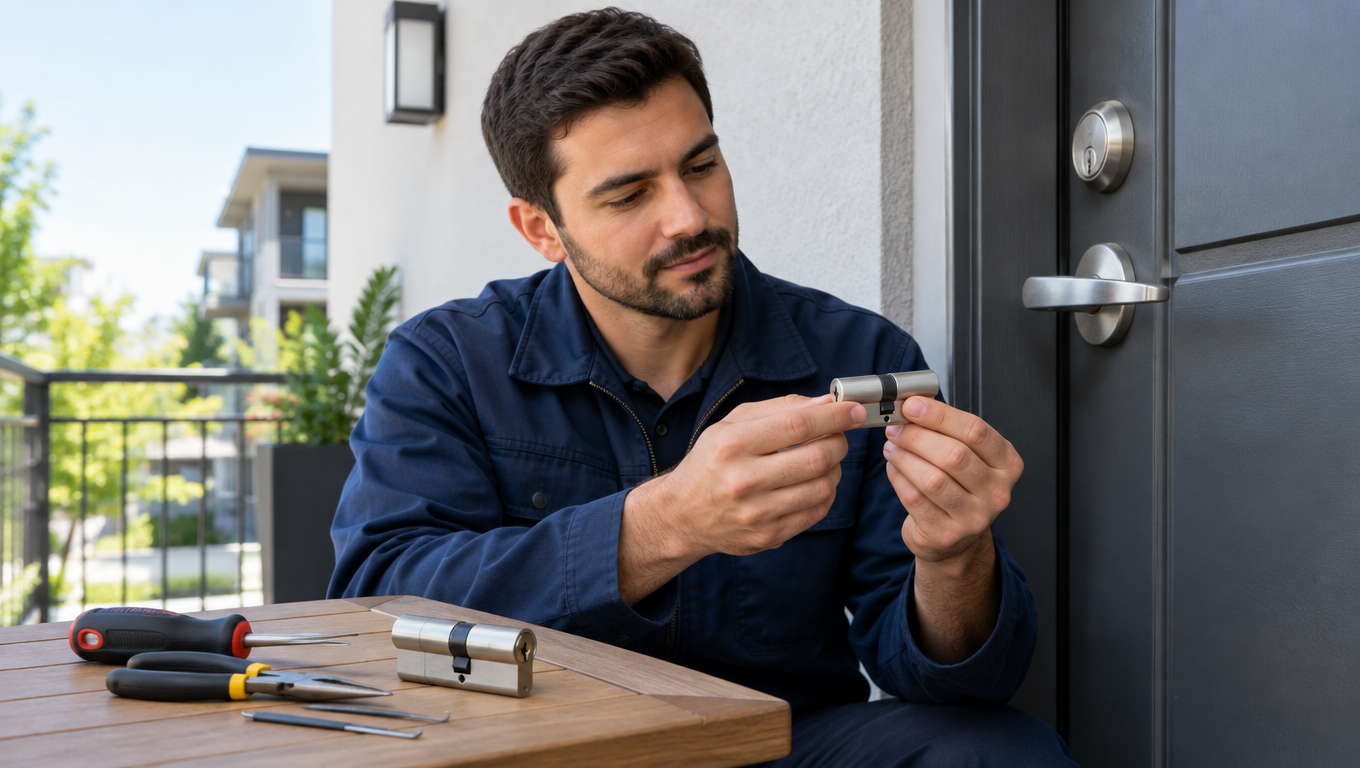
Toronto condo lockout cost at a glance
There’s no single Toronto condo lockout price. A simple entry job during regular hours usually costs less before tax and parts. After-hours work costs more, especially if the building is difficult to access or the lock needs repair.
These are planning levels, not a promise from every provider. A service call may cover travel and attendance, while entry work, replacement parts, taxes, or extra labour appear separately.
Published prices show the same split. The Toronto price list quoted above shows its after-hours service call separately from its house or condo lockout range, so ask whether a quoted figure covers the call-out, the entry work, or both.
Ask for these items before the locksmith starts:
For a broader comparison of service charges, see our guide to Toronto locksmith costs.
- Service-call or dispatch fee
- Entry fee, if separate
- Travel or parking charges
- After-hours surcharge
- Tax
- Lock repair or replacement cost
- Programming fee for a smart lock or electronic system
- Any charge if concierge access is delayed
| Service situation | Usual cost level | What can add to the bill |
|---|---|---|
| Regular daytime call | Usually lower | Travel, entry method, taxes, and lock type |
| Evening call | Usually higher | After-hours dispatch and parking delays |
| Overnight call | Often higher than daytime service | Urgency, distance, and restricted access |
| Weekend call | Often higher than regular hours | Dispatch availability and building staffing |
| Holiday call | Often the highest service level | Emergency demand and limited property access |
Check the concierge, landlord, or property manager first
Call the concierge desk before calling a locksmith. Your keys may be held in a lockbox, a building superintendent may have an approved access process, or the property manager may need to authorize the work.
This first check may cost nothing. It can also prevent a locksmith from arriving without permission to enter the building or work on the suite door.
Building staff may be able to:
Concierge staff usually can’t prove that you’re the legal occupant by themselves. You may still need government identification, a lease, proof of ownership, or written approval from the owner.
A rental condo adds another decision. The landlord may control the lock, especially if the hardware is part of the building’s standard door prep. Replacing it without approval can create a dispute over damage, keys, or return conditions.
Condo rules also vary. The Condominium Authority of Ontario explains how condo corporations and owners handle building responsibilities and rules. Check the property’s own requirements before changing exterior hardware or an electronic access device.
- Confirm that you live in the suite
- Contact the unit owner or landlord
- Provide access to a secured floor
- Explain the building’s locksmith rules
- Identify the approved lock type
- Confirm whether the suite door is owner-controlled or building-controlled
- Record damage after a break-in
- Arrange elevator or parkade access
What should a Toronto locksmith include in the quote?
The quote should explain the whole job in plain terms. “Lockout service” by itself doesn’t tell you what you’ll pay.
Ask the locksmith to confirm:
Request the quote by text or email when possible. A written quote makes it easier to compare providers and harder for the total to change without an explanation.
Tell the locksmith what happened before they arrive. State whether the key is lost, inside the suite, broken in the lock, or turning without moving the latch. Also report the building type, floor, parking restrictions, concierge rules, and lock brand if known.
A photo helps, but it does not replace the details above. The visible trim may be a standard part while the failure sits inside the latch or lock cylinder.
1. The total service-call fee.
2. Whether entry work is included.
3. Whether travel or parking is extra.
4. The after-hours charge.
5. The tax treatment.
6. The expected entry method.
7. The price of a new cylinder, latch, deadbolt, or smart-lock part if needed.
8. The labour charge for repair or replacement.
9. The cost if the first entry method fails.
10. What happens if building approval delays the work.
Why condo lockout prices vary
The lock is only one part of the job. A technician must also deal with the door, frame, building rules, and proof that you’re authorized to enter.
Time and dispatch conditions
Regular daytime service is usually easier to schedule. Some locksmiths define regular service as weekdays during the day, such as Monday to Friday, 7:00 am to 4:00 pm. Evening, overnight, weekend, and holiday calls may cost more because fewer technicians are available and travel takes longer.
An urgent security problem can justify the higher charge. For example, you may need immediate entry if a child, vulnerable person, pet, running appliance, or unsecured door is involved.
If you’re safe outside and can wait, regular-hours service may reduce the total. Ask the provider what changes if the call is scheduled instead of dispatched immediately.
Building access
A condo tower can add work before the locksmith reaches your door. The technician may need concierge sign-in, elevator access, parkade entry, loading-zone access, or owner confirmation.
Older buildings can present a different problem. The lock may be easy to reach, but the strike alignment may be poor. The strike is the metal plate in the frame that receives the latch. If the door is under pressure, a key can turn while the latch stays trapped.
Tell the technician if the door has been dragging, sagging, or sticking. That symptom points toward the frame, hinges, or strike rather than a simple key problem.
Lock type and security level
A basic lock cylinder may allow non-destructive entry and a quick repair. A high-security cylinder, restricted key system, deadbolt, mortise lock, or electronic access system may need different tools and parts.
Smart locks create another failure mode. The battery may be dead, the app may be offline, the hub may have lost connection, or the mechanical override may be jammed. A locksmith can address the physical hardware, but building software or account access may require the property manager or device dealer.
Damage and replacement decisions
A lockout can expose a pre-existing failure. If the cylinder turns without retracting the latch, the tailpiece, the part connecting the cylinder to the latch, may be broken. If the key won’t turn, the cylinder may be seized or the door may be under pressure.
Do not approve a full lock replacement before the failure is identified. The correct repair may be a cylinder, latch, strike adjustment, or alignment correction. Replace the hardware when it is bent, damaged, badly fitted, or no longer meets the building’s security requirements.
Proof of occupancy
A legitimate locksmith must protect the resident, the owner, and the building. Expect a request for government identification and proof that you can authorize entry.
If your wallet is inside, ask the concierge or property manager to confirm your occupancy. A lease, ownership record, building account, or owner call may help. The technician may refuse entry if nobody can verify authorization.
When after-hours service is worth paying for
Pay the after-hours charge when waiting creates a clear safety or security problem. An exterior door left unsecured after a break-in, a person trapped inside, or a vulnerable resident outside may require immediate attendance.
Waiting may be reasonable if the suite is secure and you have somewhere safe to stay. A friend, neighbour, hotel, landlord, or building manager may provide a temporary option while regular service becomes available.
Before dispatch, ask:
Avoid vague promises such as “low emergency pricing” or “starting from” without a total estimate. The starting figure may cover only the vehicle arriving at the building.
You can review our Toronto emergency locksmith service before deciding what information to provide during dispatch.
- What is the total after-hours service fee?
- Is entry included?
- Is the quote valid if the lock needs repair?
- Will drilling be considered only after non-destructive methods fail?
- Are parts included?
- Is there a parking or building-access charge?
- What identification must you show?
Mobile locksmith response times in Toronto
A mobile locksmith may reach a nearby condo during regular hours without much delay, but no provider can control every part of the trip. Toronto traffic, weather, construction, parking, distance, and building security can all extend the arrival window.
After-hours dispatch can be faster in some areas and slower in others. A technician may be handling another emergency, travelling from outside your neighbourhood, or waiting for concierge access.
Give the dispatcher the details that affect entry:
Stay near the entrance if it is safe. Keep your phone available. If the technician cannot reach you or the concierge cannot verify the job, the visit may take longer and the service call may still apply.
- Condo name and full address
- Suite number
- Nearest entrance
- Parking or loading instructions
- Concierge desk details
- Floor and elevator restrictions
- Lock type and visible brand
- Exact failure
- Whether the door is locked, latched, or damaged
Common reasons condo residents get locked out
A lost key is the simplest cause, but it is not the only one. The failure determines whether you need entry, a rekey, a repair, or help from building management.
Lost or stolen keys
If the key was stolen, entry alone is not enough. Ask about rekeying the lock cylinder so the old key no longer works. Replace the hardware if it is damaged or if the lock lacks a security feature you now require.
Keys left inside
A door that closed behind you may need only non-destructive entry. Do not push another key, screwdriver, or improvised object into the keyway. That can damage the pins or push a fragment deeper.
Broken or jammed locks
A key that stops halfway may indicate a damaged key, a dirty keyway, a seized cylinder, or misalignment. A key that turns without opening the door points toward the tailpiece, latch, or frame.
Describe the symptom accurately. “The key turns but the latch doesn’t move” gives the technician more useful information than “the lock is broken.”
Smart-lock battery or system failure
A dead battery can leave the electronic side of a lock inactive. The manual key override may still work, but forcing the keypad or pulling on the door can damage the housing.
If the lock is linked to building access software, the property manager may need to restore the account or confirm the device. A locksmith cannot always correct a cloud account, hub, or building access database.
Access cards that stop working
A failed fob or card may have a deactivated credential rather than a mechanical lock problem. Ask the concierge to check the account before requesting a locksmith.
If the reader itself has failed, building staff may need an access-system contractor. The right response depends on whether the card, reader, electric strike, or control system is at fault.
Non-destructive entry is the safest workable option
A locksmith should assess non-destructive entry first. Depending on the hardware, that may involve lock picking, bypassing, or decoding.
Lock picking manipulates the cylinder so it can operate without damaging the lock. Bypassing uses a weakness in the door or latch design without drilling the cylinder. Decoding examines the lock or key pattern to determine the correct operation or replacement information.
The method depends on the lock, the door, the frame, and the failure. A deadbolt, mortise lock, high-security cylinder, and smart lock do not respond to the same approach.
Drilling is a last resort. It destroys the lock cylinder and leaves you with replacement work. It may be necessary if the cylinder is seized, severely damaged, or designed to resist other entry methods.
Before drilling, ask what failed and what must be replaced afterward. If the explanation is unclear, stop the work and request a repair-versus-replacement assessment.
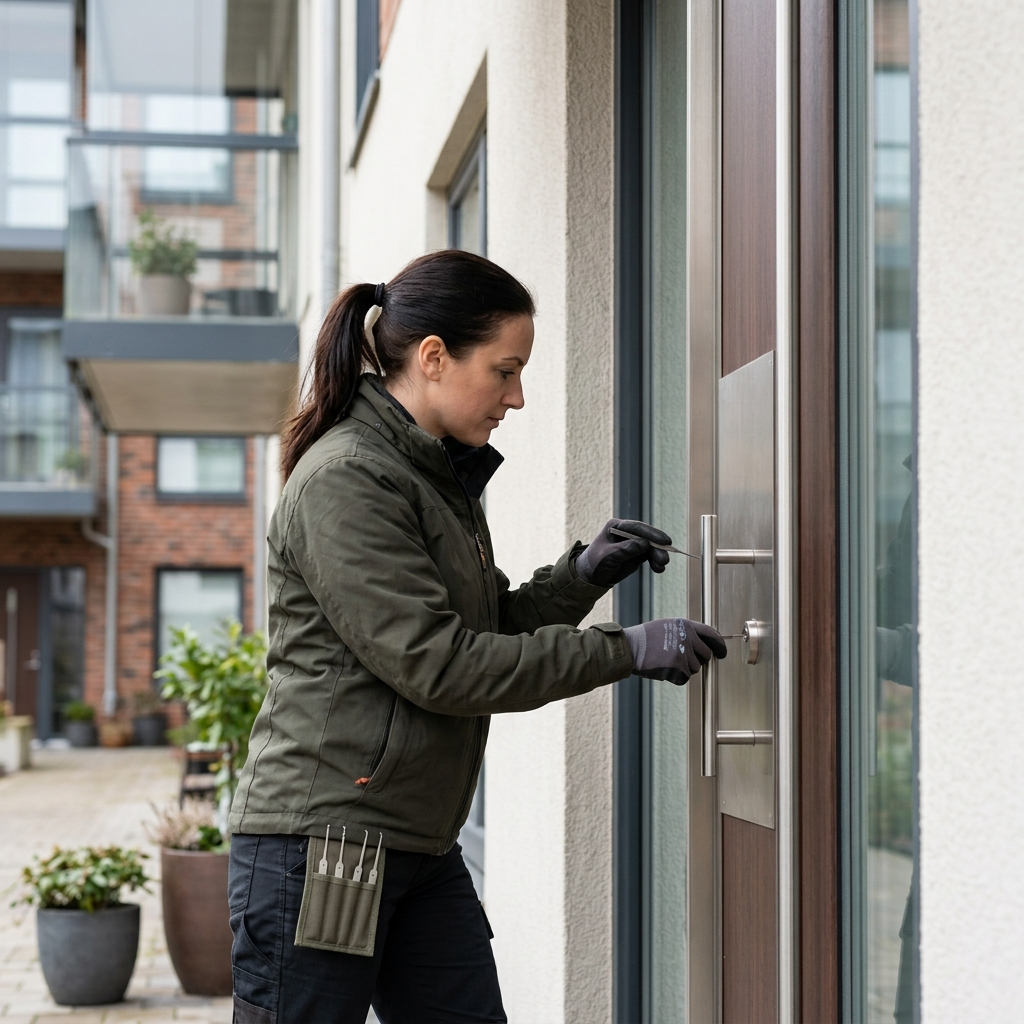
How to avoid an inflated condo lockout bill
Choose a local provider that can explain its service area and identification requirements. Then keep the call focused on the actual failure.
Use this checklist:
Do not force the key, pry the condo door, or remove the lock before the technician arrives. That can turn a simple entry call into a repair involving the cylinder, latch, door, or frame.
If you need residential help beyond a lockout, see residential locksmith service in Toronto and the GTA. The same preparation applies to a rental, townhouse, condo suite, or apartment building.
- Ask for a written all-in quote.
- Confirm whether tax is included.
- Ask if travel, parking, or building delays add charges.
- Describe the lockout accurately.
- Send a photo only after sharing the building and access details.
- Have your identification and occupancy proof ready.
- Ask for non-destructive entry first.
- Set a limit before any drilling.
- Require approval before replacement work.
- Request an itemized receipt.
- Keep damaged hardware if a break-in or insurance claim is involved.
FAQ
Common questions
Quick answers about this topic in Toronto and the GTA.
Can a concierge let me into my condo without a locksmith?
Sometimes. Concierge staff may verify your identity and follow the building’s access policy, but they usually cannot bypass a locked suite door. They may contact the owner, landlord, or property manager and confirm whether a locksmith is allowed.
Does a lost condo key require a new lock?
Not always. If the hardware works and the key is simply missing, rekeying can prevent the old key from operating the cylinder. Replacement makes more sense if the lock is damaged, poorly fitted, or unsuitable for the building.
Will a locksmith open a condo door without identification?
You should expect to prove occupancy or authorization. Government identification, a lease, ownership details, or confirmation from the concierge or property manager may be accepted. Without verification, a locksmith may refuse entry.
Can a locksmith repair a condo access card?
Usually, the card itself must be replaced or reactivated by the building’s access administrator. A locksmith may handle a faulty reader, electric strike, or related physical hardware if the property manager authorizes that work.
Should you call a locksmith or the landlord during a rental lockout?
Call the landlord or property manager first if the lock belongs to the rental. They may have an approved provider, hold a spare, or need to authorize rekeying and replacement. If there’s an immediate safety or security issue, explain that clearly when requesting emergency service.
More reading
Related guides
More step-by-step and how-to articles on the same topic.
Locked Out at Night? Safe Steps Before Calling a Locksmith
Stay safe during a nighttime lockout with practical steps for checking authorized entry, spotting emergencies, and calling a qualified locksmith.
Read article ResidentialLocked Out of Your Toronto Home? Safe Next Steps
Handle a Toronto house lockout safely with lawful entry steps, locksmith timing guidance, and advice for lost, broken, or stolen keys at home.
Read article Locksmith guidesBrampton Lockouts: What Landlords Must Provide
A Brampton landlord should restore lawful access promptly with a key, supervised entry, or locksmith, while the lease explains after-hours steps and costs.
Read articleReady for upfront pricing?
Describe your door or vehicle for a quoted range before a technician is dispatched.