
When Emergency Lock Drilling Is Truly Justified
No. If you’re asking whether lock drilling is necessary during an emergency, use an authorized spare key, concierge access, another approved entrance, or non-destructive entry first. A locksmith should identify the lock, the failure mode, and the safest authorized method. Drilling may be justified when the mechanism has failed or immediate access is required, but it permanently damages parts and creates a second job: securing the door again.
Real dispatcher answersOpen every day, 7 AM to 10:30 PM
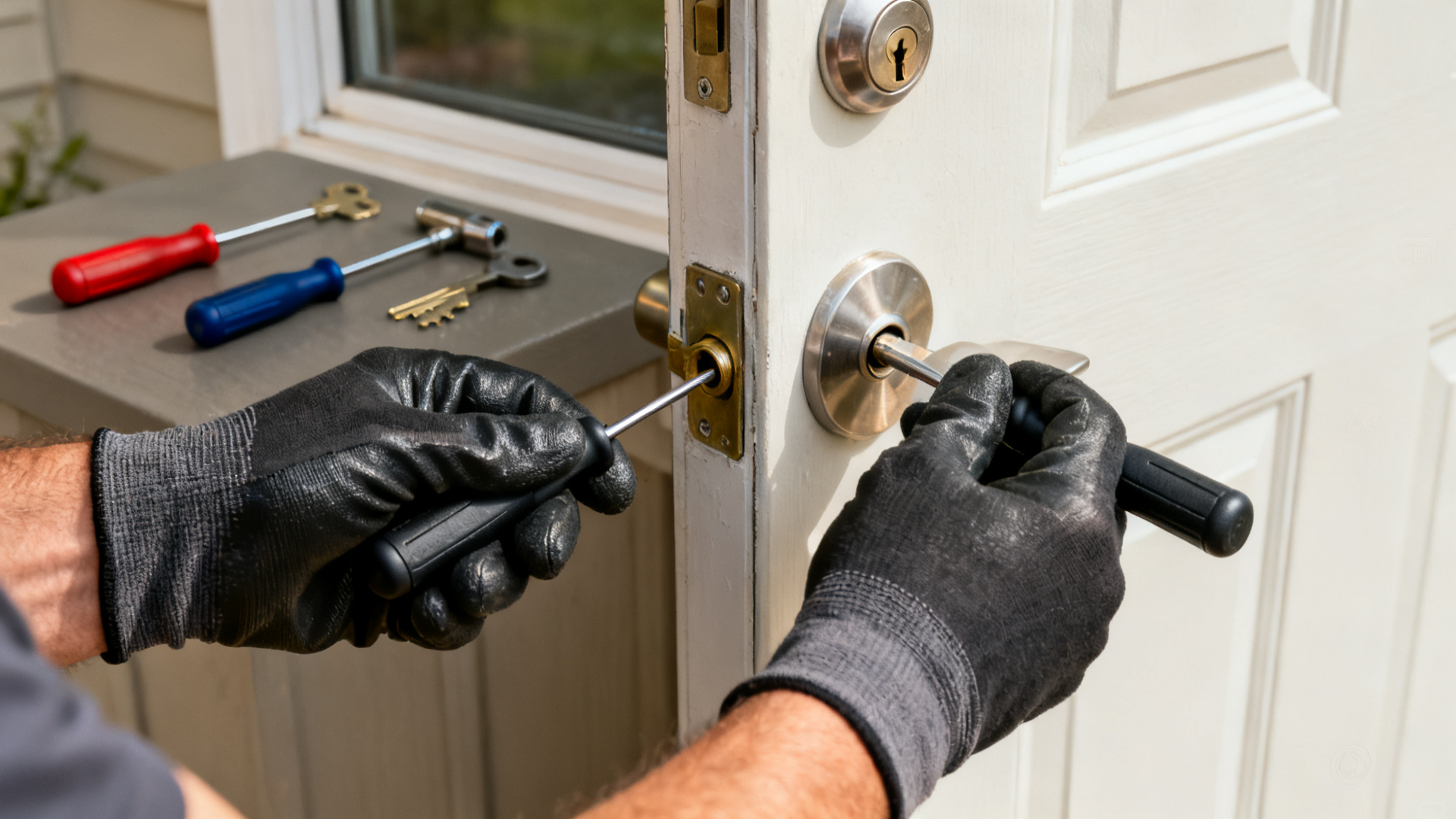
Emergency drilling is a last resort
Lock drilling is necessary only when safer authorized methods have failed, won’t work on that hardware, or would take too long during a genuine safety threat. The person approving it should understand which part will be destroyed and what must replace it.
Drilling usually targets the lock cylinder, which is the part that accepts the key. However, removing the cylinder won’t always release the door. A broken latch, disconnected tailpiece, failed gearbox, or jammed panic bar can remain locked after the visible cylinder is gone.
That distinction matters. Drilling the wrong part adds damage while leaving the original failure in place.
Before proceeding, a locksmith should confirm:
For a condo, rental, office, or managed property, concierge or property approval may also be required. Proof of ownership or occupancy protects the property as well as the technician.
- Your identity and authority to enter
- The type of door and lock
- The symptoms that occurred before the lockout
- Any visible damage or attempted tampering
- Which non-destructive entry methods fit the hardware
- Which part will need replacement
- Whether the door can be secured after entry
Drilling should wait
A drilled lock can’t simply be put back into service. At minimum, the damaged cylinder usually needs replacement. If the drill reaches the lock body, wiring, trim, door skin, or connected hardware, the repair grows.
Premature drilling can cause four practical problems:
This is especially important on commercial and condo doors. A rim cylinder may operate a panic bar, while an electric strike releases through an access-control system. Drilling the cylinder won’t correct failed power, a broken request-to-exit device, or a jammed panic bar.
- Unnecessary replacement: A working cylinder may be destroyed when the actual fault is strike alignment or latch pressure.
- Higher repair cost: You pay for entry, replacement parts, fitting, and sometimes door repair.
- Reduced security: The opening may need temporary protection if the correct part isn’t available.
- Wrong diagnosis: A new cylinder won’t correct a bent latch, failed gearbox, loose hinge, or electrical release fault.
Non-destructive options come first
Start with the option that causes the least damage and still respects ownership rules. The correct method depends on the keyway, lock condition, door construction, and access available around the door.
Safe first checks include:
Do not force a screwdriver, drill bit, second key, or improvised pick into the keyway. These attempts can push debris deeper, break internal parts, and remove non-destructive options that were available at the start.
For help choosing the right response, review the steps for an emergency locksmith in Toronto and the GTA. Commercial doors need a different check, especially when a card reader, panic bar, or electric strike is involved. The Toronto office lockout guide covers those access conditions.
1. Use an authorized spare key
Check with another occupant, the property manager, concierge, or your company’s key holder.
2. Try another approved entrance
Use it only if you’re permitted to enter that way and can do so safely.
3. Reduce door pressure
Lightly push or pull the door while turning the key once. Stop if the key bends or the cylinder binds.
4. Check the access system
A card reader, electric strike, or keypad may have lost power or authorization.
5. Contact the proper support channel
A vehicle may need roadside assistance, a locksmith with on-site programming, or dealer-level system support.
6. Use professional lockout tools
The method must fit the hardware and avoid harming the keyway, latch, frame, or electronics.
Is lock drilling necessary during emergencies?
Drilling may be reasonable when the person requesting entry is authorized and a confirmed mechanical failure blocks safer access. It may also be used when delay creates an immediate risk to a person, animal, property, or active emergency response.
Common last-resort conditions include:
Call emergency services first when someone may be injured, unconscious, trapped, or exposed to fire, gas, or another immediate threat. A locksmith handles locks. Emergency responders decide how to gain access during a life-safety incident.
A documented concern-for-welfare incident at Eccles fire station and a neighbouring property on Liverpool Road was dealt with at around 1pm on Saturday 19 July. At the property on Liverpool Road, Eccles, officers regarded the incident as an emergency and gained access by drilling the lock. About three minutes later, police called back and directed the caller to speak to the fire brigade. That case shows why drilling sometimes has a place, but it doesn’t set a normal lockout procedure or response time.
- A child or vulnerable person is trapped inside
- A medical emergency requires immediate access
- Fire, smoke, gas, flooding, or another active hazard is present
- The cylinder is seized and approved entry methods have failed
- Internal lock parts have broken and no longer transfer key movement
- Heavy tampering has blocked the keyway or damaged the mechanism
- A secure opening must be made after other lawful methods fail
Damaged, tampered, or seized locks
Visible damage changes the diagnosis. Check the keyway, cylinder face, latch edge, strike, frame, and surrounding trim before approving entry work.
The symptom usually points toward the failure mode:
After a break-in, don’t remove the damaged hardware until the door and frame have been checked. Photographs help, but they don’t show whether the strike moved or the frame split. Follow a safe order of steps after a home break-in before arranging repair versus replacement.
If the keyway contains a broken fragment, do not drill through it as a first attempt. Extraction tools can remove the piece without scraping the pins or widening the cylinder opening.
| Symptom | Likely problem | Safer first response |
|---|---|---|
| Key won’t enter fully | Debris, broken key piece, damaged pins, or tampering | Stop inserting tools and inspect the keyway |
| Key enters but won’t turn | Wrong or worn key, seized cylinder, or door pressure | Check the key and relieve light pressure once |
| Key turns without opening | Broken tailpiece, disconnected latch, or failed lock body | Inspect the mechanism behind the cylinder |
| Door was forced or pried | Bent hardware, shifted frame, or damaged strike | Preserve the scene and assess the whole opening |
| Lock became stiff over time | Wear, corrosion, poor alignment, or contamination | Diagnose before the cylinder fails completely |
| Card reader responds but door stays shut | Electric strike, latch, power, or access-control fault | Check the electrical release and door pressure |
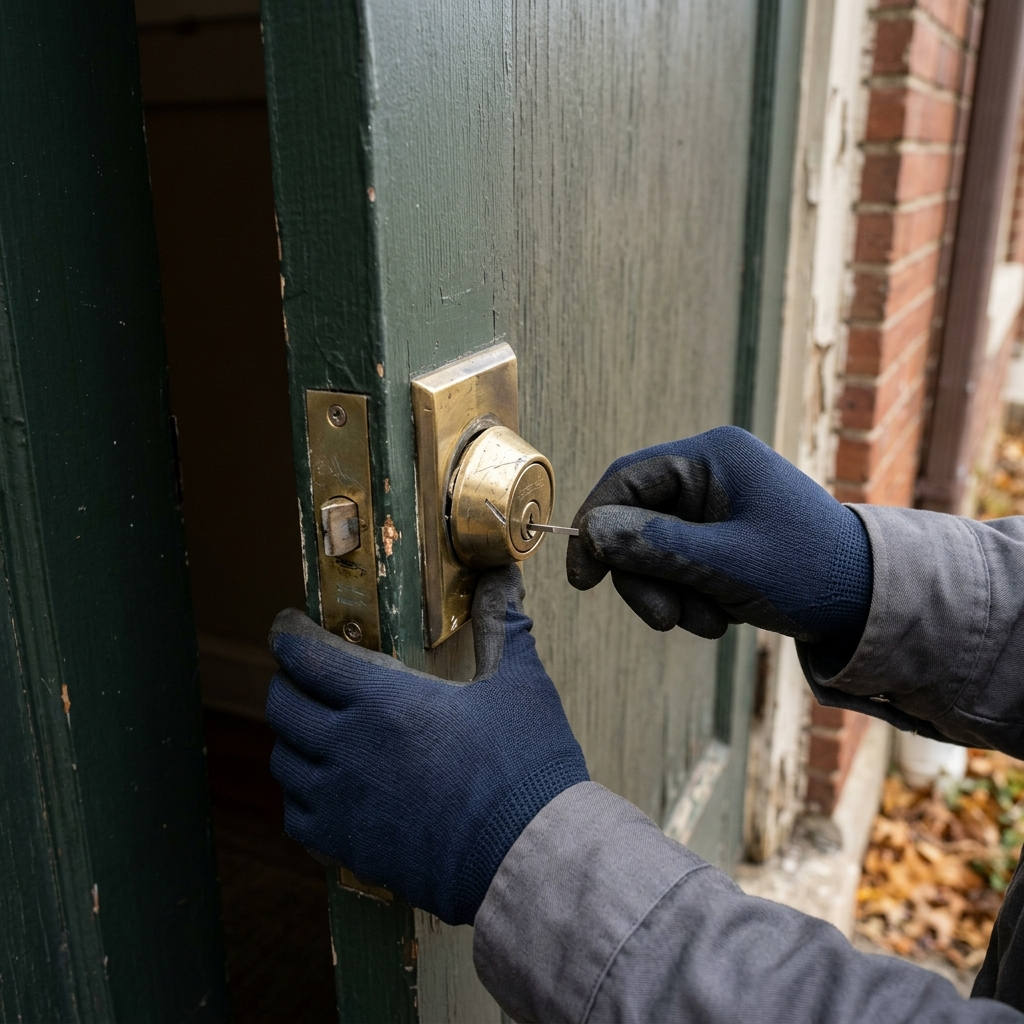
Failed internal mechanisms
A key can turn normally while the door stays closed. In that case, copying the key won’t help because the fault sits behind the keyway.
Possible failures include:
A mortise lock body sits inside a pocket cut into the door. A multipoint gearbox moves several locking points along the door edge. Both systems contain parts that a drill hole through the cylinder may never reach.
Professional tools may allow controlled entry or disassembly. However, some failures require replacement hardware after access. Vehicle immobilizers and smart keys may also require programming equipment or dealer-level support. Damaging the door lock doesn’t disable the immobilizer.
- A broken cylinder tailpiece
- A disconnected cam
- A fractured latch
- A jammed deadbolt
- A failed mortise lock body
- A broken multipoint gearbox
- A panic bar that no longer retracts its latch
- A vehicle actuator that won’t release the door
Residential lockout checks
The first check is authority. You should be ready to show identification, your address, lease or ownership details, and any property manager or concierge contact information.
If your identification is inside, other records may help establish occupancy. However, the technician may need to confirm your details after entry. A friend saying you live there doesn’t settle ownership on its own.
Toronto condos can add several access conditions:
Renters should check the lease and building process before changing hardware. Ontario’s Residential Tenancies Act sets the legal framework for rental housing, but your building may also control key systems and common-area access.
Deciding whether lock drilling is necessary during a residential emergency also depends on who is inside. If a child, older adult, or person with a medical condition may be at risk, stop treating the matter as an ordinary lockout and contact emergency services.
- Concierge approval before the technician enters
- Technician sign-in at the desk
- Elevator or loading access for tools and replacement parts
- Restrictions on exterior hardware changes
- Requirements to preserve a master-key system
- Property manager approval for replacement parts
Alignment and gearbox faults
A door that has dropped on its hinges can press the latch or deadbolt against the strike plate. The key then feels stiff even though the cylinder still works.
Weather can also affect wood doors and frames. Meanwhile, loose hinges, a shifted strike, or poor door prep can create the same symptom throughout the year. Light pressure on the door may confirm the condition, but hard pulling can bend the key or damage the latch.
Multipoint doors create another trap. The handle may move while the internal gearbox fails to lift or retract the locking points. Drilling the cylinder may remove one component without releasing the bolts along the door edge.
A proper check separates these conditions:
If alignment caused the trouble, adjust the door, hinges, or strike and then assess the lock. Replacing a sound cylinder leaves the binding door untouched.
- Does the key turn when the door is open?
- Does the latch retract freely by hand?
- Is the strike loose or visibly marked?
- Has the door started rubbing the frame?
- Does lifting the handle change the pressure?
- Is the lock linked to several locking points?
After a lock is drilled
The damaged component must be replaced before the opening returns to normal security. The exact repair depends on where the drill entered and what failed behind it.
A controlled cylinder drill may allow a new cylinder to fit the existing lock body. However, damage to the housing, latch, cam, trim, wiring, or mounting points can require more hardware. Restricted key systems may also need an authorized cylinder and matching key records.
After entry, the technician should check:
Rekeying may be possible if the replacement cylinder matches the system and the remaining hardware is sound. Rekeying changes the pins so old keys stop working. It won’t repair a drilled shell, bent housing, or failed lock body.
If the proper replacement isn’t available, the door may need temporary protection. Confirm how it will be secured, who can use it, and when the permanent repair will be completed.
- The door and frame
- Strike alignment
- Latch and deadbolt movement
- Cylinder fit
- Interior and exterior trim
- Connected panic or access hardware
- Smart-lock wiring and battery access
- All supplied keys
- The door’s operation from both sides
Replacement cost factors
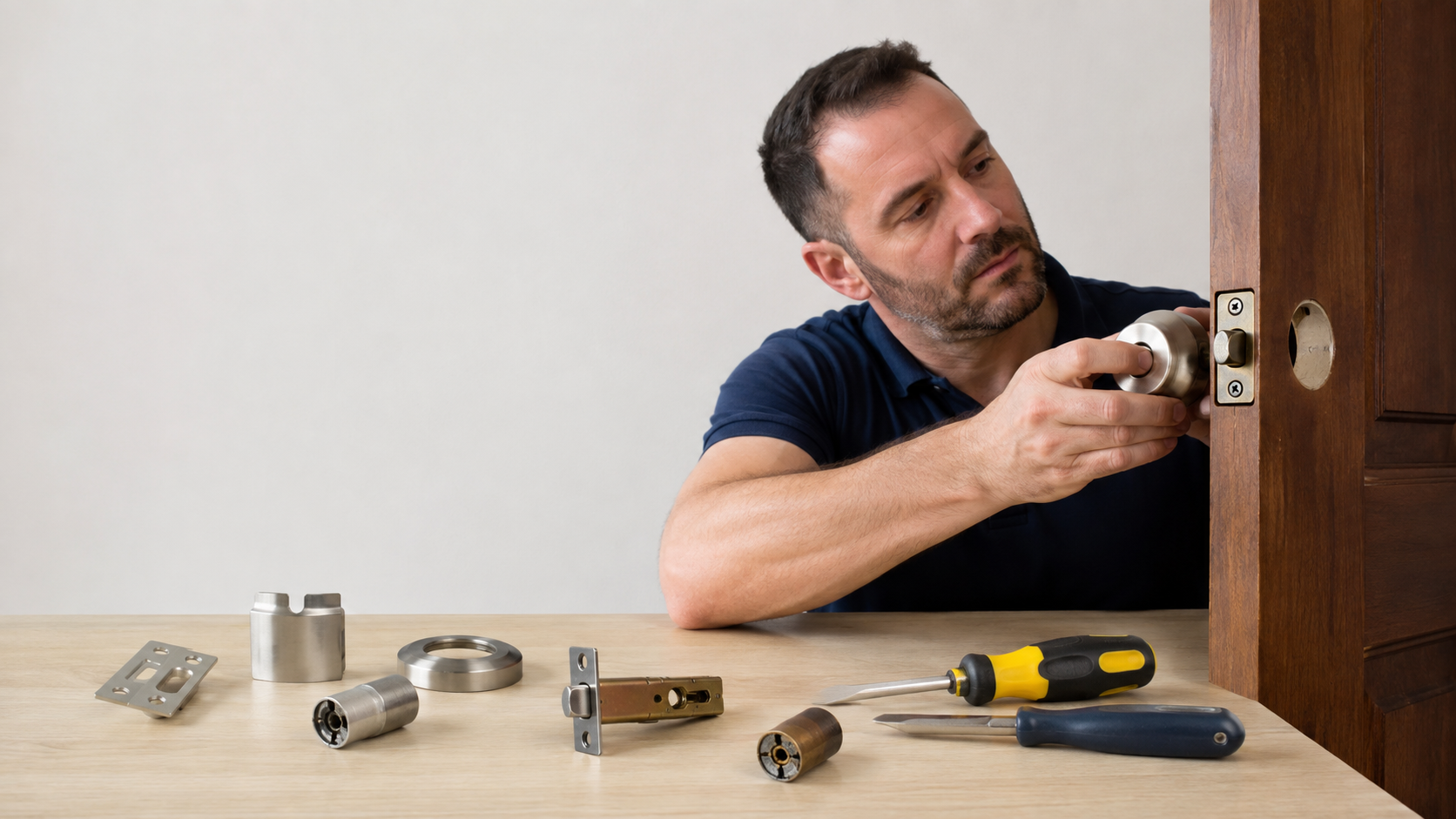
The lock label alone doesn’t tell you the final cost. Labour, access conditions, door damage, part availability, and the time of the call all matter.
The main cost drivers are:
Drilling only creates access. The repair must still fit the hardware, restore safe operation, and leave the door secure.
Before approving it, ask which part will be drilled, why other methods won’t work, and what replacement is available. Also confirm whether the quoted work covers entry alone, temporary security, or the complete repair.
- Basic cylinder replacement: Usually limited to the key cylinder when the lock body remains sound.
- High-security or restricted keys: Parts may require authorization, special key control, or a matching system record.
- Smart locks: Damage can involve the cylinder, motor, cable, mounting plate, or interior unit.
- Mortise and multipoint hardware: These systems contain larger internal mechanisms and door-specific parts.
- Commercial exit hardware: Panic bars, rim devices, and electric strikes need parts matched to the door and code requirements.
- Vehicle systems: Mechanical entry and transponder programming are separate tasks.
- Door and frame repairs: Splits, bent metal, loose strikes, and poor door prep add work beyond the lock.
- After-hours access: Parkade entry, concierge delays, site restrictions, and urgent scheduling affect the service call.
Emergency decision sequence
Use the same order each time. It prevents panic from turning a lockout into avoidable door damage.
A locksmith should be able to explain the decision before drilling, unless emergency responders are managing an immediate safety threat. “The door is locked” is a symptom. It isn’t a diagnosis.
1. Protect people first
Call emergency services for fire, gas, medical danger, or a vulnerable person at immediate risk.
2. Confirm authorization
Gather identification, proof of ownership or occupancy, vehicle information, and building contacts.
3. Check simple access options
Look for an authorized spare, concierge access, a property manager, roadside support, or another approved entrance.
4. Describe the symptom
Say whether the key enters, turns, breaks, spins, or stops under pressure.
5. Identify the hardware
Note the door type, cylinder, deadbolt, smart lock, panic bar, card reader, or vehicle key system.
6. Request non-destructive entry first
The method should match the lock and its condition.
7. Approve destructive entry only after an explanation
Confirm what will be damaged and how the opening will be secured.
8. Complete the repair
Replace the damaged part, correct alignment, test the door, and control the new keys.
FAQ
Common questions
Quick answers about this topic in Toronto and the GTA.
Can I drill my own lock during a lockout?
You may own the hardware, but drilling without a diagnosis can damage the door, latch, trim, or wiring. It can also leave you with an opening that won’t release and can’t be secured. Use an authorized spare or qualified help before destroying the cylinder.
Does drilling always open the door?
No. Drilling may defeat a cylinder while a broken latch, gearbox, panic bar, or electric strike remains engaged. The technician must identify which part is actually holding the door closed.
Should a locksmith ask permission before drilling?
Yes, except where emergency responders are exercising lawful authority during an immediate safety incident. For an ordinary service call, the locksmith should verify authorization, explain the damage, and obtain approval for the entry and expected replacement.
Can a drilled lock be rekeyed?
The drilled cylinder usually needs replacement. A new compatible cylinder may then be keyed to match an approved system, provided the lock body and related hardware remain sound.
Will drilling a car door lock let the vehicle start?
Usually not. The door lock and starting system are separate on vehicles with a transponder or smart key. Starting the vehicle may require a correctly cut key and on-site programming to the immobilizer.
More reading
Related guides
More step-by-step and how-to articles on the same topic.
Locked Out of Your Toronto Office? Start Here
Prevent door, frame, and access-system damage during a Toronto office lockout with safe checks and guidance on when to call a commercial locksmith.
Read article ResidentialLocked Out of Your Toronto Home? Safe Next Steps
Handle a Toronto house lockout safely with lawful entry steps, locksmith timing guidance, and advice for lost, broken, or stolen keys at home.
Read article Locksmith guidesCommercial Lockout in Brampton: Steps to Take and Legal Info
The initial step for a Brampton commercial lockout is phone assessment to identify authorization and hardware before checks or repairs, noting legal limits.
Read articleReady for upfront pricing?
Describe your door or vehicle for a quoted range before a technician is dispatched.