
Inside the Pinning That Makes Master Keys Work
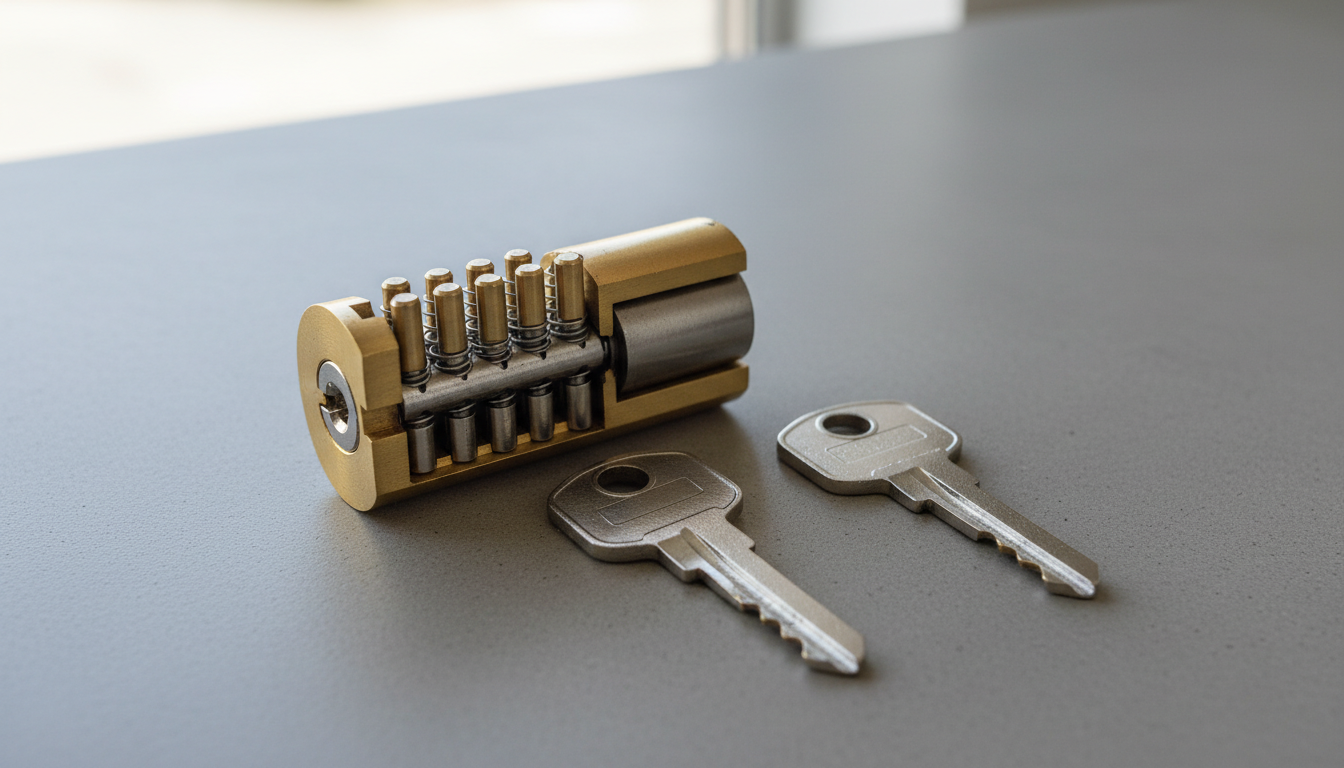
A master key works only in locks that were pinned to accept it. If you're asking, "How does a master key work?", the answer is that selected pin stacks inside the lock hold an extra piece called a master pin, and that extra piece creates a second valid position where the lock can turn. A change key lines up one position. The master key lines up another. This is planned access, not a universal override. Creating, changing, or decoding the system needs authorization and usually a qualified locksmith.
Real dispatcher answersOpen every day, 7 AM to 10:30 PM
The system is a controlled access hierarchy
A master key system is a group of locks arranged around documented access levels. Each door can have its own change key, while an authorized master key opens several doors within the same system.
For example, an employee's change key may open one office. A supervisor's key may open that office and other rooms in the department. A building master may open most mechanical locks listed on the key schedule.
The key does not gain access because its shape is recognized everywhere. Each lock cylinder must be pinned for that key. If a storage room uses another keyway or sits outside the schedule, the master key should not operate it.
This matters in Toronto offices, condos, warehouses, and storefronts. A key stamped "Master" proves nothing by itself. The system chart and the cylinder pinning control where it works.
How does a master key work inside a pin-tumbler lock?
A standard pin-tumbler lock holds spring-loaded stacks of pins. The key lifts those pins until a gap in the stack lines up with the shear line. The shear line is the seam between the turning plug and the fixed housing around it. Once the pins clear that seam, the plug turns.
In a master-keyed cylinder, selected stacks contain an added wafer called a master pin. That wafer creates a second usable gap in the stack. As a result, two different key cuts can each put a gap at the shear line.
The change key lifts the pins to its assigned heights. Meanwhile, the master key lifts them to other planned heights. Both turn the same cylinder because the lock was pinned to accept both patterns.
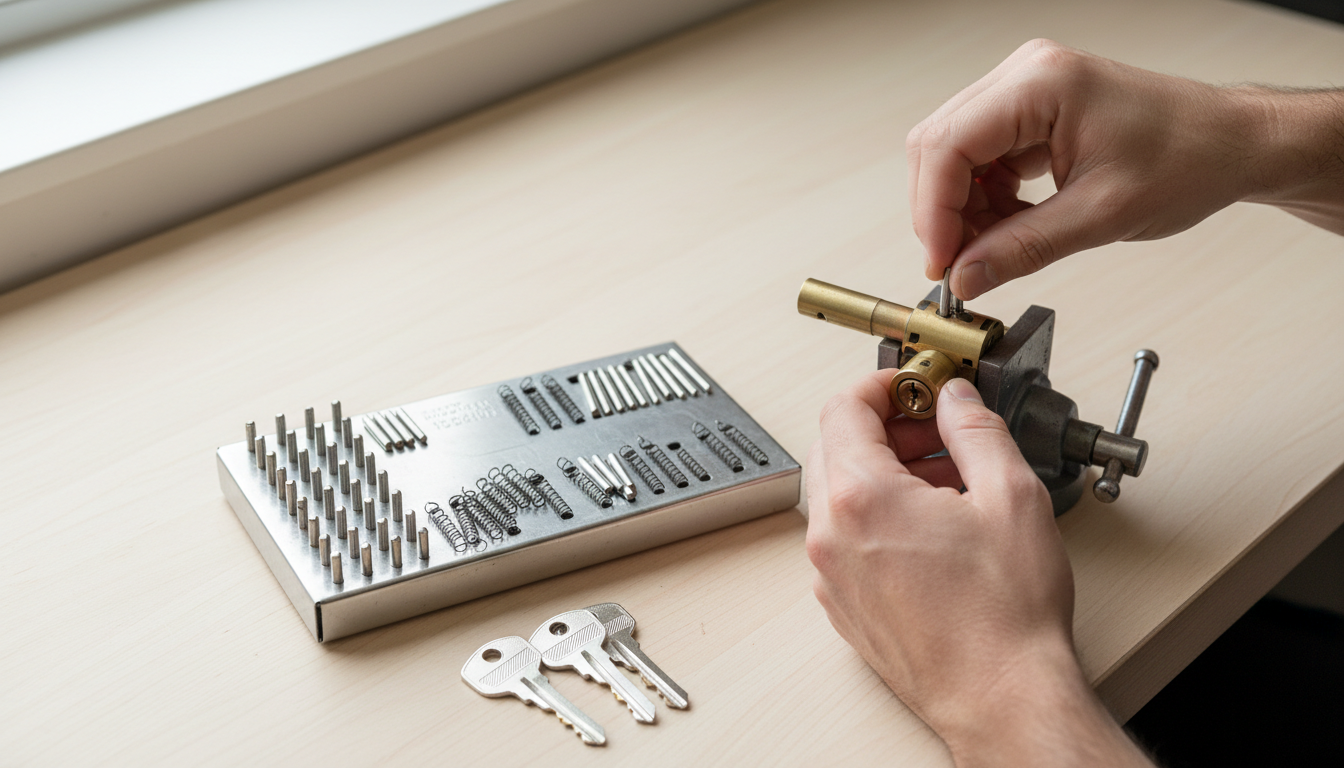
Not every chamber needs a master pin. The locksmith sets the pinning from the approved key schedule and the key cuts. Randomly adding wafers is not master keying. It creates accidental access, rough operation, or a cylinder that no longer matches the records.
Do not file a key or swap pins to make it "more master." That damages key control and may leave other doors exposed.
Change keys and master keys do different jobs
The change key is the everyday key assigned to a door or approved group. A master key sits above those change keys and operates a broader set of cylinders.
A master key does not replace the change keys. Both stay part of the same planned system. That lets staff keep limited access while an authorized person handles inspections, maintenance, or emergencies.
However, convenience carries a cost. The broader the key's authority, the more serious its loss becomes.
| Key type | Normal access | Typical holder | Main risk if lost |
|---|---|---|---|
| Change key | One assigned lock or approved group | Employee, tenant, contractor | Limited doors may need rekeying |
| Master key | Several locks within one level | Manager, superintendent, authorized staff | Many doors may be exposed |
| Grand-master key | Several master-key groups | Senior facilities or security staff | A large part of the site may be exposed |
| Great-grand-master key | Multiple grand-master groups | Tightly controlled institutional role | The wider hierarchy may need redesign |
The hierarchy starts with doors and roles
A sound master key system begins with an access survey, not a pin kit. The locksmith or security manager identifies each opening, the hardware on it, and the people who need access.
The planning record should include:
Roles come next. A cleaner may need common areas but not records storage. A property manager may need mechanical rooms but not independently leased spaces. Meanwhile, a warehouse supervisor may need one section without access to the office key system.
The locksmith then writes the key schedule. That document assigns change keys, master levels, cylinder combinations, and exclusions. Treat the key schedule as security information. It does not belong in an unlocked desk or a shared email folder.
Toronto condos add another layer. Concierge access, property management approval, suite ownership, and common-element rules may restrict who can order keys or approve cylinder changes. Confirm authorization before altering the system.
- Door or room identifier
- Lock cylinder and keyway
- Existing hardware condition
- Required access group
- Authorized key holder
- Key issue and return records
- Rekey and replacement history
- Doors excluded from master access
A simple schematic shows who opens what
A system schematic is a map of permissions. It does not need key cuts or pinning details to explain the structure.
Each lower key opens only its assigned lock or group. Each higher key opens the groups placed beneath it. A door can also be excluded, even if it sits in the same building.
That exclusion is often sensible for cash rooms, server rooms, pharmacies, evidence storage, or independently controlled tenant spaces. A broad master key should not exist merely because a chart can accommodate it.
Great-grand-master key
└── Grand-master key: Main property
 ├── Master key: Administration
 │ ├── Change key: Reception
 │ └── Change key: Records room
 └── Master key: Operations
 ├── Change key: Loading area
 └── Change key: Maintenance room
Multi-level systems bring wider access and wider risk
Grand-master and great-grand-master arrangements let large sites divide access by department, floor, building, or operating role. They suit campuses, institutions, commercial properties, and other sites with many controlled openings.
However, every added level makes the pinning and the records harder to maintain. More master-pin combinations can also raise the chance of unintended key interchange in a poorly designed system. In plain terms, a key may open a lock it was never meant to open.
Small-format interchangeable core, or SFIC, systems are common in institutional hierarchies. An authorized control key removes the core, so a technician can change it without replacing the whole lock body. Frank E. Best introduced the interchangeable core system in the 1960s, and Best Access products are typically installed in moderately sized or larger master key systems. Even so, the key records and compatible hardware still need tight control.
More hierarchy is not better security. Use only the levels the site can document, audit, and rekey after a loss.
What happens when a master-keyed lock is rekeyed?
Rekeying changes the pins inside the lock cylinder so old keys no longer work. The existing lock body can stay if the cylinder, latch, door, and strike remain serviceable.
For one stand-alone lock, that work is direct. In a hierarchy, the locksmith must know which change key and higher-level keys should still operate the cylinder. Without the system records, keeping the intended access becomes guesswork.
A careless rekey can cause several failures:
If the records are missing, a controlled redesign may be the safer choice. Do not preserve a hierarchy nobody can verify.
A lock that binds may also have a door problem rather than a keying problem. Check the keyway, latch, hinges, and strike alignment before changing pins. Our guide to door lock repair and broken key extraction explains why cylinder work will not correct a shifted door.
- The change key works, but the master does not
- The master works, but the assigned change key does not
- An unrelated key gains accidental access
- The key turns roughly because the pinning is wrong
- The cylinder no longer matches the site records
Security depends on key control
The main weakness is simple: a lost master key can expose every cylinder at its level. A lost change key usually does less damage because its access is limited.
Other common failure modes include:
Restricted or patented key systems can reduce casual duplication, because blanks and cutting equipment are controlled. They do not fix poor authorization. Someone still has to approve orders, track holders, recover keys, and act after a loss.
Master-key derivation is another concern. Someone with a valid key, the right lock, and enough system information may work out broader keying details. Publishing bittings, photographing key charts, or labelling keys with the areas they open makes that risk worse.
Do not keep a master key on the same ring as an address tag or building identification. Also, do not label it with every area it opens.
- Keys issued without a written record
- Master keys shared between staff
- Returned keys never checked back in
- Unrestricted blanks copied without approval
- Too many hierarchy levels
- Worn keys copied from worn copies
- Old cylinders left in service after staffing changes
- Keying charts stored where unauthorized people can reach them
- Unverified additions made by different contractors
A compromised master needs immediate assessment
Treat a missing master key as a site security incident. Do not wait for proof that someone used it. By then the problem has moved from prevention to investigation.
Start with a short control list:
Rekey affected cylinders if the hardware is sound and the hierarchy can be preserved safely. Replace the hardware if cylinders are worn, damaged, obsolete, or no longer suitable for the building's security needs.
In a condo or managed commercial site, contact the property manager or authorized building representative. A locksmith may also need proof of ownership, a work order, concierge access, or confirmation from the registered system holder.
For an active commercial access problem, prepare the door list and key records before requesting a commercial emergency locksmith in Toronto. A photograph of one cylinder will not show the affected hierarchy.
- Identify the missing key and its access level
- Confirm when and where it was last held
- List every affected cylinder
- Check whether the key was stamped or tagged
- Review who could have handled it
- Secure high-risk rooms first
- Preserve camera and access records
- Approve rekeying or replacement through the proper authority
Maison systems follow a different access pattern
"Maison" is used in more than one way, so the locksmith's system chart controls the meaning. In many apartment-style systems, an occupant's key opens a private unit and selected common doors, such as the main entrance or a shared service area.
That arrangement differs from a simple top-down hierarchy. Several individual keys may operate a common lock while staying separate at their private doors. The common entrance accepts the approved tenant keys, but those keys should not open each other's units.
Some people also use "maison key" loosely for any key that operates several locks. That description is too vague for service work. Confirm the doors, key groups, and intended permissions before cutting or rekeying anything.
FAQ
Common questions
Quick answers about this topic in Toronto and the GTA.
Can an electronic fob be part of a master key system?
A fob can follow the same access hierarchy, but it does not use master pins. The access-control software assigns doors and schedules to each credential. A mechanical override key may still exist, so review the electronic and mechanical permission records together.
Does holding a master key give a landlord permission to enter a unit?
No. Physical access and legal authority are separate matters. In Ontario, landlords must follow the entry rules in the Residential Tenancies Act, including notice requirements where they apply. Emergencies and other lawful grounds are handled under those rules, not by the label on the key.
Can a master key operate a panic bar or electric strike?
Only if the door hardware includes a compatible cylinder and the system assigns that access. On a panic bar, the key may retract or hold the latch through the trim. With an electric strike, the key may work the mechanical lock while the electrical release stays a separate system.
Why would a working master key fail at one door?
The cylinder may have been rekeyed, replaced, pinned wrong, or left outside the hierarchy. Wear, debris, a damaged key, and door pressure can look the same from the outside. Do not force it. Record the door, test the authorized change key, and have the cylinder and strike checked.
Can a hardware store copy a master key?
A store may copy an unrestricted key blank, but a matching blade does not confirm that the copy is authorized or accurate. Restricted systems may require registered approval and controlled equipment. For an active hierarchy, order keys through the party responsible for its records rather than copying a copy.
More reading
Related guides
More step-by-step and how-to articles on the same topic.
Ready for upfront pricing?
Describe your door or vehicle for a quoted range before a technician is dispatched.