
How to Secure a Trailer With the Right Lock Layers
No single lock makes a trailer theft-proof. The safest workable trailer lock setup has three parts: a coupler lock that fits your exact coupler, a locking hitch pin on the tow vehicle, and a wheel lock or other immobilizer whenever the trailer sits unattended. If a lock is damaged, seized, or fits loosely, replace it. Do not force or bypass it.
Real dispatcher answersOpen every day, 7 AM to 10:30 PM
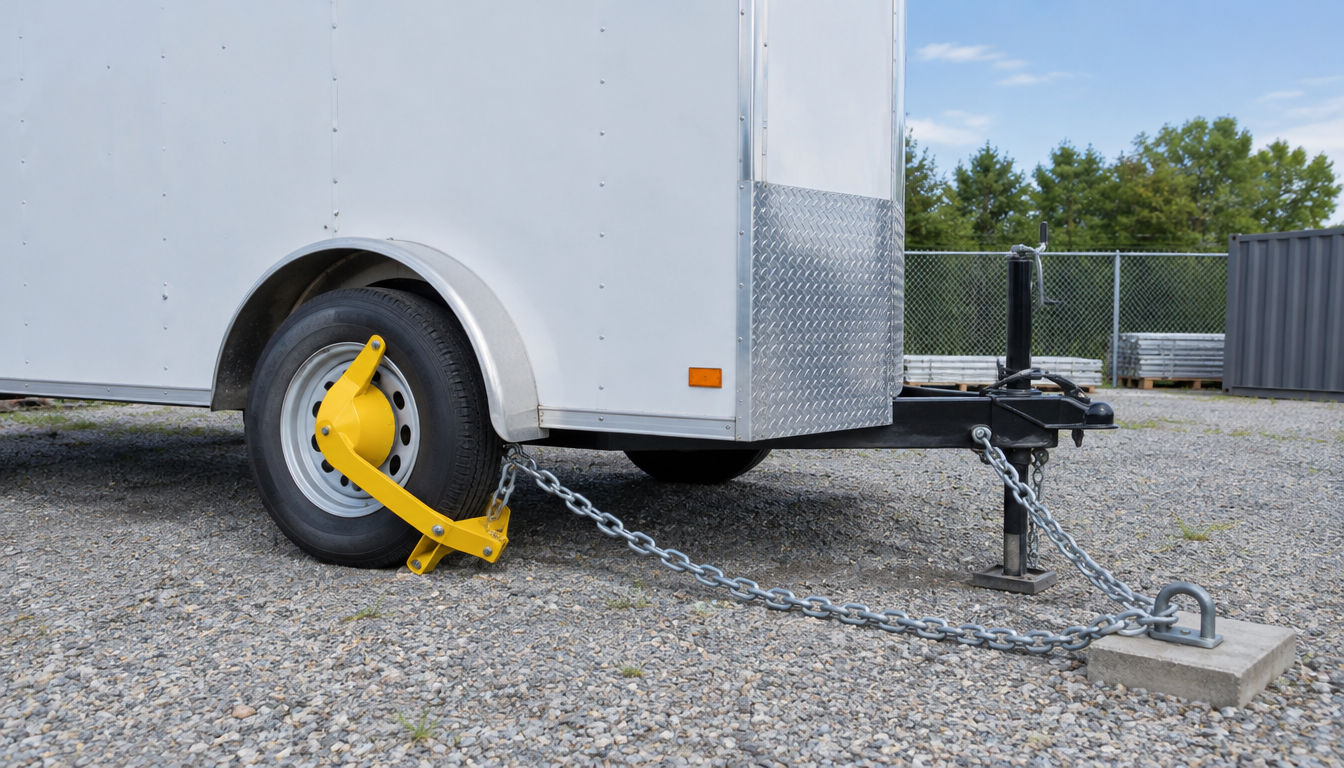
One Lock Blocks One Theft Route
A coupler lock stops someone from dropping your trailer onto their hitch ball. That is its whole job. It does nothing about a thief who cuts the safety chains, unbolts the coupler, or winches a small utility trailer onto a flatbed.
So treat the coupler lock as the first layer. A second layer should stop the trailer from rolling. A third should keep the hitch hardware on your tow vehicle.
Fit matters as much as strength. A lock that wobbles in the coupler can be knocked loose or pried out with a bar. Most trailer lock trouble comes from three places:
- The wrong lock for the coupler
- A lock left off between trips
- A lock that rusted shut over winter
What Coupler Does Your Trailer Use?
Check the coupler on the trailer tongue before you shop. Every tow hitch family uses different coupling hardware, and each needs its own lock. Most trailers on GTA roads use one of these:
Next, read the stamp on a ball coupler. Most are stamped with the ball size and a weight rating near the latch. Write down the ball size and the latch style: a lever on top, a trigger underneath, or a flip-up handle.
Then take two photos from the side, one with the latch open and one with it closed. Those photos show how much room a lock has to fit into. If the stamp has worn off, measure inside the coupler cup. Do not guess from the ball on your truck. A used trailer often runs a different ball than the last owner's notes say.
- Ball coupler: a cup that drops over a hitch ball on the tow vehicle. Most utility, boat, and small cargo trailers use one.
- Lunette ring: a heavy steel eye on the trailer tongue. It hooks into a pintle hook.
- Pintle hook: the jaw on the tow vehicle that grabs the lunette ring. It's common on construction and equipment trailers.
- Fifth wheel: a kingpin under the trailer's front overhang drops into a horseshoe-shaped hitch in the truck bed.
- Gooseneck: a coupler on a long neck that drops over a ball mounted in the truck bed.
Which Trailer Lock Fits Your Coupler?
Buy the lock for the coupler's latch and opening first, then confirm the ball size. Ball diameter only tells you the socket is large enough. It says nothing about whether the lock body clears the latch handle, the jack, or the safety chains.
The Master Lock 379ATPY is a useful example of what "universal" means on a coupler lock. It fits 1-7/8-inch, 2-inch, and 2-5/16-inch couplers. That covers the common ball sizes. However, it is universal across ball sizes, not across every coupler. Your latch shape, tongue width, and jack position decide whether it actually seats.
Coupler locks also work in two positions:
For storage, use a lock that fills the coupler socket or encloses the whole coupler head. Test it before you walk away. The lock should sit tight with no rattle, the latch should stay shut, and the coupler should not drop over a ball.
- Hitched: a latch lock, often a pin or padlock through the latch hole, stops someone from opening the latch while the trailer is on your truck.
- Unhitched: a latch lock alone is weak here. A thief can sometimes force the coupler onto a ball with the latch open.
Receiver Locks Protect the Hitch Side
A receiver lock guards the tow vehicle's side of the connection. The receiver is the square tube under your rear bumper. The ball mount slides into it and is held by a hitch pin and clip.
With a plain pin and clip, anyone can pull the pin and slide out the ball mount with your trailer still attached. They then push that same mount into their own receiver and drive off. A locking hitch pin replaces the clip with a keyed lock, so the mount stays in your truck.
Use both locks when the trailer stays hitched at a gas station, job site, or overnight stop. If the trailer is unhitched and the truck has left, the coupler lock carries the load alone. Even with nothing in tow, the receiver lock keeps a ball mount or bike rack from walking away.
Match the pin diameter and receiver size before you buy. A pin that is too long leaves room to pry. One that is too short will not lock at all.
Wheel, Tire, and Chain Locks Stop the Trailer Rolling
Immobilize any trailer you leave unattended beyond a short stop. A wheel clamp, sometimes called a boot, wraps the tire and stops it from turning. Better designs cover the lug nuts, so a thief cannot simply swap the wheel. A lighter tire lock slows a thief down but usually leaves the lug nuts exposed.
Chain locks fill a different gap. A hardened chain run through a wheel and the trailer frame, then to a ground anchor, stops a light trailer from being lifted or dragged. Thread it through the frame itself, because a fender or tongue jack can be unbolted quickly.
Safety-chain locks clip the trailer's safety chains together or to a fixed point. On their own they protect little, since thieves cut chains. Treat them as an add-on for a hitched trailer.
A ground anchor needs a concrete pad or wall you are allowed to drill. In a rental driveway or condo parkade, get written approval from the owner or property manager first. Many GTA condo buildings do not allow trailer parking at all, so check the rules before you plan any anchor.
Matching Locks to Utility, Boat, Cargo, and Equipment Trailers
How you use the trailer changes what a thief is after. The table below matches common trailer types to the lock layers that fit them.
Tandem axles change the wheel lock decision. A clamp on one wheel still blocks normal rolling, but a thief with a winch can drag the trailer. If it sits in an open lot, add a chain or a second clamp.
On an enclosed cargo trailer, the rear door latch is often the weakest point. Factory cam latches use thin steel and simple keys. A disc padlock with a shrouded shackle, on a hasp that covers its own bolt heads, makes the door much harder to open quietly.
| Trailer type | Main theft risk | Lock layers that fit |
|---|---|---|
| Small single-axle utility | Light enough to lift or roll by hand | Socket or enclosed coupler lock, wheel lock that covers lugs, chain to a ground anchor |
| Boat trailer | Long seasonal storage; boat and motor taken together | Coupler lock, wheel clamp, separate outboard motor lock |
| Enclosed cargo | Contents worth more than the trailer; thin rear-door hardware | Coupler lock, wheel clamp, shrouded padlock on the rear door hasp |
| Equipment or flatbed | Machinery on the deck; often lunette and pintle hardware | Lunette or coupler lock, wheel clamp, machinery chained to the deck with hardened chain |
| Fifth-wheel or gooseneck RV | Large unit parked for weeks in open lots | Kingpin or gooseneck coupler lock, wheel clamps, rekeyed entry and compartment locks |
Fifth-Wheel and Gooseneck Trailers Need Purpose-Built Locks
A ball-coupler lock will not fit either system, so do not try to adapt one. A fifth-wheel trailer carries a kingpin, a heavy vertical pin under the front overhang. A kingpin lock clamps around or caps that pin so it cannot enter a hitch's jaws.
A gooseneck trailer has a coupler that drops onto a ball in the truck bed. Use a gooseneck coupler lock sized to that coupler. It is a different part from a bumper-pull lock, even when the ball size matches.
On the truck side, both hitches have their own locking points. Lock the fifth-wheel hitch handle while hitched, and use a locking pin on a removable gooseneck ball. Also check the RV's entry door and storage compartments. Those factory locks often share common key codes across many trailers, so rekey or replace the hardware after you buy one.
Is Keying Everything Alike Worth It?
For most owners, yes. One key for the coupler, receiver, wheel, and compartment locks means you lock everything every time. Otherwise you skip the one whose key is sitting in the other truck.
The limits are real, though. If that one key is lost or copied, every lock on the trailer is exposed at once. Keyed-alike sets usually come from the same maker and product line, so adding a different brand later breaks the match.
Many trailer locks cannot be rekeyed. As a result, a locksmith may not be able to make an odd lock match your set. Record the key code stamped on the key or the packaging, and keep it somewhere other than the trailer. The manufacturer usually needs that code to cut a replacement key.
Materials, Coatings, and Lock Cores
Hardened steel resists cutting and hammering better than plain steel or cast alloy. Still, any portable lock can be beaten with enough time, noise, and a battery grinder. The goal is to make the attack slow and loud enough to draw attention.
Check three areas on any lock you consider:
Then look past the lock. A strong coupler lock on a coupler held by plain bolts invites the thief to unbolt the coupler instead. Welded couplers, or bolts with tamper-resistant heads, close that gap.
Treat words like "unbreakable" or "theft-proof" on the packaging as a reason to read the specs more closely. Also expect winter to test every lock. Salt spray from GTA highways gets into exposed keyways and freezes there.
- The shackle or locking pin. Shrouded designs leave little room for bolt cutters.
- The lock cylinder. A keyway with a cover keeps out water, grit, and road salt.
- The finish. Zinc, chrome, or powder coating slows rust, but scratches let it start.
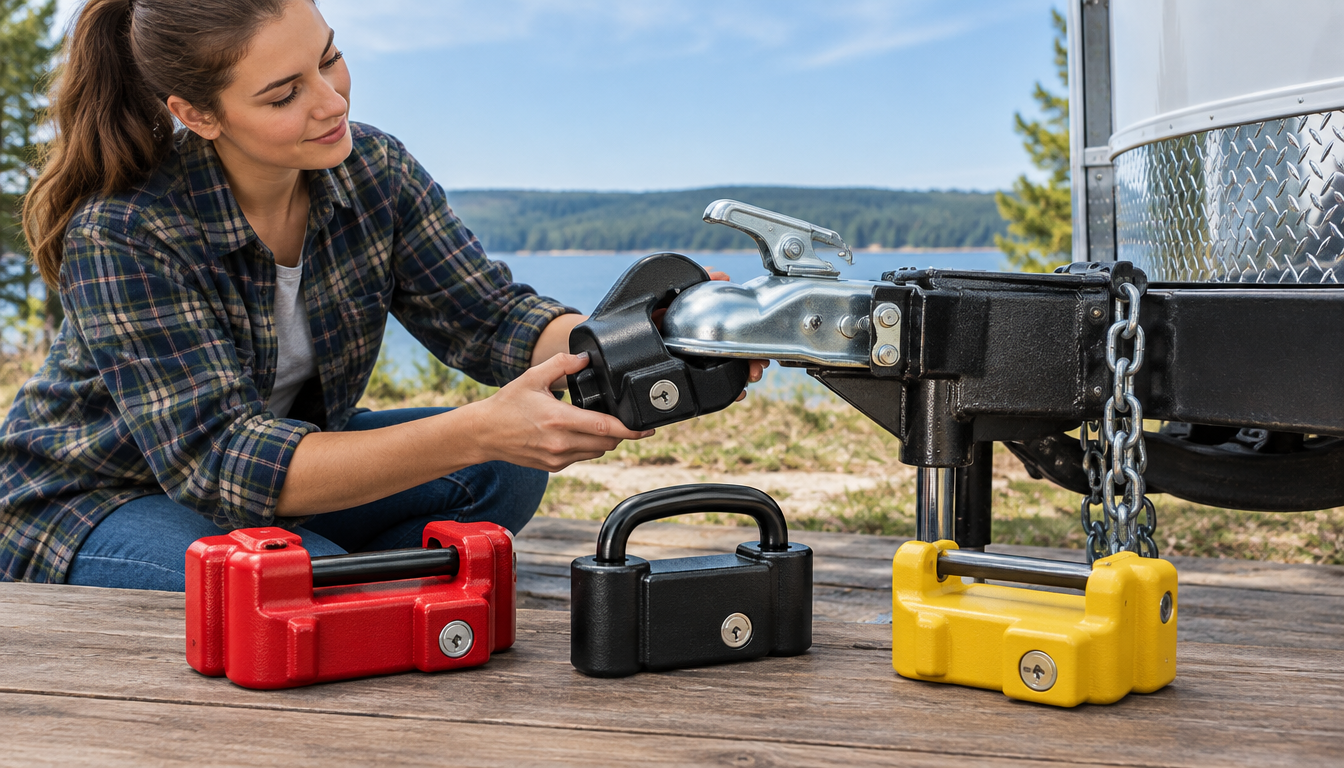
Signs the Lock Has Failed the Job
Inspect the trailer lock each time you fit it and before winter storage. Look for these warning signs:
Fresh pry or cut marks mean someone has already tested your setup. Replace the lock and add a second layer before the trailer sits there again.
The check that matters most is the spare ball. With the lock fitted, hold a loose hitch ball up into the coupler cup. If the ball can seat, the lock is decoration.
- The lock rattles or shifts when you push it by hand.
- The latch still lifts with the lock in place.
- The key binds, turns only after jiggling, or comes out gritty.
- Rust bleeds from the keyway or shackle.
- The lock body hits the jack or chains, so it sits crooked.
- The shackle or pin shows cut marks, pry marks, or fresh scratches.
Do Not Force a Seized or Keyless Lock
Stop if the key will not turn. Do not hammer the lock, pry it with a bar, or grind it off against the coupler. The coupler holds the trailer to your truck at highway speed, and a gouge or bent latch can make it unsafe to tow.
For a frozen lock, use a lock de-icer or gentle warmth, then try the key once more without forcing it. Do not pour boiling water into the keyway, because it refreezes deeper in the lock cylinder. If a key snaps, leave the stub alone and read our guide to broken key extraction and lock repair before anything else goes into the keyway.
If the key is lost, start with the lock manufacturer and your key code. Without a code, a qualified locksmith can often open the lock with non-destructive entry. If that fails, the lock can be cut off in a controlled way that protects the coupler.
Expect to show proof of ownership, such as your trailer's ownership permit, registration, or bill of sale. If the latch, cup, or tongue is bent, have a trailer dealer or trailer shop inspect the coupler before you tow. When the missing keys belong to the tow vehicle instead, that is a separate problem; start with what to do first when locked out of your car.
Secure the Spot Where the Trailer Sits
Park with the coupler facing a wall, fence, or another vehicle so nobody can reach it. Locks still matter, but blocked access slows a thief before they even get to the lock. Light the spot, point a camera at the tongue and the exit path, and keep the trailer visible from the house or street.
In a storage lot, ask how the gate is controlled and whether you may add a ground anchor. Businesses that keep trailers behind a gated warehouse yard should treat the gate and building locks as part of the same system. Our page on handling a commercial lockout covers the authorization steps a yard or storefront needs.
Keep records off the trailer: the VIN, plate number, equipment serial numbers, photos from all sides, and any marks you added under the deck. If the trailer is stolen, report it to the Toronto Police Service or your local police right away and hand over those details. Then call your insurer. Before any theft, confirm whether your policy covers the trailer, its contents, or both.
FAQ
Common questions
Quick answers about this topic in Toronto and the GTA.
Can I leave a coupler lock on while towing?
Only a latch-style lock made for use while hitched. Take socket and enclosure locks off before you hitch. Then confirm a latch lock cannot vibrate loose or hold the latch partly open on the road.
How should I maintain trailer locks between seasons?
Spray a dry lock lubricant into each keyway in the fall and after salty drives. Skip heavy grease, which traps grit and stiffens the pins. Operate every lock a few times before storage so you catch a binding key while you can still reach a dry garage.
Does a GPS tracker replace a lock?
No. A tracker helps police recover a trailer after it's gone, while locks slow the theft itself. Hide the tracker where a quick search will miss it, and check its battery or power source on a schedule.
More reading
Related guides
More step-by-step and how-to articles on the same topic.
How Toronto High-Security Locks Control Access
High-security locks make key copying and unauthorized entry harder, but Toronto properties also need strong doors, frames, access rules, and key control.
Read article Locksmith guidesInstalling a New Deadbolt in a Pickering Home
Measure, check the door and line up the frame before you install a deadbolt in a Pickering home. What to check before you drill or replace a lock.
Read article Locksmith guidesRekeying or Replacing a Lock: How to Choose
Rekeying preserves a sound lock when key control changes, while replacement addresses damage, poor fit, outdated features, and security concerns.
Read articleReady for upfront pricing?
Describe your door or vehicle for a quoted range before a technician is dispatched.