
How Toronto High-Security Locks Control Access
High-security locks in Toronto: what they are and who needs them comes down to the cost of unauthorized access. They use stronger lock cylinders, tighter key control, and better protection against common attacks than basic hardware. They make sense after a break-in, during a tenant or staff change, or anywhere lost keys and uncontrolled copies create a serious risk. They still fail if the door, frame, strike, or access rules are weak.
Real dispatcher answersOpen every day, 7 AM to 10:30 PM
High-security locks in Toronto: what they are and who needs them
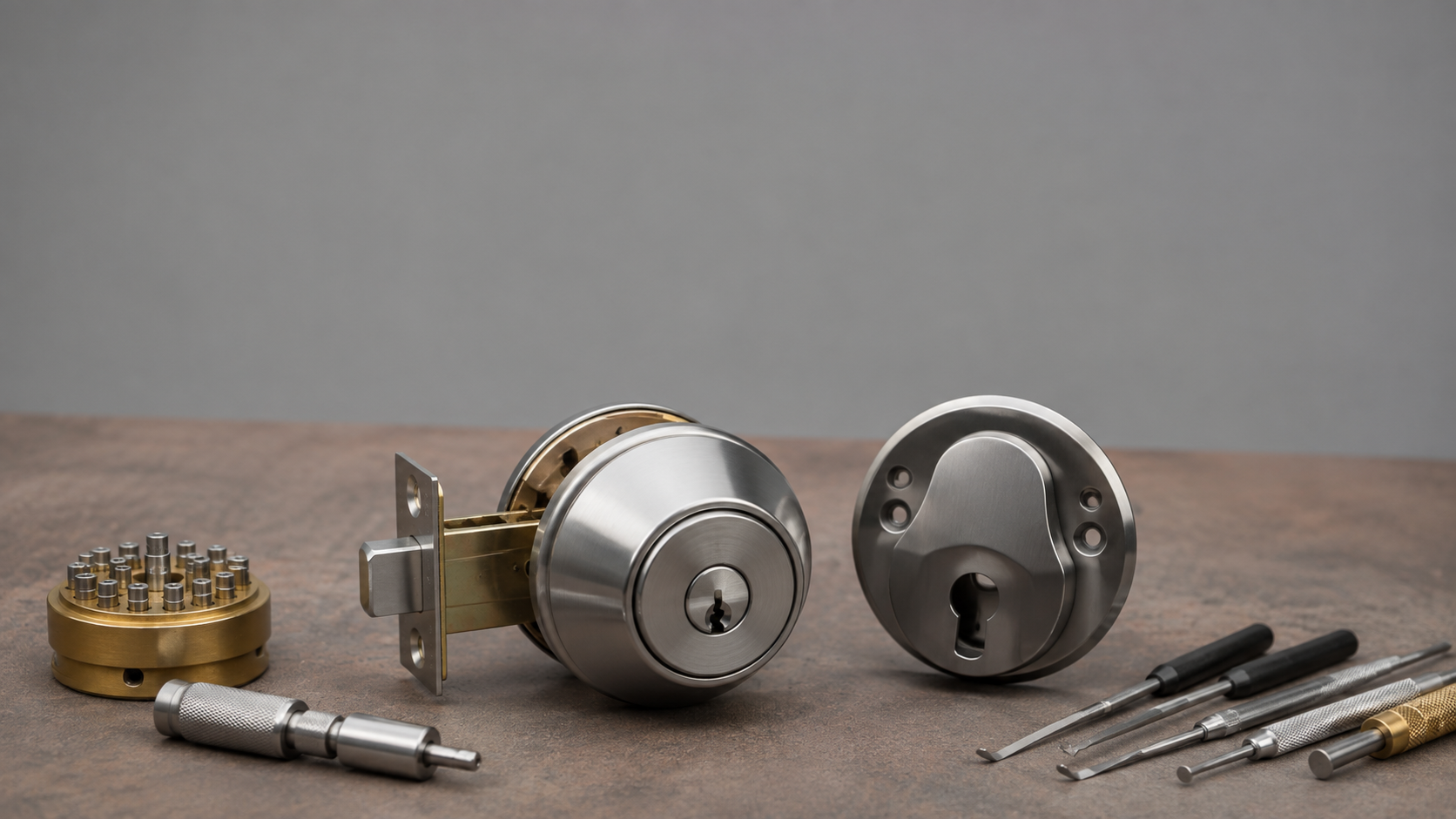
A high-security lock is a complete security system, not a shiny cylinder with a serious name. It usually combines an attack-resistant lock cylinder, protected key blanks, restricted duplication, and hardware that is fitted to the door and frame.
The cylinder is the part that reads the key. Better designs make picking, bumping, drilling, and unauthorized key copying harder. Some systems are certified against defined attack tests or controlled through an authorized dealer.
That last part matters. A lock can have a complex-looking key and still provide poor key control if anyone can order blanks online or copy it at a kiosk.
High-security locks in Toronto are usually worth considering for:
You don't need this hardware on every interior closet. Start with exterior doors, common entrances, server or records rooms, medication storage, cash areas, and any door where access must be tracked or revoked.
For a Toronto condo, confirm the building's door and hardware rules first. The concierge, property manager, or condominium corporation may control the lock format, restricted key system, or approved contractor list.
- Detached homes with valuable contents or a recent break-in
- Condos with repeated key changes or strict building access rules
- Rental properties where former tenants, contractors, or cleaners may still have keys
- Offices with staff turnover and several access levels
- Retail stores with cash, stock, or exterior doors exposed to the street
- Warehouses and industrial spaces with multiple workers and shift changes
- Medical, legal, financial, and educational facilities
- Multi-tenant buildings with shared entrances and separate suites
- Properties where a lost master key would affect many doors
Picking and bumping resistance depends on the cylinder design
High-security cylinders use internal parts that make manipulation harder. These may include security pins, false pin positions, side pins, sliders, or other features that do not behave like a basic pin tumbler cylinder.
Picking attempts to set the internal pins without the correct key. Bumping uses a specially cut key and impact to try to move those pins at once. Neither attack is magic, and neither is stopped by every high-security cylinder. However, a well-designed cylinder gives common tools less room to work.
The correct comparison is the full cylinder design, not the number of claims on the package. Ask what attack testing applies, who controls the key blanks, and whether the cylinder is installed in hardware that protects it from direct attack.
A locksmith also checks the condition of the existing lock. A worn cylinder may have poor tolerance even if its original design was strong. If the key sticks, turns roughly, or operates differently from door to door, repair or replacement may be needed before adding a higher-grade system.
Can high-security locks stop drilling, crowbars, and impact attacks?
No. A high-security cylinder can resist some attacks, but it cannot make a weak door strong.
Protection against forced entry depends on the entire opening:
Hardened inserts and reinforced escutcheons can make drilling or direct attacks harder. A properly secured strike can also resist more force than a thin plate held by short screws. Still, a hollow interior door, loose frame, weak hinges, or exposed glass can defeat the upgrade.
A crowbar attack is a door and frame problem as much as a lock problem. Impact attacks may damage the lock, door, frame, or surrounding wall before the cylinder itself gives way.
The National Institute of Justice explains physical security as a layered system. That is the right way to assess a Toronto property. Check the complete opening before paying for a premium cylinder.
- Lock cylinder and housing
- Escutcheon, which is the trim around the cylinder
- Latch or deadbolt
- Strike plate and its fasteners
- Door material and construction
- Hinges and hinge screws
- Frame and wall anchoring
- Glass panels and sidelites
- Clearance around the door
Restricted keyways control ordinary duplication
A restricted keyway uses a key profile that isn't freely available to every hardware counter or copying machine. The blank may be supplied only through an authorized dealer. The system may also require registration, written approval, or proof of ownership before duplicate keys are cut.
This reduces uncontrolled copying. It doesn't make duplication impossible.
A person can still lend a key, lose one, photograph one, or order an unauthorized copy through a dishonest or careless channel. The value comes from controlling the normal duplication process and keeping a record of who received keys.
Ask these questions before choosing the system:
For commercial properties, key control should be written into the handover process. Return keys during offboarding, record missing keys, and avoid giving a master key to workers who only need one room.
Our guide to commercial locksmith services in Toronto and the GTA covers the broader hardware and access decisions that affect business doors.
- Who is allowed to order duplicate keys?
- What proof of ownership or authorization is required?
- Are key holders recorded?
- Can the system be rekeyed if a key is lost?
- How long will replacement keys remain available?
- Can the dealer support the system after a staff or tenant change?
- Does the building already require a specific keyway?
Lost or stolen keys require a prompt access decision
Treat a lost high-security key as a possible access failure, not an inconvenience. If you cannot reliably recover it, have the affected cylinder rekeyed or replaced.
Rekeying changes the internal combination so the old key no longer operates the cylinder. Replacement may be better if the cylinder is damaged, the key system is obsolete, or you need a different restricted keyway.
Give the locksmith clear information:
Don't wait for proof that someone used it. The exposure comes from uncertainty. In a condo or rental, confirm approval with the owner, property manager, or condominium corporation before changing controlled hardware.
A stolen master key needs a wider review. Rekeying one visible door may leave several other doors exposed.
- Which key is missing
- Which doors it operated
- Whether the key had an address or suite marking
- Who may have handled it
- Whether it was lost or stolen
- Whether the key belonged to a master system
- Whether other keys are also unaccounted for
Customized master key systems need narrow permissions
Yes, but master key design needs restraint. A master key system gives different users access to different groups of doors while allowing an authorized higher-level key to operate more doors.
A basic structure may include:
The risk is overbroad permission. If every contractor receives a master key, the system has been designed for convenience rather than control.
A locksmith maps the doors, users, schedules, and emergency needs before cutting keys. The plan should also account for future doors and staff changes. Poor planning can create unwanted overlaps that are hard to correct without replacing or rebuilding parts of the system.
Keep a current key record. Mark who has each key, what it opens, and when it was returned. A master key system without records is only organized until the first missing key.
- Individual keys for one room or suite
- Sub-master keys for a department or floor
- A master key for a property manager or security lead
- A restricted emergency or service key with defined access
Remote monitoring and access management add control, not simplicity
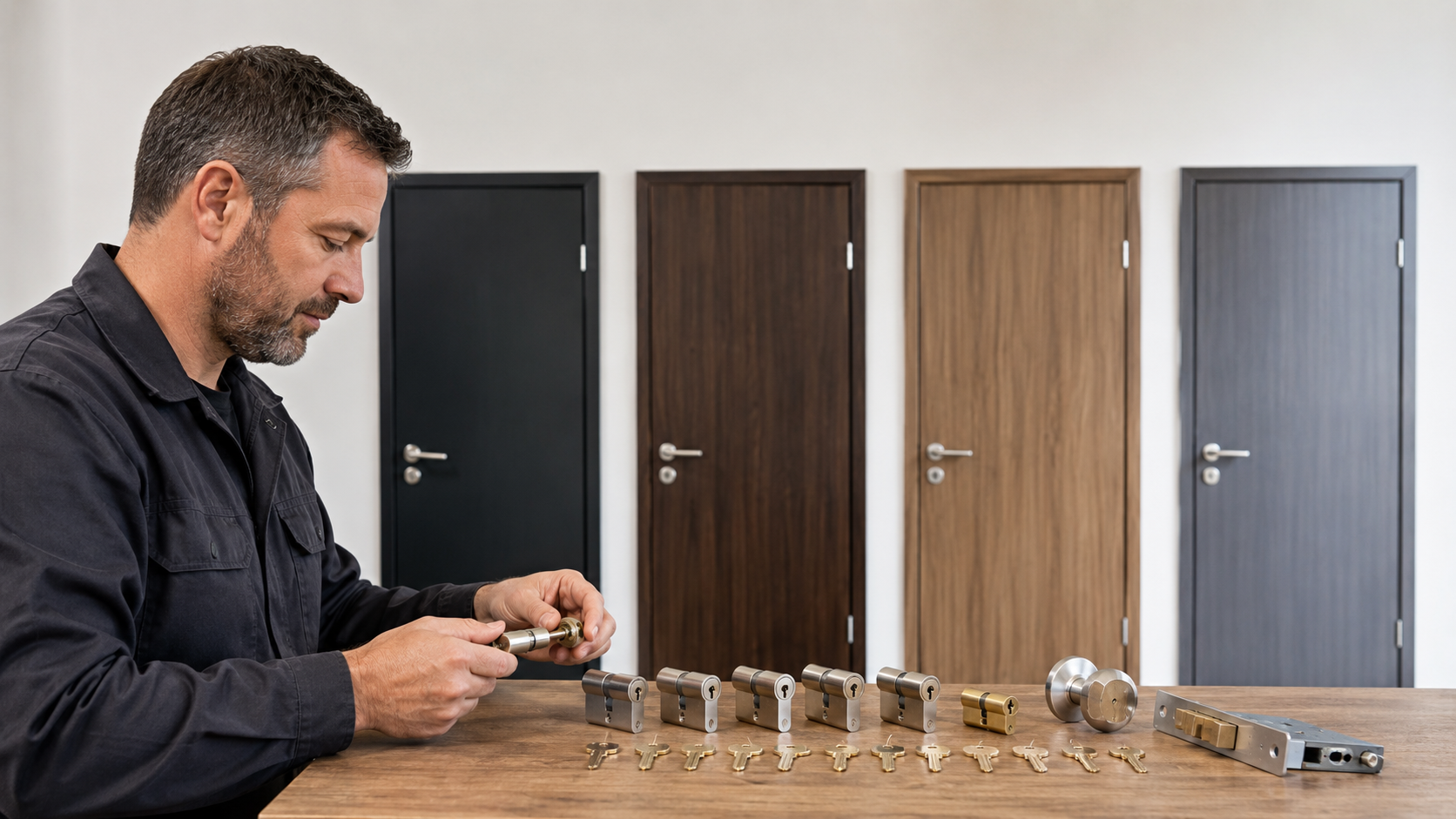
Mechanical high-security locks protect the cylinder and control physical keys. Electronic access systems add different functions, including audit trails, temporary credentials, remote changes, and rapid revocation.
Choose electronic access when you need to know:
Cards, fobs, keypads, mobile credentials, and electric strikes can support those needs. However, the system also depends on power, batteries, software, network coverage, credential management, and a working emergency release.
A mechanical cylinder may be the safer choice for a small property with a few trusted users. An electronic system adds control, but it also adds failure modes and maintenance duties.
For mixed systems, confirm how the door works during a power failure. A panic bar must still allow emergency egress, and an electric strike must be compatible with the door, frame, access controller, and fire-safety requirements. The Ontario Building Code governs building requirements that may affect door hardware and emergency exits.
- Who entered a door
- When the entry happened
- Which credential was used
- How quickly access must be removed
- Whether contractors need temporary access
- Whether staff need different schedules
- Whether several sites must be managed together
A strong cylinder cannot correct a weak opening
They aren't. A premium cylinder on a weak door is a badly balanced repair.
Common problems include:
Start by checking the door's movement. It should close without being lifted, shoved, or pulled into place. Check the strike alignment, latch engagement, hinge screws, and frame condition before selecting a cylinder.
On older Toronto rentals and condos, a lock that seems weak may have a door-prep or alignment problem. Installing a stronger lock without correcting that problem can make the door harder to operate and leave the latch poorly engaged.
Our page on security and smart locks in Toronto and the GTA covers these combined hardware and access choices.
- Hollow or damaged doors
- Loose strike plates
- Short or missing fasteners
- Bent lock housings
- Shifted frames
- Weak hinge attachment
- Exposed glazing beside the lock
- Gaps that allow tools into the frame
- Doors that drag or fail to close fully
DIY checks are reasonable, but high-security installation has a clear boundary
You can handle simple checks, but high-security installation often needs a qualified locksmith or authorized dealer. Accurate door prep matters because the cylinder, latch, strike, escutcheon, and frame must work together.
Dealer or locksmith support is especially important for:
Do not enlarge the door with a drill until you know the lock's required dimensions. A bad cut can weaken the door, misalign the latch, or leave you with hardware that cannot be returned.
Don't force a keyway, remove a secured cylinder without authorization, or bypass an electronic access system. The damage may cost more than the original security work, and a rental or condo may require proof of ownership before any change is approved.
- Restricted keyway authorization
- Master key design
- Cylinder pinning and rekeying
- Commercial storefront hardware
- Panic bars and emergency egress
- Electric strikes and access controllers
- Condo-approved hardware
- Doors with unusual thickness or clearance
- Vehicle or building systems with controlled credentials
Repair, replacement, or a dealer-level system depends on the failure mode
Use the failure mode to choose the work. Don't buy a high-security cylinder as a substitute for diagnosis.
Repair makes sense when the lock body, latch, door, and frame are still sound. Replacement is the right call when the hardware is compromised or no longer fits the security need.
A dealer-level system makes sense when key control is central to the risk. It gives you a defined process for authorized copies, records, rekeying, and system changes. It also means you depend on the dealer for future service, so confirm that support before choosing a proprietary system.
For homes, start with the exterior doors and the people who hold keys. For businesses, map the doors and access levels first. High-security locks in Toronto work best when the hardware, authorization, and daily key handling all support the same plan.
| Condition | Correct next step |
|---|---|
| Sound lock with a minor cylinder fault | Repair or rekey the existing lock |
| Worn, damaged, corroded, or poorly fitted hardware | Replace the affected hardware |
| Weak door, frame, strike, or hinges | Correct the opening before upgrading the cylinder |
| Lost key with controlled access concerns | Rekey or replace the affected cylinders |
| Multiple users with different door permissions | Design a master key or electronic access system |
| Need for key records, audit trails, or rapid revocation | Use a dealer-managed access system |
| Condo or rental with controlled building hardware | Get written approval before changing the system |
FAQ
Common questions
Quick answers about this topic in Toronto and the GTA.
Do high-security locks work with existing keys?
Usually, only if the existing keys belong to the same compatible key system. A new restricted keyway normally requires new keys, and an existing master key plan may need to be reviewed before any cylinder is changed.
Can a high-security cylinder be installed on a standard deadbolt?
Sometimes, but the cylinder must match the deadbolt, door thickness, backset, trim, and mounting method. A cylinder that fits the opening may still leave the housing or strike vulnerable.
Do high-security locks work during a power outage?
Mechanical locks continue to operate without power. Electronic locks depend on their design, battery condition, and emergency release method, so confirm the failure mode before installation.
Should a business use one high-security key for every door?
No. Use the narrowest access level that meets the job. Separate individual, department, service, and emergency access so one missing key doesn't expose the whole property.
Can a high-security lock replace an alarm system?
No. A lock controls entry at the door. An alarm can detect movement, door opening, or tampering after someone reaches the property. The two systems address different parts of the risk.
More reading
Related guides
More step-by-step and how-to articles on the same topic.
Residential Key Duplication in Toronto: Where to Copy
In Toronto, Pro Locksmiths can help, and Minute Key’s key-copy and locksmith service is listed at 1000 Gerrard Street East. The keyway also matters.
Read article Locksmith guidesToronto Lock Changes: Notice, Keys, and Eviction Rules
Toronto landlords usually need no notice to change a lock, but must provide working keys and follow Ontario rules for entry and eviction procedures.
Read articleReady for upfront pricing?
Describe your door or vehicle for a quoted range before a technician is dispatched.