
Toronto Lock Changes: Notice, Keys, and Eviction Rules
The legal boundary is clear: a Toronto landlord generally doesn’t need advance notice merely to change a rental lock. The landlord must provide working replacement keys and cannot use the change to remove the tenant’s access. One published Ontario decision, [Laczi-bencze v Cheung, 2024](https://riverview.legal/encyclopedia/index.php/Illegal_Lockout_%28Landlord_Changes_Locks%29) ONLTB 66824, ordered $6,000.00 in a lock-change dispute. If the landlord or locksmith must enter the rental unit, the landlord normally must give written notice before entry. Ending the tenancy is a separate legal process: a landlord who wants the tenant out must serve proper notice, and if the tenant does not leave, only an order from the Landlord and Tenant Board enforced by the sheriff can remove them.
Real dispatcher answersOpen every day, 7 AM to 10:30 PM
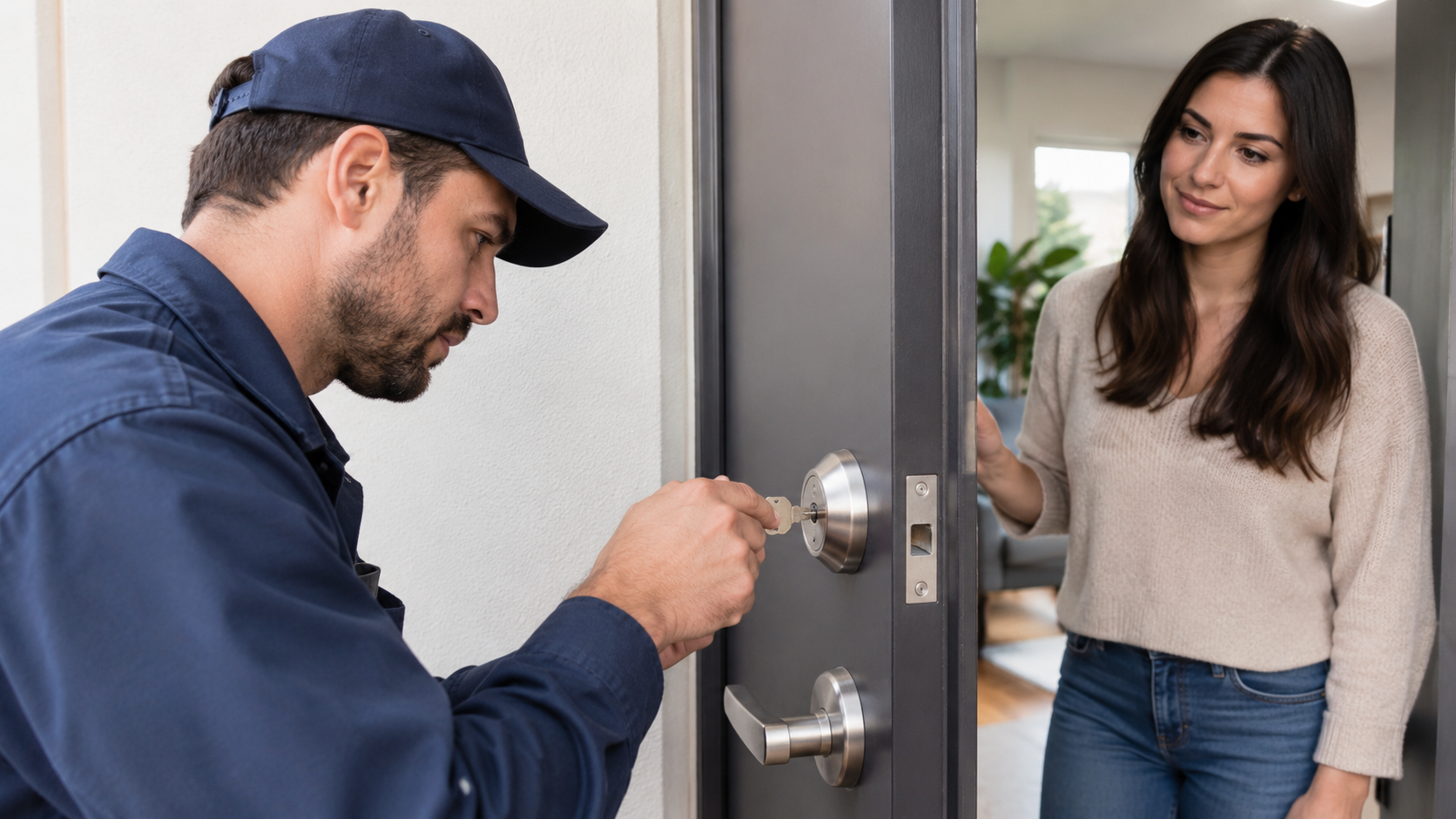
Ontario law governs Toronto rental lock changes
Toronto rentals are governed by Ontario’s Residential Tenancies Act, including the rules on entry, access, quiet enjoyment, and eviction. Municipal location doesn’t create a separate Toronto lock-change rule.
Changing a lock and ending a tenancy are different acts:
The Residential Tenancies Act requires a landlord who changes a lock or locking system to give the tenant replacement keys. That duty still applies if the change follows a lost key, a break-in, a tenant change, or a security upgrade.
A landlord should also check the door, strike, latch, and frame before replacing hardware. A lock that appears faulty may have a shifted door or poor strike alignment. Replacing the cylinder alone can leave the actual failure in place.
- A lock change repairs, replaces, or secures the entrance hardware.
- A tenancy termination ends the tenant’s legal right to occupy the unit.
- A lockout blocks access without properly ending that right.
- An eviction requires legal authority and enforcement through the required process.
Do landlords need notice for lock changes in Toronto?
Usually, no advance notice is required solely because the landlord plans to change the lock. The tenant must receive working replacement keys, but the law does not create a general waiting period for the hardware change itself.
Notice becomes a separate issue if someone needs to enter the rental unit. A landlord normally must give written notice before entering for a repair, maintenance task, or lock replacement. The notice should state the reason, date, and time of entry.
The lock change and unit entry must be treated separately:
An emergency can change the entry rules. A suspected fire, flood, active break-in, or immediate safety threat may justify faster action. However, the landlord still needs to provide access afterward and should document what happened.
| Situation | Notice or permission issue |
|---|---|
| Contractor changes a lock from outside the unit | The lock change itself generally does not require advance notice |
| Locksmith enters the rental unit | Written notice before entry is normally required |
| Landlord needs access to a common hallway or exterior door | Check the building’s access rules and any affected tenant rights |
| Tenant’s keys are disabled or withheld | The landlord must restore lawful access |
| Landlord wants the tenant to leave | The tenancy must end lawfully, usually by a valid termination notice; an LTB order is needed only if the tenant does not leave |
Replacement keys must work
A landlord who changes an entrance lock must provide the tenant with working replacement keys. A key that fits the keyway but does not turn the cylinder is not a replacement key. Neither is a key that opens only one of several required entrances when the old system gave broader lawful access.
The replacement must fit the actual system. That may include:
Condos add practical complications. A concierge desk may control fobs, a property manager may control building-wide cylinders, and a restricted key system may require authorization before duplication.
The landlord should give the keys promptly after the change. If the tenant cannot enter the unit, retrieve medication, care for a pet, or collect essential belongings, the problem is more serious than a delayed handover.
- The unit entrance
- A building entrance
- A parking garage or parkade
- A mailbox or storage area
- A shared amenity or service entrance
- An electronic fob or access card
Quiet enjoyment continues during the work
A tenant has a right to reasonable enjoyment of the rental unit. This includes lawful access and protection from substantial interference by the landlord.
A lock repair, security upgrade, or lost-key response does not suspend that right. The landlord can protect the property, but the work must be planned around the tenant’s access and the building’s rules.
A proper lock change should account for:
The landlord should tell the tenant what is changing and how replacement keys will be delivered. A vague message that says “the locks are being changed” leaves the main issue unanswered: how will the tenant get inside afterward?
If the work affects a common entrance, the landlord may also need cooperation from the property manager or condominium corporation. A locksmith cannot issue a building fob that the building controls.
- The tenant’s current keys
- The door’s condition and fit
- The strike plate, the metal plate that receives the latch
- Any condo or rental building restrictions
- Emergency access
- Other lawful occupants
- Fobs, remotes, and electronic access
- The timing of the locksmith visit
A lock change cannot become an illegal lockout
A landlord cannot change the lock to force a tenant out. Disabling the tenant’s key, refusing replacement keys, blocking entry, or removing access devices can amount to an illegal lockout.
The landlord also cannot avoid eviction rules by describing the lockout as a “security measure.” The label does not decide the issue. The effect on the tenant does.
A tenant should not force the door, damage the frame, or break the new hardware. That can create a second dispute and may affect evidence about the original lockout. Photograph the door and hardware instead, then keep the messages, notices, and access records.
A published Ontario Landlord and Tenant Board decision identified as TET-01936-09 (Re) involved a landlord changing or disabling a rental-unit lock. It shows why access disputes can lead to a formal LTB claim. Another decision, TST-78142-16 (Re), 2016 CanLII 88280 (ON LTB), also involved a landlord changing or disabling a rental-unit lock.
In Laczi-bencze v Cheung, 2024 ONLTB 66824, the decision ordered compensation in that matter. That result belongs to that named decision. It should not be treated as an automatic award in every lock dispute.
Ending a tenancy requires the proper process
A landlord who wants a tenant to leave must rely on a lawful reason and serve the correct notice to end the tenancy. The notice must use the proper form and meet the requirements for the reason claimed.
Common grounds can include:
The rules differ by ground. A landlord cannot simply announce that the tenancy is over and then change the locks.
A termination notice also does not give the landlord immediate possession. The tenant may have the right to remain while the notice period runs or while the dispute is decided. The landlord must follow the next legal step if the tenant does not leave.
This is where many lock disputes go wrong. The landlord treats a notice as permission to take the unit back. It isn’t.
- Non-payment of rent
- Serious damage
- Persistent interference with others
- The landlord’s own use of the unit
- Sale-related possession in limited circumstances
- Major repairs or demolition in limited circumstances
An eviction notice is not an eviction order
A notice to end a tenancy is a demand or warning under the Act. An eviction order is a decision issued by the Landlord and Tenant Board.
The tenant does not have to leave merely because a landlord served a notice. The landlord normally must apply to the LTB if the tenant remains and the landlord wants an enforceable eviction order.
The tenant can respond to the application, attend the hearing, provide evidence, and raise issues with the notice or the landlord’s claim. Useful records include:
Keep the original files where possible. Screenshots without dates or context are weaker than a complete message thread.
The Landlord and Tenant Board explains the application and hearing process. A landlord cannot replace that process with a locksmith visit.
- The termination notice
- The tenancy agreement
- Rent payment records
- Text messages and emails
- Photographs of the lock and door
- Dates and times of denied access
- Witness names
- Proof of emergency expenses
- Evidence of the keys or fobs that stopped working
Eviction requires an LTB order and sheriff enforcement
If the LTB grants an eviction order, the order must still be enforced through the authorized enforcement process. A landlord cannot personally remove the tenant or arrange a private lockout after receiving the order.
The sheriff is the official responsible for enforcing an eviction order. Until lawful enforcement occurs, the landlord should not change the locks to take possession.
This matters for locksmith work. A locksmith may be asked to change hardware after a lawful eviction has been enforced. The technician may need to see the order and confirm who can authorize the work. Building access, concierge rules, and proof of possession can also affect the appointment.
For a landlord, prepare:
For a tenant, do not assume a landlord’s verbal claim is enough. Ask for the legal document and keep the request in writing.
- The LTB order or other legal authority
- Proof of ownership or management authority
- The unit address
- The door and lock type
- Building contact information
- Any restricted-key or access-control requirements
What should you do if access or keys are withheld?
Start with a written request. State that the lock was changed, explain that the replacement key or fob does not work, and ask for working access. Keep the message factual and avoid threats.
Then document the failure:
Do not confront the landlord at the door or damage the lock. If the landlord refuses to restore access, contact the LTB or a legal clinic about available remedies. If you face an immediate safety risk, cannot access essential medication, or are stranded outside the home, seek urgent legal or emergency help.
For a landlord, the safest response is to restore working access while the dispute is reviewed. A disagreement about rent, damage, or the tenancy does not justify withholding the tenant’s key.
A residential locksmith in Toronto and the GTA will need the lock type, door condition, building rules, and proof that the person requesting work is authorized. For a condo, include the concierge contact and confirm whether the cylinder or fob is building-controlled.
- Photograph the lock, door, and any notice
- Record which key or fob fails
- Save all landlord and property manager messages
- Note the time access stopped
- Keep receipts for necessary temporary expenses
- Ask a witness to attend if safe
- Contact the concierge or property manager where relevant

The practical rule for landlords and tenants
A landlord can generally change a rental lock without advance notice for the change itself. The landlord must provide working replacement keys and must follow the entry rules if the work requires access inside the unit.
A tenant cannot be locked out because the landlord wants possession. The landlord must end the tenancy lawfully, and if the tenant does not leave, obtain an LTB eviction order that only the sheriff can enforce.
The safest decision is to separate the hardware problem from the tenancy dispute. Repair or replace the lock, preserve access, and handle possession through the legal process.
FAQ
Common questions
Quick answers about this topic in Toronto and the GTA.
Can a landlord change the locks after a tenant loses a key?
Yes. A landlord may replace or rekey the lock for security, but the tenant must receive working replacement keys. The landlord should state where the new keys or fobs can be collected so access doesn’t depend on guesswork.
Can a landlord change the locks because rent is unpaid?
No. Unpaid rent does not authorize a landlord to take possession by changing the lock. The landlord must serve the proper notice and proceed through the LTB process for non-payment.
Can a tenant call a locksmith after being locked out?
A tenant can seek help, but the locksmith cannot decide the tenancy dispute. Bring identification, the lease or ownership details, the rental address, and records showing when access stopped.
Does a condo landlord control every building key and fob?
No. The condominium corporation, property manager, or concierge may control common-entry fobs and restricted key systems. The landlord may need building approval before arranging replacements.
Can a landlord enter the unit to change the lock without telling the tenant?
Usually, no. If the work requires entry into the rental unit, the landlord normally must provide written notice before entering, unless an emergency or another legal exception applies.
Ready for upfront pricing?
Describe your door or vehicle for a quoted range before a technician is dispatched.