
Fix Deadbolt Alignment Without Forcing the Key
Start with the contact point, not the key. To fix a misaligned deadbolt, find where the bolt is hitting the strike or frame, then correct the door position, strike plate, or weatherstrip pressure causing the bind. Do not force the key, grind a large opening, or keep turning the thumb-turn against resistance. If the door is warped, damaged, fire-rated, or still binds after basic alignment, stop and call a qualified locksmith or door professional.
Real dispatcher answersOpen every day, 7 AM to 10:30 PM
How can you tell whether the deadbolt or the door is misaligned?
Keep the door open and extend the deadbolt. Turn the key or thumb-turn slowly while watching the bolt. It should move fully without scraping the lock housing, door edge, or strike plate.
Next, check where the bolt meets the frame.
A simple mark can show the failure point. Rub a pencil or chalk lightly on the end and sides of the extended bolt. Close the door gently, then turn the bolt only far enough to make contact. Open the door and inspect the mark transferred to the strike or frame.
The mark tells you what is wrong. A mark on the upper or lower edge usually points to a door position problem. A mark on one side can mean the strike opening is shifted. No mark on the strike, with the bolt hitting the frame instead, means the opening is too far away or the door is not closing in its intended position.
A deadbolt that works smoothly with the door open is usually not failing inside the cylinder. The door, frame, strike, or seal is putting the bolt under pressure.
- Look for fresh scratches on the bolt.
- Check the strike plate for bright rub marks.
- Inspect the wood or metal around the strike opening.
- Look for loose hinge screws or a gap that changes from top to bottom.
- Check whether the door sits high, low, or tight against one side of the frame.
| Symptom | Likely failure | Safe first check |
|---|---|---|
| Bolt works with the door open but binds when closed | Strike alignment or door pressure | Push or pull the door lightly while turning |
| Bolt hits the top or bottom of the opening | Sagging door or shifted strike | Check hinges and the bolt mark |
| Bolt hits the side of the opening | Strike is left or right of the bolt | Compare the mark with the opening |
| Key turns but the bolt barely moves | Lock cylinder or deadbolt mechanism | Test the lock with the door open |
| Door must be lifted to lock | Loose hinges, frame movement, or sag | Check hinge screws and door gaps |
| Lock binds after rain or cold weather | Swollen wood or compressed seal | Inspect the weatherstripping and frame |
Can you lock the deadbolt by pushing or pulling the door?
Yes, but treat that as a diagnosis, not a repair. With the door nearly closed, turn the key or thumb-turn gently while applying light pressure toward the hinges. Then try light pressure toward the strike side.
If the bolt moves when you pull the door toward the frame, the door may be sitting too far from the strike. A compressed or oversized weatherstrip can create the same symptom. If the bolt moves when you push the door inward, the seal may be holding the door away from its normal position.
Do not lean your body into the door or twist the key harder. This can bend the key, damage the cylinder tailpiece, or leave the bolt partly extended. If the bolt only works under pressure, the alignment still needs correction.
A bolt that refuses to move with the door open points to a different failure mode. The deadbolt mechanism, cylinder, or internal tailpiece may be damaged. See how to free a stuck deadbolt without damaging it before trying more force.
How do you fix a misaligned deadbolt?
Use the lowest-risk adjustment first. Keep the door open during most of the work so you don't create a lockout.
Extend the bolt with the door open, mark its end, and close the door gently. Check where the bolt touches the strike or frame.
Close the door without locking it. The latch should enter the centre of its strike without lifting, dragging, or forcing the door sideways. If the latch holds the door out of position, correct it before adjusting the deadbolt strike.
Tighten loose hinge screws with the correct driver. Do not strip the heads or drive screws into damaged wood. If the hinge holes no longer hold, the door may need proper repair rather than a larger strike opening.
Look for a seal that folds into the strike side, rubs heavily, or keeps the door from sitting flat. Press the door closed by hand and see if the pressure changes the bolt position.
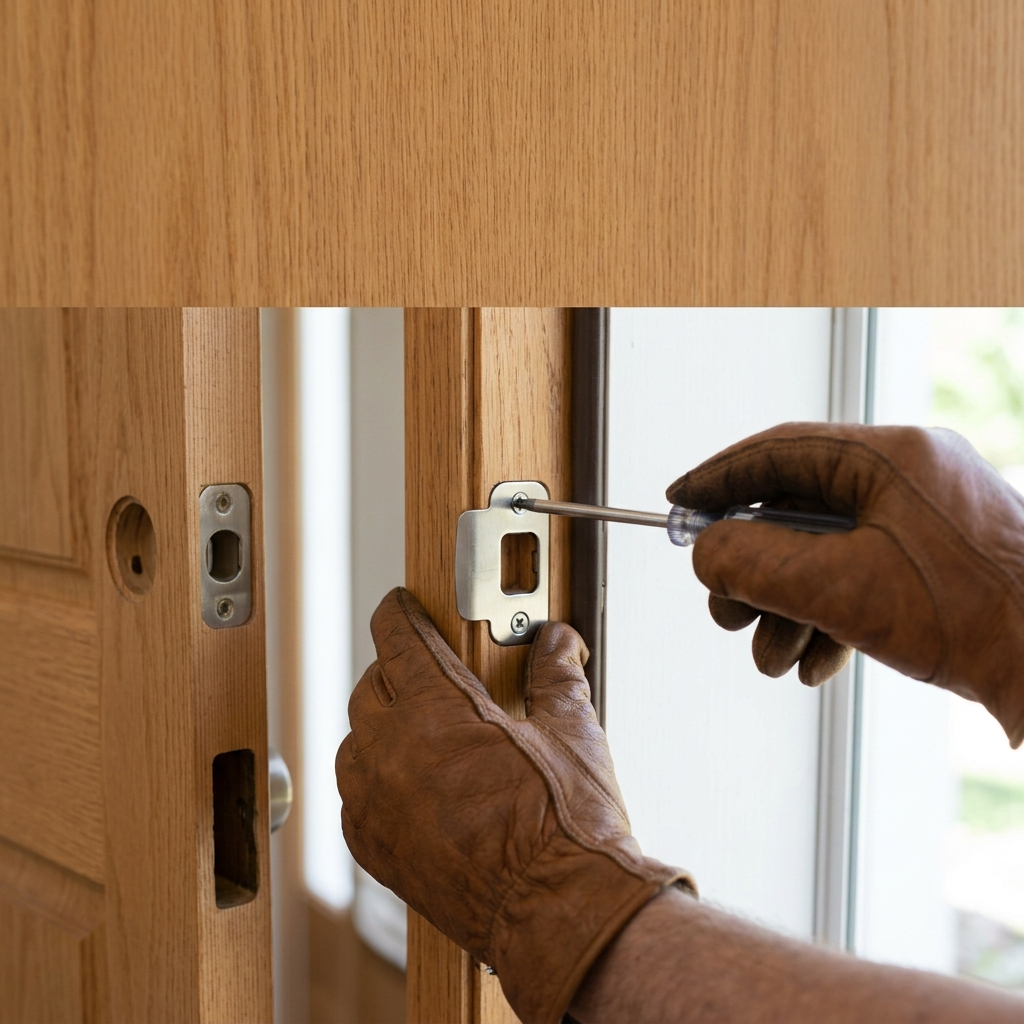
Open the door first. Loosen the screws enough for the plate to shift, but keep the plate supported against the jamb. Do not remove material from the jamb until you know which direction the opening must move.
Move the strike toward the bolt's contact point only as much as needed. If the plate needs to sit away from the jamb, use a solid strike shim that fits the hardware. A loose stack of washers or improvised metal can let the strike move under load.
Close the door without turning the lock. Then test the key and thumb-turn with light hand pressure. If the bolt still hits, reopen the door and reassess the mark instead of cutting more metal.
If the strike is correctly positioned but the opening is slightly tight, file the opening by hand. Keep the plate installed or protect its edges so the file does not damage the visible finish.
Confirm that the bolt extends fully, retracts fully, and does not rub the strike. Then repeat the test with the door closed and no pressure on the key.
Strike adjustment is suitable only when the door and frame remain sound. If the plate cannot move far enough, the jamb is split, or the door has shifted, the adjustment is hiding a larger failure.
1. Find the contact point.
2. Check the regular latch.
3. Check the hinges and frame.
4. Inspect the weatherstripping.
5. Loosen the deadbolt strike plate.
6. Shift or shim the strike.
7. Retighten and test with the door open.
8. Make only a controlled correction.
9. Test the full lock cycle.
Should you adjust the regular latch strike plate too?
Often, yes. The latch strike controls where the door stops when it closes. If that strike holds the door too high, low, or far to one side, the deadbolt reaches the frame at the wrong position.
Check the latch before touching the deadbolt strike. The latch should enter its opening without scraping and should not require you to lift, pull, or shove the door. A latch that drags can also show that the hinges or frame have moved.
Loosen the latch strike and make a small position change toward the latch. Retighten it, then close the door normally. The door should rest against the weatherstrip without being pushed away from the frame.
Do not move the latch strike just to make the deadbolt fit. If the latch opening must move a long distance, the door may be sagging or the frame may be out of square. Fit the hardware to a sound door position first.
How do weatherstripping and seasonal swelling make a deadbolt bind?
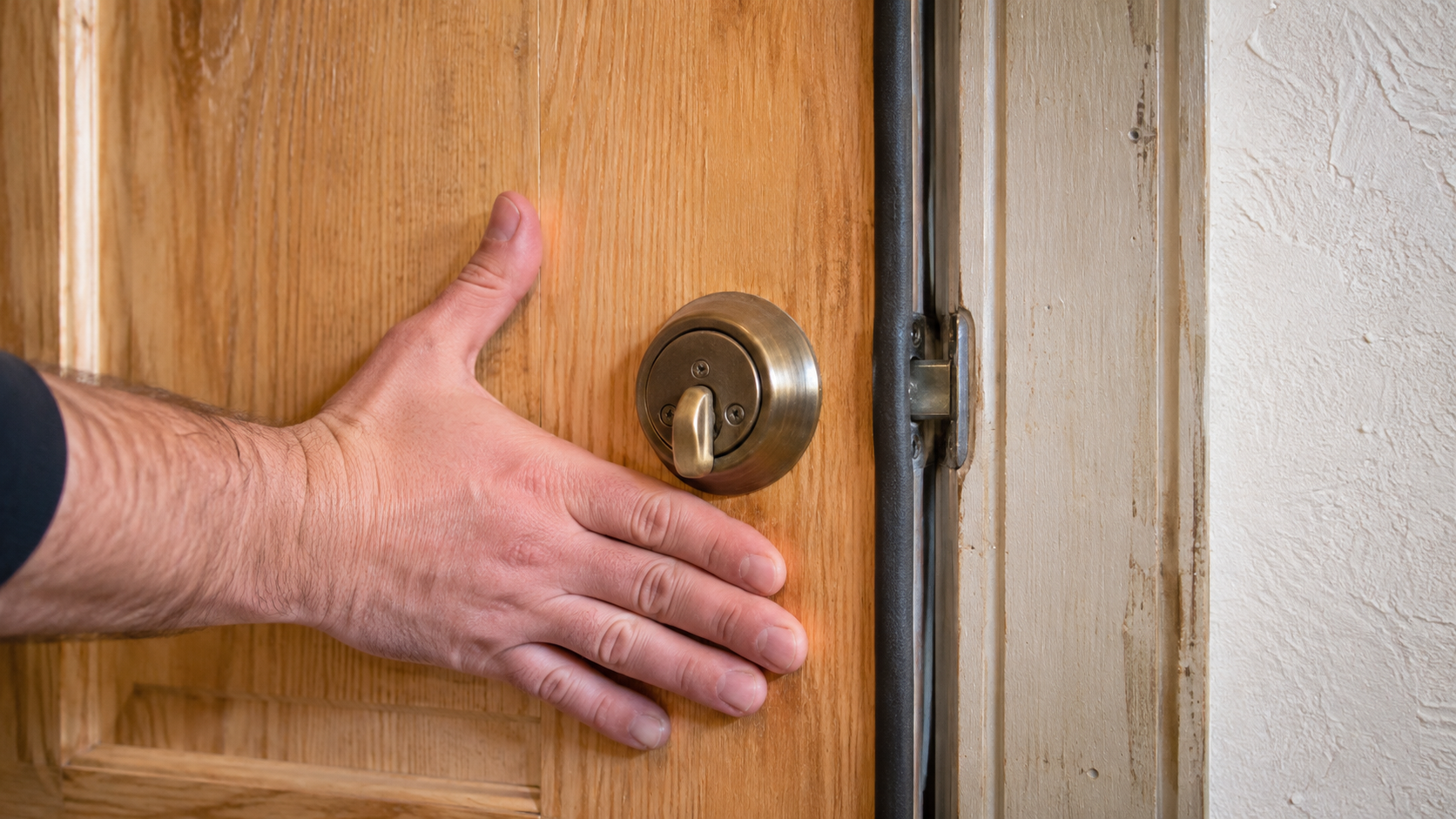
A door seal can create enough pressure to stop a deadbolt from entering cleanly. This is common after the seal is replaced, after heavy rain, or when a wood door swells against the frame.
Inspect the strike-side seal while the door closes. It should compress evenly rather than fold into the opening or push the door back. Look for a shiny rub mark on the seal and for paint or wood contact on the frame.
Try closing the door slowly without locking it. If the bolt works when you press the door fully against the seal, the seal may be too thick, misplaced, or damaged. Reseating the weatherstripping may solve the problem. Replace it if it has hardened, torn, or lost its shape.
Do not remove the weatherstrip from the whole door to solve one tight spot. That can leave a gap, create drafts, and weaken the door's seal. Correct the affected section or have the door fitted properly.
Swollen wood may need time to dry before a final adjustment. If the door binds in every season, the frame or door likely needs repair. Filing away the jamb each summer is not a repair plan.
When is it safe to enlarge the deadbolt strike opening?
Enlarge the opening only after you confirm that the strike is correctly positioned and the door closes in the right place. The correction should be small and limited to the area where the bolt contacts the metal or wood.
A strike opening that is too narrow can stop the bolt. A strike opening that is made too large can leave less material around the bolt and reduce the holding strength of the jamb. Do not turn a precise fit into a loose hole.
Protect the strike plate while making the correction. Keep the plate seated firmly, preserve its screw holes, and remove only the metal or wood that prevents full bolt entry. If the bolt is missing the opening by a clear amount, reposition the strike instead of enlarging it.
Do not enlarge the opening if the jamb is cracked, the strike screws are loose in damaged wood, or the door is being held out by the latch or weatherstrip. Those conditions need correction first.
Should you use a file or rotary grinder on the strike plate?
Use a hand file for a small, controlled correction. It removes material slowly and lets you check the fit after each pass. Keep the filing inside the strike opening and avoid thinning the plate around its screw holes.
A rotary grinder removes metal quickly and can overshoot the needed correction. It can also damage the finish, create sharp edges, throw metal dust into the lock, or weaken the strike. The speed is not useful if the diagnosis is wrong.
Do not cut the strike plate at all if the bolt is hitting because the door is sagging, the frame is moving, or the lock body is failing. Metal removal cannot correct a door that no longer sits in the frame.
If you see a hardened security strike, reinforced jamb, concealed fasteners, or a fire-rated assembly, stop. These parts may require a specific fit and installation method. A file can solve a small clearance issue. It cannot restore a damaged door assembly.
How do you fix a sagging, warped, or poorly installed door?
Start with the hinges. Check for loose screws, a hinge leaf pulling away from the jamb, or a gap that changes along the door edge. Tighten loose screws with the proper driver and stop if the wood no longer holds them.
A door that has dropped can make the latch and deadbolt miss their strikes together. In that case, moving both strike plates may make the lock work for a while, but the door will continue to load the hardware.
A warped door may touch the frame at one corner while leaving a gap at another. A shifted frame can show the same symptom, especially in older homes, rentals, and condo buildings. Do not force the door flat with the deadbolt.
Poor installation also causes repeat failures. The deadbolt may be mounted too close to the door edge, the strike may be set too shallow, or the lock body may not sit square in the door. Those problems need the hardware removed and fitted correctly.
If the door is part of a fire-rated assembly, do not alter the door, frame, or strike without approval from the responsible building professional. Fire doors are tested as assemblies, and a casual cut can affect their required performance. The National Fire Protection Association's fire door guidance explains why these doors need special care.
When does a misaligned deadbolt need replacement instead of adjustment?
Replace the deadbolt when the internal mechanism is failing. A bolt that slips, sticks with the door open, retracts unevenly, or fails to extend fully is not fixed by moving the strike.
Replace damaged strike hardware if it is bent, cracked, badly worn, or no longer holds its screws. A strike that moves under normal locking pressure will keep changing alignment.
Stripped screw holes also need a proper repair. Driving longer or thicker screws into weak wood may split the jamb or leave the strike loose. The repair may require rebuilding the hole, reinforcing the jamb, or fitting a different strike.
A worn lock may fit the opening and still be unsafe to keep. If the key is difficult to insert, the thumb-turn feels rough, or the cylinder has visible damage, have the lock inspected. Door lock repair and broken key extraction in Toronto covers the separate warning signs that a cylinder needs service rather than more adjustment.
When should you call a locksmith, installer, or building professional?
Call for help when the safe adjustment boundary has been reached. A professional can separate a strike problem from a lock-cylinder failure, frame movement, or door-prep error before more damage is done.
Arrange qualified service for:
In a Toronto or GTA condo, check with the concierge or property manager before changing shared hardware. A technician may need building approval, elevator access, or a sign-in. For a rental, proof of authorization can matter as much as the lock model.
If you need a smart lock after fixing the door, check the door prep and building rules first. How GTA homes avoid smart lock installation problems explains why a smart lock cannot correct a door that already drags or misses its strike.
- A fire-rated door or shared building entrance.
- A steel security door or reinforced frame.
- Severe frame damage after a break-in.
- A warped door that cannot close without force.
- A deadbolt that binds with the door open.
- Stripped strike holes or a loose jamb.
- A rental or condo door where approval is required.
- A lock tied to access control, an electric strike, or a building system.
- A repair that requires specialized drilling, reinforcement, or replacement parts.
How do you test the repaired deadbolt without risking a lockout?
Keep the door open for the first full test. Turn the key or thumb-turn through the complete cycle and watch the bolt extend and retract without scraping.
Then check these points:
After the open-door test passes, close the door while standing inside. Lock it and then open it several times with the key. Do not close the door behind you until the lock works smoothly without pushing or pulling the door.
Finally, test the door from the normal outside position with the key in hand. Keep another approved way inside until you trust the repair. A deadbolt that works once after filing is not proven reliable.
- The bolt enters the strike without lifting or pulling the door.
- The key turns without unusual pressure.
- The thumb-turn does not stop partway.
- The bolt extends fully into the opening.
- The latch still enters its strike correctly.
- The door closes against the weatherstrip without excessive force.
- The strike plate stays tight after repeated cycles.
FAQ
Common questions
Quick answers about this topic in Toronto and the GTA.
Can a deadbolt be misaligned even if the door looks straight?
Yes. The strike opening can be off by a small amount while the door and frame appear normal. A bolt mark on the strike shows the actual contact point more reliably than looking at the door from across the room.
Does lubricating the deadbolt fix alignment?
No. Lubricant may reduce friction inside a clean cylinder, but it cannot move a strike or correct door pressure. If the bolt works with the door open and binds when closed, check the door position and strike first.
Can a new deadbolt solve a misalignment problem?
Usually not if the existing lock works with the door open. A new lock may have slightly different clearances, but it will still bind if the door hits the frame or the strike is in the wrong place.
Why does the deadbolt work in summer but bind in winter?
Wood, seals, and frames can change position with moisture and temperature. If the problem returns each season, inspect the door edge, weatherstripping, hinges, and frame instead of enlarging the strike repeatedly.
Is a loose deadbolt strike a security problem?
Yes. A loose strike can shift during locking and may no longer support the bolt correctly. Stop relying on the door until the strike and the surrounding jamb are repaired and the bolt engages fully.
More reading
Related guides
More step-by-step and how-to articles on the same topic.
Free a Stuck Deadbolt Without Damaging It
Relieve door pressure, check the key and strike, lubricate safely, and know when a stuck deadbolt needs a locksmith instead of force or risky repairs.
Read article Home securityHow GTA Homes Avoid Smart Lock Installation Problems
A proper GTA smart lock installation starts with door fit, condo rules, battery planning, and backup access. Use this guide to avoid lockouts.
Read article Locksmith guidesCommercial Lockout in Brampton: Steps to Take and Legal Info
The initial step for a Brampton commercial lockout is phone assessment to identify authorization and hardware before checks or repairs, noting legal limits.
Read articleReady for upfront pricing?
Describe your door or vehicle for a quoted range before a technician is dispatched.