
Free a Stuck Deadbolt Without Damaging It
A stuck deadbolt is usually fixed by relieving door pressure, lubricating the lock, or correcting the door and strike alignment. Do not force the key or twist the cylinder harder. If the door is locked and you can’t prove lawful access, stop and call a locksmith, landlord, property manager, or owner.
Real dispatcher answersOpen every day, 7 AM to 10:30 PM
What should you do before trying to free a stuck deadbolt?
Confirm that you’re authorized to open the door. For a rental, condo, office, or shared building, that may mean showing identification and contacting the landlord, property manager, or concierge.
Keep a working key available if you have one. Also check whether the problem affects the key, the deadbolt, or the door itself. A key that turns halfway, a thumb turn that stops, and a door that only sticks when closed point to different failures.
Before trying anything, avoid:
A broken key can leave part of the blade inside the cylinder. A damaged cylinder can turn a minor alignment problem into a full lock replacement. If the key begins to bend, stop turning it.
- Pushing a second key into the keyway
- Twisting the key with pliers
- Prying the door or frame
- Hitting the lock with a hammer
- Flooding the cylinder with oil
- Removing the lock while the door is locked
- Drilling without confirming the hardware and ownership
Is door pressure preventing the deadbolt from moving?
Door pressure is the safest failure mode to test first. A shifted frame, swollen door, loose hinges, or tight weatherstripping can press the bolt against the strike plate and stop it from retracting.
Use this sequence:
If the deadbolt retracts when you push or lift the door, the lock may be sound. The likely problem is strike alignment, loose hinges, or a door that has shifted in the frame.
If the key turns freely but the bolt does not move, the cylinder tailpiece or internal deadbolt case may be broken. That needs an inspection. Another copy of the same key won’t repair a failed lock body.
1. Insert the key fully, but don’t force it.
2. Turn the key gently in the direction that retracts the bolt.
3. At the same time, push the door toward the frame.
4. If that fails, pull the door lightly toward you.
5. If the door is sagging, lift the handle or door slightly while turning.
6. Stop as soon as the bolt moves
Don’t keep twisting after the pressure clears.
How do you lubricate a deadbolt safely?
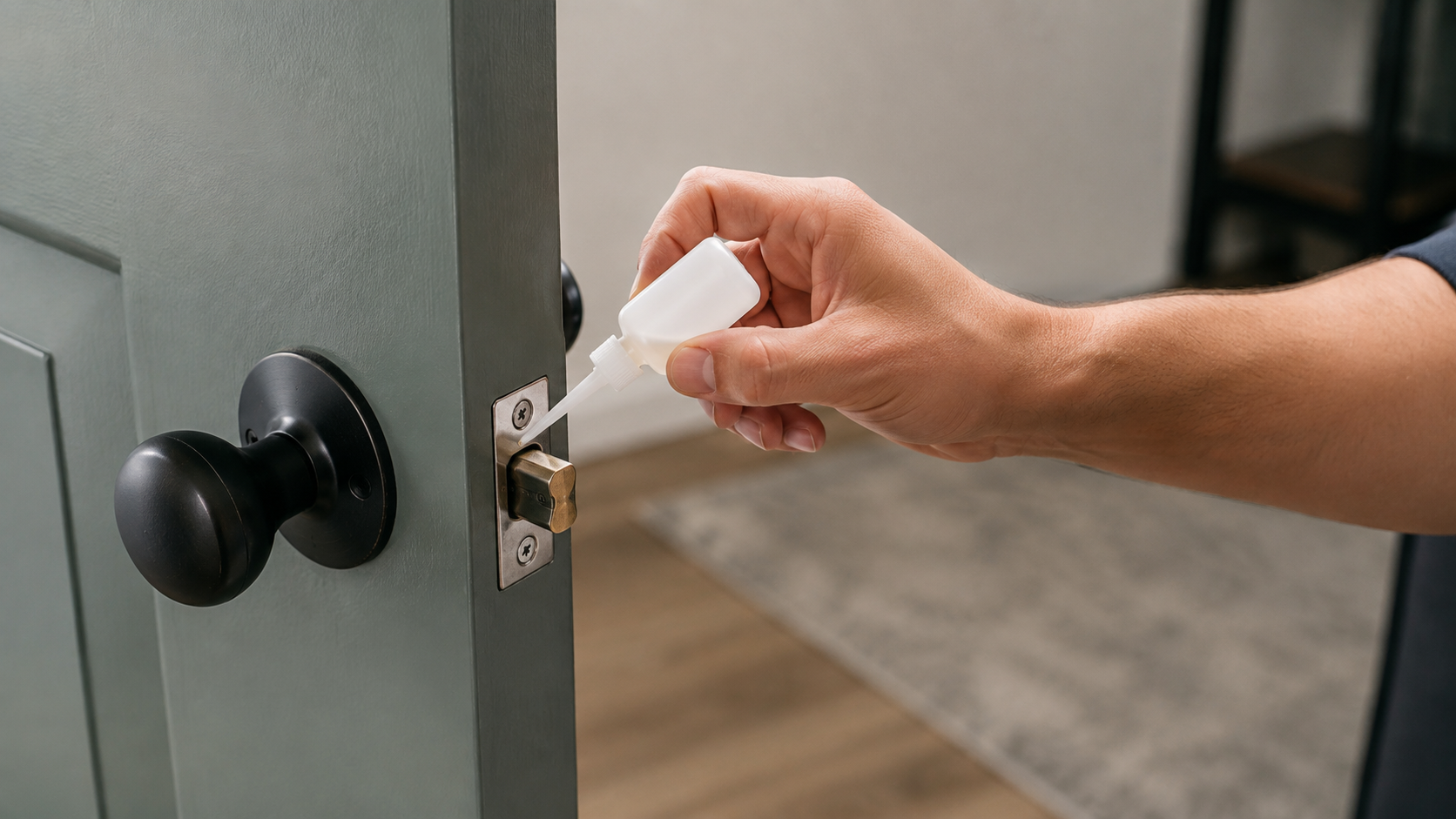
Use a lock-rated dry lubricant made for cylinders and moving lock parts. Apply a small amount into the keyway, then insert and remove the key several times without forcing it.
You can also apply the product to the exposed bolt edge if the door is open. Work the thumb turn or key gently so the lubricant reaches the moving parts.
Avoid household oils and grease. They collect dust inside the keyway and can leave the pins moving poorly. Do not pour liquid into the cylinder or spray until the lock is dripping.
A lubricant won’t fix a broken tailpiece, bent bolt, loose strike, or corroded lock case. It may help a dry or dirty mechanism, but continued sticking means the failure still needs attention.
How can you tell whether the key or deadbolt is the problem?
Start with a spare key if you have one. If the spare works, the original key may be bent, worn, or cut incorrectly.
Inspect the working edge of the key:
Next, test the lock with the door open. If the key turns smoothly with the door open but sticks when the door is closed, the door or strike is creating pressure. If it still sticks while open, the cylinder, tailpiece, or deadbolt case is the likely failure.
Don’t keep copying a worn key. A new copy made from a damaged original can carry the same problem into the new key.
If the key has broken inside the lock, follow the safer extraction limits in How to Get a Broken Key Out of a Lock. Stop if the fragment moves deeper or the keyway is no longer straight.
- Look for bending along the blade.
- Check for rounded cuts.
- Look for deep scratches or burrs.
- Compare it with the spare.
- Stop using it if it binds at the same point each time.
How do you fix a deadbolt that binds against the strike plate?
Open the door and extend the deadbolt. Then compare the bolt with the strike plate opening in the frame. The bolt should enter the opening without scraping the top, bottom, or sides.
Check these parts:
Tighten loose screws with the correct screwdriver. Don’t over-tighten them, because that can pull the strike out of position or strip the wood.
You can make a minor strike adjustment only with the door open. Remove the strike, clear visible debris, reposition it carefully, and test the lock before closing the door. Make small changes and keep the door available as an exit.
Do not file a large amount from the strike as a first response. The opening may be wrong because the hinges, door prep, or frame has moved. Removing metal can hide the symptom while leaving the alignment failure in place.
A Toronto condo door may also have restricted hardware or a fire-rating requirement. Confirm building approval before changing the strike, escutcheon, or deadbolt assembly.
- Loose strike screws
- Loose hinge screws
- A bent strike plate
- Paint or debris inside the opening
- A bolt that rubs one edge
- A door that sags or twists
- A frame that has shifted
What should you do if the deadbolt is frozen, dirty, or corroded?
Cold weather can freeze moisture in the keyway or bolt path. Use a lock-safe de-icer and apply it sparingly. Then insert the key gently and work the mechanism without force.
Don’t heat the cylinder with a lighter, torch, or open flame. Heat can damage the finish, seals, and nearby door materials. It can also create a fire risk in a confined entryway.
Don’t flood the lock with hot water. That may free the bolt for the moment, but the water can freeze again inside the cylinder.
For dirt, use a lock-rated cleaner or dry lubricant suitable for the hardware. Keep grit out of the keyway and wipe the key before inserting it.
Corrosion is a replacement warning. If the key has rough movement, the bolt surface is pitted, or the cylinder has visible rust, cleaning may not restore reliable operation. Replace the cylinder or complete lock based on the damage and the condition of the door prep.
How do you remove a stuck deadbolt when the door is open?
Only remove the deadbolt with the door open. You need to keep control of the doorway while the hardware is disconnected.
Follow these steps:
The lock may use a separate cylinder, a complete deadbolt case, or a restricted key system. Replace the damaged part only if the rest of the hardware is sound. Replace the complete lock if the case is bent, the bolt is damaged, or the hardware is poorly fitted.
Measure the old hardware against the replacement before installation. A lock that looks similar can still have the wrong backset, bolt length, mounting pattern, or door prep.
If the door is locked, don’t remove the interior trim by force. The screws may be accessible, but that doesn’t make the work authorized or non-destructive. A locked door may require extraction tools, bypass tools, or replacement hardware chosen after the lock is identified.
1. Retract the bolt fully.
2. Remove the interior thumb-turn screws.
3. Support the exterior cylinder as you loosen the mounting screws.
4. Remove the interior and exterior trim without twisting the cylinder.
5. Remove the screws holding the deadbolt case to the door edge.
6. Pull the lock body out carefully.
7. Compare the replacement with the old hardware.
8. Fit the new lock, cylinder, and strike before tightening everything.
9. Test the key and thumb turn with the door open.
10. Close the door only after the bolt moves smoothly.
When should you stop troubleshooting and call a locksmith?
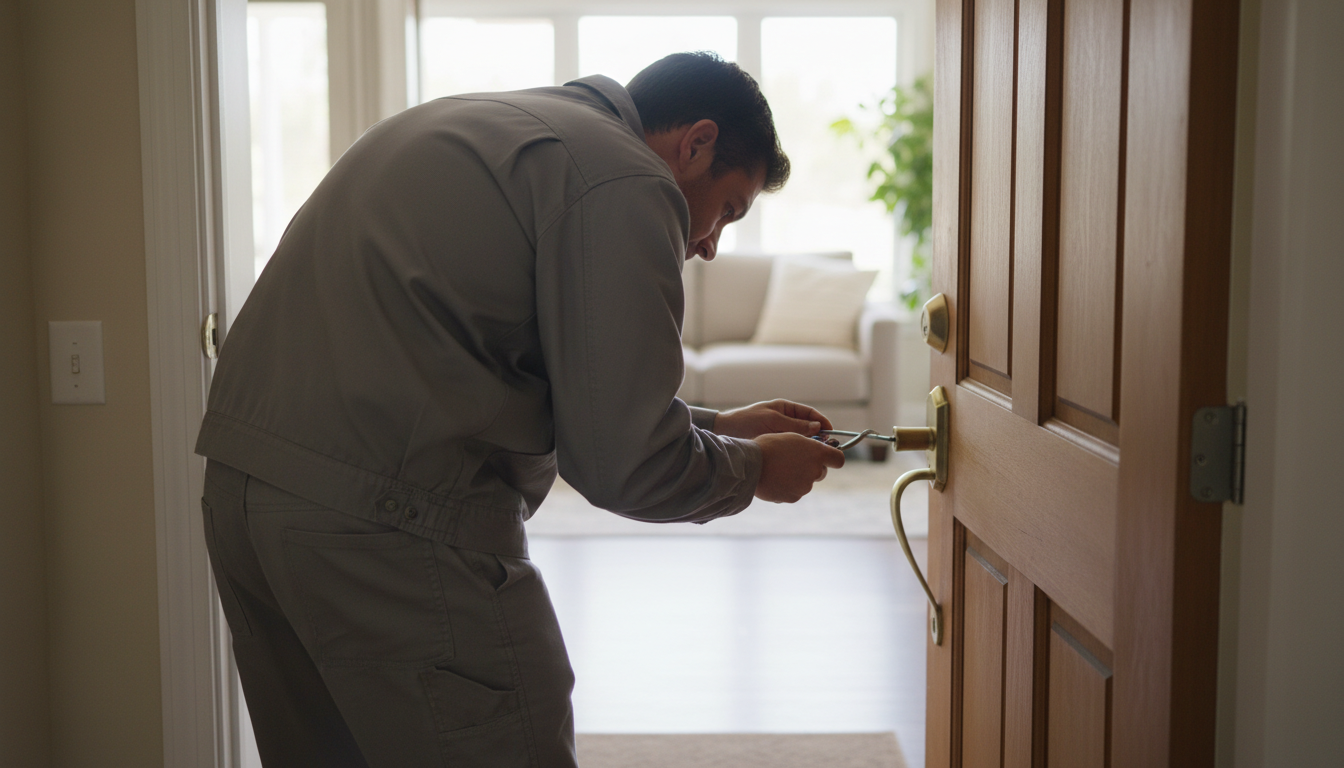
Stop when the next attempt could damage the key, cylinder, door, or frame. A stuck locked door is the point where improvised tools create more trouble than they solve.
Call for professional service if:
For a Toronto condo, prepare identification, your suite number, lease or ownership details, and concierge or property manager contact information. A technician may also need elevator access, a building sign-in, or approval to change the hardware.
For a U.S. cost reference, the 2024 National Average Price Survey lists an average residential locksmith service-call fee of $94 for freeing a stuck lock. The same U.S. residential survey lists average labor charges of $104 during regular hours and $151 after hours. Those figures describe U.S. averages, not a Toronto quote.
After a break-in or attempted forced entry, don’t throw away the damaged lock or repair the frame before it’s inspected. The failure may involve the strike, hinges, door prep, and frame together. See emergency residential locksmith service in Toronto if the lockout involves damaged entry hardware or a security concern.
- The key is broken in the cylinder.
- The key turns but the bolt doesn’t retract.
- The cylinder spins without moving the bolt.
- The door is locked and you can’t gain lawful access.
- The deadbolt has failed internal parts.
- The lock is high-security or restricted.
- The door is part of a condo, rental, office, or shared property.
- The frame or strike is badly damaged.
- The lock is connected to access control or an electric strike.
- You need non-destructive entry or specialized extraction tools.
How can you prevent a deadbolt from sticking again?
Fix the cause, not only the symptom. A new cylinder won’t solve a door that drags against the frame, and a new strike won’t repair a failing lock case.
Use this maintenance checklist:
The deadbolt should move fully with light key pressure. If it needs force, treat that as a failure warning rather than a normal part of using the lock.
Related: Call Toronto Locksmith for Quote & ETA
- Keep the key clean and free of burrs.
- Use dry lock lubricant when the cylinder becomes rough.
- Tighten loose hinge and strike screws.
- Check that the bolt enters the strike without scraping.
- Repair door sag before it stresses the deadbolt.
- Replace corroded or unreliable hardware.
- Keep spare keys that were cut from a good original.
- Don’t leave a damaged key in regular use.
- Test the lock with the door open after any adjustment.
FAQ
Common questions
Quick answers about this topic in Toronto and the GTA.
Can I use graphite powder in a stuck deadbolt?
You can use a lock-rated dry lubricant, but follow the product directions and the lock maker’s guidance. Some modern cylinders and electronic locks call for a specific lubricant, and adding powder to an already dirty keyway can make the problem worse.
Why does my deadbolt work with the door open but not closed?
The door is likely pressing the bolt against the strike. Check for sagging hinges, a shifted frame, a tight strike opening, or weather changes that have altered the door fit.
Should I replace the whole deadbolt or only the cylinder?
Replace only the cylinder if the bolt case, trim, door, and strike are sound. Replace the complete deadbolt if the internal case is damaged, the bolt is bent, the housing is corroded, or the existing hardware doesn’t fit the door correctly.
Can a locksmith fix a stuck deadbolt without replacing it?
Often, yes. A locksmith may relieve the door pressure, extract a broken key, repair the alignment, or replace only a worn cylinder. Replacement becomes more likely when the internal case or housing has failed.
Is a stuck deadbolt a security emergency?
Treat it as urgent if the door won’t secure, the lock failed after forced entry, or you can’t leave safely. If the door is locked and you’re outside, don’t force the key or frame. Confirm authorization and arrange non-destructive entry or the correct repair.
More reading
Related guides
More step-by-step and how-to articles on the same topic.
Ready for upfront pricing?
Describe your door or vehicle for a quoted range before a technician is dispatched.